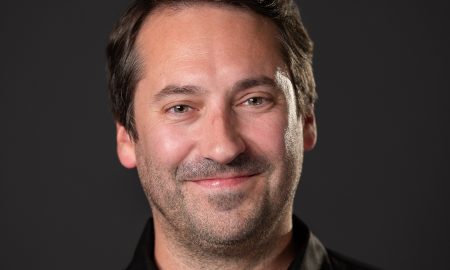
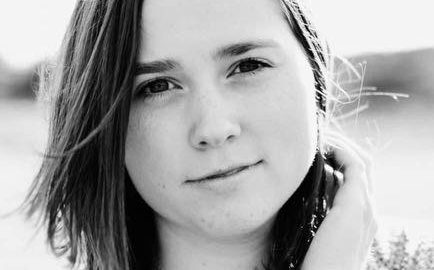
Today we’d like to introduce you to Matt DiBiase.
Matt, can you briefly walk us through your story – how you started and how you got to where you are today.
I was born in Wellesley, MA in 1994, I began my passion for music with mallet percussion at age seven. In middle school, I added a drum set and slowly narrowed in on jazz and improvised music during high school. After my first year as a liberal arts student at Oberlin College studying neuroscience, I auditioned to enroll in the dual degree program and receive an additional bachelors in music performance on jazz vibraphone. Oberlin’s geographical isolation provided the solitude to discover my own voice as a composer and also learn to write music for personalities in our well-knit department, which felt like a family away from home. Two of the bands I worked to form at Oberlin, Frisson (frissonband.com) and Echoes (echoesbandinfo.com) are releasing records and touring this summer throughout the U.S.
Alongside my studies of acoustic music at Oberlin, my audio engineering job and guilty pleasure listening to electronic music began to feed a love for dance music production in my free time. After graduating in 2017, my ambitions to live in Southern California lead to a cross-country road trip from Boston to San Diego for a neuroscience position on UCSD’s child brain development study (the ABCD study). Over the past two years, my intentions to pursue music full time inspired me to leave UCSD, form a private studio of music students, and perform in the local jazz and electronic music scenes in SD and LA.
Since arriving in Southern California, I find myself situated between the creativity of jazz and the drive of electronic music. San Diego’s jazz scene is small but extremely talented, and very reminiscent of Oberlin’s community. Performing alongside visionaries like Kamau Kenyatta, saxophonist Robert Dove, trumpeter Gilbert Castellanos, pianist Joshua White, drummer Julien Cantelm, vocalist Leonard Patton (and many others) inspires me to hone my craft as an acoustic vibraphonist. Meanwhile, Los Angeles’ fury of underground electronic music fuels my love to produce and perform with the cathartic energy only dance music seems to satiate.
Nowadays, I spend most of my time composing and producing music and video content under the artist name PlexusPlay. I am shaping my own sonic identity as the music producer for PlexusPlay and learning new techniques for animating video. This fall I’ll be releasing a full video album. The word plexus (n.) is defined as a complex arrangement of interconnected parts that form a network. Plexus is often used in the neurosciences to describe formations of capillaries and neurons. Similarly, I want to transform the audience at a show into a network that can input data via their phones to collectively influence the performer’s sonic environment – this can be done using an online server and the audio software I perform with, Ableton Live. In essence, the audience and performer create a single interactive system – PlexusPlay. As I begin to find my voice as a producer, I will slowly work to form the team needed to tackle the larger goals of this project, which would ultimately link my studies as a scientist with passions as a musician.
Has it been a smooth road?
The road trip out here to begin a new life in SD was invigorating and inspiring. I hiked the Colorado Rockies, Bryce Canyon, Moab, Zion, and tumbled down white water rapids kayaking in Aspen. There’s even a “Road Trip” song on the new album from such an inspiring week. But after three months of working at UCSD, I felt the knowledge I was gaining as a scientist plateau. The monotony of a research assistant lifestyle really began to take a toll on my mental health and my overall creativity with regards to music. I felt stuck on the opposite side the country in San Diego, far from home, and the risk of leaving my job was intimidating. Leaving UCSD also resembled a larger decision for me to pursue music professionally and transition away from a career as a scientist.
Initially, I came across a contractor to help acquire music students. I loved being able to teach and perform full time. After eight months of working through them, I discovered how detrimental their legal contract was for both my wallet and my relationship to music. Driving to thirty students homes per week on four different instruments with half my pay cut out for the contractor and many students not practicing for a single session in an entire month was disheartening. But I had come face to face with how large the market for students was, and I knew my skills as a teacher were enough to create my own studio. Forming my teaching business over the course of ~1,800 music lessons in the last two years since graduating in 2017 has been extremely humbling. Living the dual life of a trusted educator and a confident performer requires a lot of independence and patience. Each set of goals a student has requires a custom tailored experience in order to encourage and maintain their relationship with music, all the while finding time to maintain and discover my own. Most importantly, teaching has called to mind my love and gratitude for all my past mentors – my first teacher Sarah Tenney, and Oberlin faculty Dan Wall, Sullivan Fortner, and Michael Rosen.
As for my own creations, taking on both audio production and video editing for Plexusplay while the projects in its infancy is a huge responsibility. I have a growing respect for professional Youtuber’s who spend most of their lives video editing, and the challenge of setting realistic goals will always be difficult for me when I have aspirations set so high. I’ve certainly experienced one or two burn out phases since arriving in San Diego, both of which have made my mental radar stronger. Short meditations, creative musical experiments, and exercise are essentials to my weekly lifestyle. One of my favorite musician’s, Louis Cole, once said: “every day I wake up, I feel behind.” For the number of options you have at your disposal in a digital audio workstation, and all the edits and animations in the video stages, my mind will always seem lightyears ahead of the production line. But as the project grows and I shape my sound more, I’m excited to work as part of a larger team. Patience with its development alongside “adulting” (taxes, dishes, laundry, commuting, meal-prep) has been the true test after college. The new album for fall 2019 will probably be called “Adulting” for this very reason.
Please tell us more about what you do, what you are currently focused on and most proud of.
As a musical performer:
I specialize in mallet percussion; in particular, bringing mallet percussion and the fine motor skill stick control from drumming into an entirely electronic setting that is usually inhabited by DJs. An invention of mine that makes my sound unique incorporates a foot pedal that allows for vocal expressiveness (pitch bend and vibrato) using a mallet instrument.
I am most proud of my ability to transform the energy in a room with my playing, whether it be driving the band forward through rhythmic playing or lifting up a stranger who’s having a crappy day simply through the weirdness of my instrument.
As a teacher:
I set myself apart from others with a very systematic but energetic style of teaching. While my experience with neuroscience informs structuring practice and optimal learning, my gregariousness makes students comfortable to share how and why they’re pursuing the music they love. That pairing maximizes a students growth and engagement with music – revealing their deeper self, and how to communicate it through something as subjective as sound; it’s a beautiful craft.
As a multimedia startup:
I like having a care-free and often witty flavor to the videos I make. Incorporating smartphone data is something that few professionally trained musicians are exploring, and as my sound forms as a producer, I’d like to experiment with challenging our notions of “musical performance.”
How do you think the industry will change over the next decade?
Based on the rapid change in our music consumption in the last 5-10 years, it’s hard to fathom where we will be in another decade. I believe ambisonic music (a full-sphere surround sound format ) will continue to rise in popularity as virtual reality becomes more popular. I also think media consumption will continue to become more individualized (For example, everyone’s soundtrack playing through headphones at a movie may be different depending on their musical preferences).
People claim technology like blockchain could help protect the sustainability of a musical career with better monitoring for royalties and consumption in general, but whether that’s true or not I believe streaming services and algorithm based distribution will continue to thrive. With the automation of many jobs predicted in the US, I am grateful to have a creative and personal profession with performing and teaching. Ultimately I do feel technology’s ability to enhance our creativity in producing music outweighs detrimental effects on effect on consumption and making a living as a creative.
Pricing:
- My album if you’d like to purchase it on Bandcamp costs $7.99
Contact Info:
- Website: mattdibiasemusic.com
- Email: plexus.mhd@gmail.com
- Instagram: @plexusplay
- Facebook: https://www.facebook.com/plexusplay
- Twitter: @plexusplay
- Other: https://www.youtube.com/channel/UCI31oD7sY07ciQp0aBkP24A/videos


 Image Credit:
Katie Berns, Sage Jenson, Deli LA, Idyllwild Jazz in the Pines
Getting in touch: SDVoyager is built on recommendations from the community; it’s how we uncover hidden gems, so if you know someone who deserves recognition please let us know here.