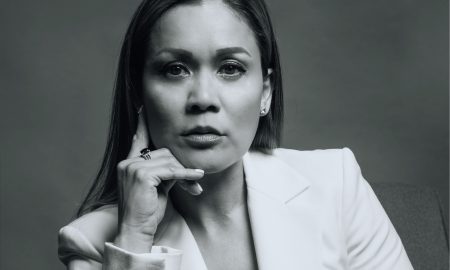
Today we’d like to introduce you to Aleksandra Drecun.
Hi Aleksandra, we’d love for you to start by introducing yourself.
Thank you for allowing me to share my story. I am flattered and honored by the opportunity. Truly my story begins with my enduring gratitude to my loving mother and father. They are my greatest supporters and always encouraged me to follow my dreams. They faithfully believed in me and stood by my side every step of the way. They were instrumental in allowing me to get to where I am today. They are my greatest teachers and mentors. I admire them for the amazing people and parents they are. My journey began at a young age. I distinctly remember taking my first psychology course in 9th grade and falling in love with the subject matter. My eyes and heart were opened in a way that no other subject matter I was exposed to did. I was introduced to a discipline that answered questions that all teenagers and humans are plagued with: Who am I and why am I here? Psychology held the existential answers I was seeking and afforded the opportunity to do meaningful work that helps other people. It truly felt as a calling early on at age 14 and I never deviated from that path. I graduated high school with high honors and went on to obtain a Bachelors in Psychology. I immediately went on to obtain a Master’s Degree in Marriage and Family Therapy and following that obtained my doctoral Degree in Psychology with an emphasis in Marriage and Family Therapy. Afterward, I obtained my licensure as a Clinical Psychologist. My first clinical work was as a Marriage and Family Therapist Intern at a behavioral health county clinic and another agency.
I worked with individuals that had persistent and severe mental health diagnoses. It was incredibly rewarding work. I walked along side individuals with tremendous struggles and felt fortunate that they would allow me to bear witness to their path despite my lack of experience at that time. I never under-estimate the strength and courage it takes to engage in therapeutic work. It is an introspective process that requires that individuals dig deeply and bear their souls to their therapist in the most intimate and vulnerable way. At times, this process can be incredibly painful and to hold that space and be a container for people is a privilege. I feel honored that clients share with me their deepest darkest pain and allow me to get to know them in the most intimate, raw and transparent way possible. There is so much reward from working with people at such a deep and personal level. Every single one of my clients has been a valuable teacher in my life. If anyone of them comes across this story, I hope that they realize that they have been a formative part of my personal and professional journey. I have learned about difficulty, pain, tragedy and the resiliency that people have following adversity. They have taught me about struggle, grit and determination. Most importantly, they have made me a staunch believer in healing and personal growth and transformation.
Our greatest opportunity to grow comes from struggle. When we are not challenged, we are not pushed outside of our comfort zones to evolve as people. This is the paradox of my work. After graduating with my Master’s degree in Marriage and Family Therapy, I worked as a social worker for a private agency in foster care while pursuing my Doctorate Degree in Psychology. This was incredibly rewarding and difficult work watching children move through the foster system. I was grateful to be able to support the children in their foster homes and ensure that they were being well-taken care of mentally, emotionally and physically while in their foster homes. Plus who does not absolutely love being able to play with babies and children as part of their job! During my work as a social worker, I began teaching at Mt. San Antonio College. I felt great joy teaching college students. Students are open-minded and eager to learn. Being able to share my love of psychology and its applicability to the world at large is meaningful work. Even better, it was a way outside of therapy to give students knowledge and empowerment to better their own personal lives. Psychology as a discipline not only intersects with our lives on a personal level such as therapy, it impacts how we interact with technology, our environment, health (i.e., this pandemic), social justice and politics.
Psychology has a role in every aspect of our lives. This is one of the many reasons I love the field. After leaving social work, I began working as psychology intern at a Medical group evaluating individuals with worker’s compensation cases. Following that I worked as psychological assistant for a private practice in Orange County conducting psychological evaluations and providing therapy services. I then moved on to work as a Clinical Psychologist at a University Counseling Center at California Baptist University. It was wonderful being in such a cohesive environment with supportive staff and working with college students. I conducted psychological testing and provided therapy. Later, I worked for a psychological corporation in San Diego and left to open my private practice. I wanted to embark on private practice because I enjoyed the warmth of a small practice. At times, it was scary being completely responsible for my practice and liberating at the same time. I have adored all the individuals I have and continue to work with. I am extremely grateful that I get to do work that I love and am passionate about. It gives my life a tremendous amount of purpose. While working in private practice, I have been able to work as a physician advisor conducting psychological evaluations, independent medical examinations, fitness for duty evaluations, forensic competency evaluations and disability evaluations for Veterans. While working at my private practice I continued to teach at various colleges and universities teaching both under-graduate and graduate students.
Would you say it’s been a smooth road, and if not what are some of the biggest challenges you’ve faced along the way?
Looking back for the most part, it has been a smooth road. The greatest obstacle was starting my practice in 2008 after the economic crash. However, with encouragement from my husband and parents and some savings, I dove in. Thankfully, I have been blessed with so much support from my family. My parents have been very supportive of my personal and professional endeavors. In addition, they have been incredibly supportive of my growing family and I am eternally grateful for them. When I have peace of mind with how our family life is operating at home, it makes focusing to improve one’s professional work so much easier.
Thanks for sharing that. So, maybe next you can tell us a bit more about your work?
What sets me apart from other clinicians is my approach to my work. Unlike the “medical-model” or “disease model” that the majority of mental health clinicians and medical doctors are trained in and adhere to; I utilize a personal growth and brain-based model in working with clients. The medical model supports the idea that a person with social or mental problems is “ill” and limits their understanding of their patients through a “diagnosis” which is too confining to understand the complexity of human beings. Medical “treatment” targets symptoms and clinicians determine what to do with their “patients” based on “medical necessity.” In contrast to the medical model, I work from a personal growth model that strives to remove pathology from the human condition. Psychotherapy deals with the social, mental, and emotional aspects of individuals, couples and families. Within the personal growth model, the individual is referred to as a client because the individual is perceived to have areas of strength and resources that need to be cultivated to address their areas of self-improvement.
Operating from a personal growth model requires that I am client-centered and focus on client needs and utilize approaches that will result in desired change. My goal is to empower clients by teaching them skills and strategies that will allow them to have victory over their concerns and to have a meaningful existence. My goals is to teach clients to be proactive about their lives, self-sufficient and establish a healthy interdependence. It is my intention that clients leave therapy feeling confident to address their concerns because they have established a healthy mental and emotional frame of mind and have been equipped with effective life tools to cope with a challenging fast-paced technologically advanced and modernized world.
The crisis has affected us all in different ways. How has it affected you and any important lessons or epiphanies you can share with us?
Absolutely! This pandemic has been a world social experiment that we are all experimental subjects in. For the first time in history, clinicians and clients are experiencing the same collective trauma for the pandemic simultaneously. It reinforces our social nature and need for social connection and community. It reminds us of our inherent connection and interdependence across the globe. What is done here in this moment will impact someone on the other side of the earth. We need each other. We need to share our collective energy as humans. Those small moments of interactions with people we don’t know help us function as a whole. We all need to feel valued and cared for. Our mental health is heavily tied to our social connections. When people cannot access their community, we are all at risk for mental deterioration. Kindness, gratitude and flexibility is vital. This is new adjustment for everyone that requires people to be flexible and understanding. Finding ways to take care of our health holistically while staying connected is vital to wellness.
Contact Info:
- Email: Dr.Drecun@a4ct.com
- Website: www.a4ct.com
- Youtube: https://www.youtube.com/user/aleksandradrecun


 Suggest a Story: SDVoyager is built on recommendations from the community; it’s how we uncover hidden gems, so if you or someone you know deserves recognition please let us know here.