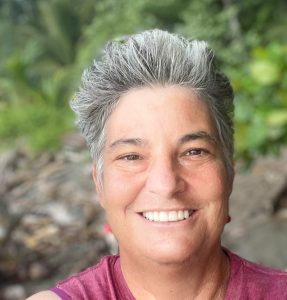
 Today we’d like to introduce you to Tracey Chester.
Hi Tracey, so excited to have you with us today. What can you tell us about your story?
I am the first therapist that offers surf therapy groups for people with invisible illnesses, such as chronic pain and autoimmune diseases. Most surf therapy is geared towards more visible diseases, such as autism, obvious physical disabilities, such as limb loss and paralysis, or groups like veterans with PTSD… My work is a personal mission to help patients struggling with chronic pain or illness to achieve a full meaningful life, despite their health struggles. I have personally experience the devastating effects of living with chronic pain, and this has informed my approach to working with clients and founding the San Diego Pain Trauma Institute. Our surf groups are a place where chronic illness patients can feel connected to others and feel less alone. I view most issues from a grief perspective, and this applies to chronic illness… Loss of body. Loss of the life you’d imagined loss of the childhood you wish you had. Once we can see things in terms of loss, we can grieve and move forward.” We can’t skip over this grief or spend most our time wishing it away
I just presented at ISTO (International Surftherapy Organization) in Puerto Rico to show my findings of a study I conducted with Dr. Jason Kutch at the University of Southern California. He looked at the neurological effects of surf therapy by measuring participants brains both before and after getting into the water. I Had each participant circle the words of pain they were feeling (McGill assessment) before and after. The initial results are inspiring; both Dr. Kutch and I saw a 50% reduction in pain during individual sessions, with even better results as participants continued surf therapy after the study was complete. I am excited to keep studying the effects of surf therapy and to raise awareness to the general public. Over 100 million Americans live with a chronic disease, and each one has family, friends, jobs that are affected. This is an invisible epidemic, and chronic illness is linked to childhood trauma another invisible epidemic…
I live with an autoimmune condition (Interstitial Cystitis, or IC), a rare autoimmune disease that affects the bladder. I also have had multiple cervical spine surgeries, amongst others, but I’m happy py to report that most of that pain went away. Underneath it all this whole time was IC. My body and my patient’s body do not work the same as they used to, and pain, discomfort, and crippling fatigue can often hold us back from our day-to-day. And because our illness is in an area that people don’t like to talk about, we keep it inside. The best way to describe this disease is that it feels like a severe UTI infection during flares, with spasms that mimic even a kidney stone, and feeling generally unwell, achy, sick, and tired.
Between flares, I am the person others seeee, feeling well, socializing, surfing. During a flare I am often curled up in a ball of pain and unable to do anything, thanking god for Zoom to see patients… To others who don’t see how I feel, it can look to them like missing events, showing up late or needing to cancel last minute due to pain. Or just needing to take a break. I play pickleball with retired people many 20 years older, who ask me why I am taking a break. Many dismiss it, and I don’t want to be known as the sick Tracey here because I no longer think of myself that way… This is the first new social group to navigate my pain, as they all think I am fit and healthy. I look fit and healthy, so they are surprised when I tell them I have to stop playing because I am more intolerant to heat. Poplle may see me as “flakey” or always late. I often feel depressed and anxious. And this and the fatigue makes me experience Isolation, hopelessness, and uncertainty. It can and does have large impacts on my day-to-day and long-term life plans.
I am 54, and before becoming a therapist and a mother, I was a geologist who traveled the world. I found it difficult when I went away, especially to Asia, where the time change led my two weeks of insomnia and despair. I didn’t understand it then; I didn’t even know what anxiety and depression was… I ended up leaving that field in my late 20s because of anxiety and depression, formally diagnosed as Bipolar 2, which I now understand to be the symptoms expressed due to complex developmental trauma in my very early life
My childhood core wound is one of invisibility and isolation. I grew up with a disabled sister 17 months my elder. When she was born, she was very sick and was thought to be dying. So, my parents decided to have another child to replace her. I was the replacement! Seems I never had an identify of my own to start. The time I spent in the womb was a time with a mother of a dying child. Research has shown stress can cross the placenta, and my brain was already primed for anxiety the moment I was born. But my sister didn’t die. So, when I was born, there was still doom in my household, and this led to many of the effects of physical and mental disease. When I would sometimes say to my mother, “I wish I didn’t have a disabled sister,” she would counter with “Without her you wouldn’t be alive.” I understood this to mean I was to be grateful for her illness, thus my feelings were invalid. This then became internalized to all of my feelings were invalid. Whatever happened, I interpreted to be my fault. The best example I have as to realizing this is when a boyfriend wronged me when I was 23 and slept with a friend of mine while I slept on the floor. I spent the next day upset with myself, and another friend said, “You know, that was a shitty thing to do.” I couldn’t understand this.
I, like other trauma survivors, coped by being ambitious and pleasing others. I am an organizer of social activities; I cope by making friends and gathering them for fun. For my own survival.
I have been married to my husband for 27 years and together 30 years. We have two grown children, and I am dealing with empty nest! I am a movie and tv buff because I spend much time at home when I am feeling badly. I play drums in a band, and I love music. It gets me through life. I can remember being a lonely child playing my 45 records on my record player. My childhood was very lonely when at home, but again I socialized as much as possible and did have good friends.
I am also an educator and provide CAMFT-Approved Trainings in Grief, Chronic Pain, and Ecotherapy.
I’m sure it wasn’t obstacle-free, but would you say the journey has been fairly smooth so far?
No, not smooth! I suffered from crippling insomnia in my 20s and especially after my children were born and I had no control of a sleeping schedule. I would lay in bed while my husband slept telling myself I was weak and awful because I couldn’t sleep. After they were both born (1999 my daughter, and 2001 my son), I was initially diagnosed with postpartum depression. I had left my career as a geologist and was now a stay-at-home mom while I prepared for a possible future career as a therapist. I was isolated, and during that time, we moved from the Bay Area, where I had lived since I studied geology at Stanford and then worked with a consulting firm where the travel made my mental state worse. These trips, I would not sleep for weeks.
As time went on, my diagnosis changed to bipolar 2. I worked with a therapist and psychiatrist for many many years, and without them, I don’t know where I’d be. They worked as a team, which I needed because I didn’t trust just one person’s advice. They got me through my years of chronic pain, surgeries, and dysfunctional friendships as I searched for stable friends to replace the family I did not have. I was unable to be the mother I wanted to be; I needed help and felt a burden to my husband. My depression became even more severe as my kids got older, and I didn’t have the structure of mommy groups when they were in preschool. I went back to school when my son started kindergarten, and life improved with the mental stimulation. During my 40s, I finished school and eventually got my license 8 years later as I coped with my health and being unable to get my required hours in a shorter amount of time. I don’t know how I did it, but again that survival mode I was in since childhood drove me. Once I got my license, I worked to try and help other people with chronic pain. It was lonely, I pounded the pavement to have pain doctors have me in their office. I ran groups for years where very few people could come. I didn’t know about Zoom and was wondering how I could do this online. 2020 came, and with that the experience I had helping others make their practices work with insurance, etc., I gathered as many experts as I could and started my clinic.
We moved to San Diego because it was more affordable than the Bay Area; I wanted warmer weather and primarily to learn to surf, I had taken a lesson in Waikiki when I was younger and stood right up and got hooked. I wasn’t able to learn in the cold and strong currents around San Francisco. So, I started in earnest at age 30. Surfing quickly became a passion but was really hard to do when I was exhausted and in pain. Finding Groundswell Communtity Project (non-profit surf therapy for trauma) in 2020 saved my life and led me to do what I am doing today. Still, it was and still is hard to do the work I do while dealing with being exhausted and sick.
Appreciate you sharing that. What should we know about Pain Trauma Institute?
I am the owner and founder of PTI.
I am a licensed marriage and family therapist, a certified grief instructor, a play therapist, a surf therapist, and a Certified Clinical Trauma Professional. What sets me apart is that I am advocating for chronic illness that so many people suffer from invisibly. I’m am an authentic woman and have suffered from many of the conditions that my patients do. Because of my own illness, I basically have a Ph.D. in chronic pain and also a large network of doctors I have found through my journey.
Pain Trauma Insitute is a trauma-informed clinic treating patients with chronic illness and chronic pain. I want every patient to feel the best they can and save them years of wandering around a broken medical system. Chronic Illness is a complicated issue, and having experienced it myself as both a patient and therapist, I saw a huge gap between mental health treatment and primary care physicians. While I know that every doctor wants a better outcome, there is a certain proportion of patients that frustrates them, and this often comes across in their interactions. What doctors perceive as a “non-compliant” patient may actually be a very capable, intelligent person whose trauma symptoms are so severe that it interferes with their ability to relay their symptoms, which, in turn, negatively affects their treatment and their quality of life.
Ideally, as a therapist, I would collaborate with my patients’ medical providers, but prior to this clinic, I found that most providers didn’t think they had any reason to hear my assessment. But now, with PTI, having gathered a multi-disciplinary collaborative team of physicians and therapists, we are able to work together for each individual.
I am on a mission that sets me apart from people? I intend to remove the barrier to mental health services that most sick patients have to deal with simply because very few doctors have the foresight to have a therapist in their office. I speak at conferences about this and am not getting far yet, but will do
I also developed waves of grief with Natalie Small, which has led to the waves of grief collective, run by Kelsey Ellis. I had the honor to present to the Office of the Surgeon General, Dr. Vivek Murthy in Half Moon Bay
I am proud I made this clinic and that we are moving the needle just a little on awareness of the isolation and pain that millions of people suffer from.
My clinic differs in that I have therapists, naturopaths, acupuncturists, and a medical doctor referral network with whom I collaborate. These doctors work WITH me, which is very important. (again, still working on them getting a therapist in the office). If they did just that, most people would be able to get help coping with their illnesses, and we can help by telling the doctor any information that will make the treatment successful.
go to my website (www.paintraumainstitute.com) to see the press and some podcasts I have been featured on
What are your plans for the future?
I am partnering with Daydream MD, a ketamine clinic that helps patients with chronic pain and PTSD. This is a very exciting development. Ketamine is considered the gold standard for depression from the AMA (American Medical Association) and has also been proven to help the most severe of pain disorders.
I would like to advance the study of trauma and pain by putting together educational programs, conducting research, and ultimately initiating new protocols for the mental and physical health treatments of chronic pain. I am especially interested in developing training programs for doctors regarding trauma and illness and how it affects their treatment outcomes. I have partnered with like-minded physicians to develop programs that empower patients and relieve physician fatigue and frustration.
Pricing:
- We take health insurance fr some of the services
- Surf Therapy Individual (225)
- Trauma Therapy (175 first appt, 150 after)
- Group Therapy 50/session
Contact Info:
- Website: www.paintraumainstitute.com
- Instagram: sdpaintraumainstitute
- Linkedin: https://www.linkedin.com/in/tracey-chester-0b0493288/
- Youtube: www.youtube.com/@paintraumainstitutesandieg8634
- SoundCloud: https://soundcloud.com/tracey-chester


Image Credits
TLC PRODUCTION
Surf with Amigas