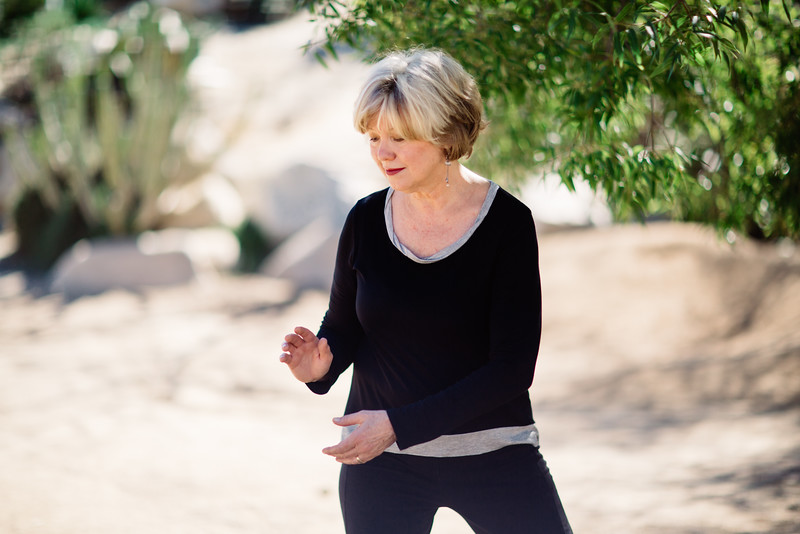
Today we’d like to introduce you to Kathi Diamant.
Hi Kathi, so excited to have you with us today. What can you tell us about your story?
My lucky number has been 108 since I was 8 years old. In 1960, as I entered my third grade classroom for the first time, I was stopped by the number above the door: 108. I can still see it, those three numbers: the line, the circle, and my age.
I knew it was deeply significant, and I decided that it meant the most I could imagine: that I would live until I was 108 years old. I still believe it. I have thirty-five more years to go, and based on how quickly time has flown, I’ll need everyone of them.
Since then, the number 108 has proved itself to me over and over again, as a sign to notice the moment I’m inhabiting, to become aware of what I am thinking and doing at that moment. Every day 108 offers itself to me in one form or another: on a license plate on a passing car, a book page with a memorable quote, my seat in the theatre, the room in the hotel, the time on the clock, which can happen twice a day. Over the years, it has become for me a sign that the universe is in order, and all will be well.
For over half a century, 108 was my own private, if slightly quirky, lucky number. Then, about 20 years ago, 108 started to pop up in other places. I learned yogis practice the sun salutation posture 108 times. The Chinese living in Japan bong a gong on the Chinese New Year 108 times. In the movie Bull Durham, Susan Sarandon says: “There are 108 beads in a Catholic rosary and 108 stitches in a baseball.” It’s true, the Catholic rosary did originally contain 108 beads, but it was streamlined to 59 after Vatican II.
I googled 108 to see what would come up, and was stunned by the SIGNIFICANCE of the number. There is a whole website dedicated to it. It has meaning in every avenue of life, in physics, mathematics, astrology, astronomy, geology, and in every major world religion, including Judaism, Hinduism, Islam, and in the Jain, Tantric, Taoist, and Buddhist traditions. 108 has been called “a road map of reality.”
One of the most practical benefits of the number in my life is in the ancient Chinese practice of Tai Chi, which has 108 moves.
In 1999, I was in Bejing, China, and saw groups of people practicing different forms in a large city park. I’d enjoyed flowing tai chi since college days, but never learned all the moves. Shortly after my return to San Diego, a new tai chi class started at my local YMCA. The instructor, a 5th generation Honor of Master in Wu-style Tai Chi, informed us that Tai Chi would be our life’s riches, and that we were all his life-long students. I was unconvinced. He told us that Tai Chi has 108 moves, and my heart and mind opened to the possibility.
Practiced in China for thousands of years, tai chi is a slow, gentle moving meditation, used for centuries to improve balance, build strength, and release stress and tension. Modern science has shown that it improves health outcomes significantly, and also works to balance both hemispheres of the brain. The Arthritis Foundation reported that nothing was more effective in the prevention and treatment of arthritis than the regular practice of tai chi.
I have been a student of Master Henry Cheng since that first class in 2000, and was certified in 2006 as a Wu-style Tai Chi instructor. While teaching the form hasn’t made me rich, it has made my life infinitely richer, in mental and physical health, and in happiness, building friendships and community through the teaching. I now teach two beginning tai chi and qigong classes in Pan’s Garden in Sherman Heights on Mondays, and see private students by appointment.
Can you talk to us a bit about the challenges and lessons you’ve learned along the way. Looking back would you say it’s been easy or smooth in retrospect?
Learning any new skill takes time and effort, so there was that. But learning and practicing tai chi has not been a struggle at all, but rather a way to practice perseverance, a daily act of remembering and slowing down. The practice utilizes no force, no effort. It’s been a building, a growing, a process of becoming. The reward of patience is patience. Learning one new move a week, it takes about two years to learn the whole form. Taking 5-10 minutes every day to practice the new move, and to add it to the moves that have gone before, builds a habit of health, that produces so many life-enhancing benefits.
Alright, so let’s switch gears a bit and talk business. What should we know about your work?
My 50-year career as a professional performer includes work in theatre, television and film, as an emcee and public speaker, and as a writer/author. I am also a published author of two biographies, a freelance writer with hundreds of articles on entertainment, travel, and lifestyle, and an adjunct professor at SDSU. I still appear on air on PBS as an anchor/host for fundraising, I started the Kafka Project at SDSU in 1998, the official search for a lost literary treasure, research which continues and takes me to Berlin, Germany for a month every year.
But the work that brings me the most benefit and joy is that of Tai Chi/Qigong instructor. I started teaching tai chi at the Mission Valley YMCA in 2008, and branched out to other YMCAs, as well as at recreation and community centers, and at yoga and fitness studios. Since 2022, I have taught exclusively in my garden in Sherman Heights, a historic residential neighborhood near downtown. Since I hope to live until the age of 108, I plan to continue my practice of 108 Tai Chi moves right up until the end of my life. It may be just the thing that gets me there!
Before we let you go, we’ve got to ask if you have any advice for those who are just starting out?
No matter what your field, practice, patience, and perseverance are the keys to a successful and happy life. Learning tai chi offers lessons in all those areas.
Pricing:
- $10 per class
Contact Info:
- Website: https://kathidiamant.sdsu.edu/tai-chi.html
- LinkedIn: https://www.linkedin.com/in/kathi-diamant-7489417
- Other: http://kafka.sdsu.edu
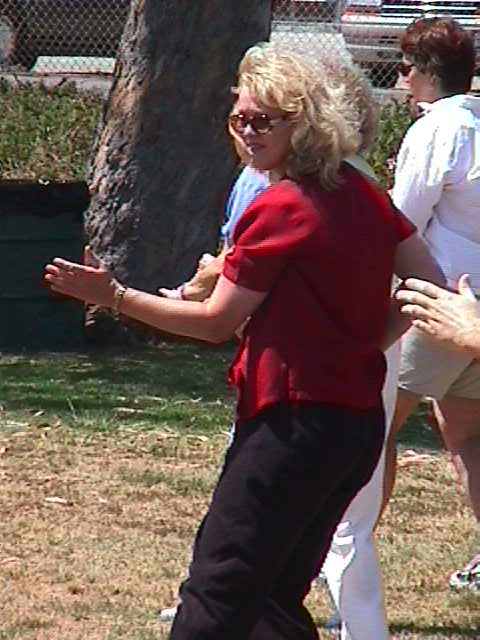
Image Credits
(c)kathidiamant