Today we’d like to introduce you to Julien Brandt.
Hi Julien, can you start by introducing yourself? We’d love to learn more about how you got to where you are today?
My entrepreneurial journey started in 2010 when I founded OrganikSEO, a digital marketing agency here in San Diego. I bootstrapped the company and spent the next several years learning how to build a team, serve clients, navigate uncertainty, and grow a business.
From the beginning, I wanted to build a company that could be financially successful while also having a positive impact. OrganikSEO became one of the first 10 Certified B Corporations in San Diego and was also registered as a California benefit corporation. I was an early adopter of the movement because the triple bottom line philosophy deeply resonated with me, especially the belief that a business should place equal focus on people, planet, and profit. That mindset shaped how we built our culture, served our clients, and made decisions.
In 2018, OrganikSEO merged with another prominent local digital marketing agency, and we created Digitopia, beginning a new chapter of growth and leadership for me. I assumed the role of Chief Culture Officer, focused on recruiting and retention. Shortly after the merger, COVID hit, and I eventually stepped back into the CEO role before selling the business in 2023. That sale gave me the opportunity to spend time traveling with my family, gain a new perspective, and think carefully about what I wanted to build next.
Around that time, AI was beginning to change how businesses operate. I saw tremendous potential, but I also saw a growing gap between what the technology could do and what most business owners and their teams actually knew how to use. Many people were overwhelmed by the tools, unsure where to begin, or struggling to turn experimentation into something practical.
That led me to start Ampra.ai. We help established small and midsize businesses adopt AI and automation in ways that save time, reduce friction, and make work better for their teams. I am not interested in AI for the sake of AI, and I do not believe the goal should be to replace people. The real opportunity is to help people spend less time on repetitive work and more time using their judgment, creativity, and experience. My north star now is to help people do less of what drains them and more of what drives them.
In many ways, Ampra brings together everything I have learned over more than 15 years about entrepreneurship, technology, people, and organizational change. The values are also very much connected to what I believed when I started OrganikSEO. Technology and business should ultimately serve people and contribute to something bigger than growth alone.
Today, I am focused on growing Ampra while building the kind of company that supports a meaningful life, not one that consumes it. I still love building, solving problems, and helping other entrepreneurs grow. I am just doing it now with a much clearer understanding of what success means to me.
Alright, so let’s dig a little deeper into the story – has it been an easy path overall and if not, what were the challenges you’ve had to overcome?
It definitely has not been a smooth road. Like most entrepreneurs, I have made plenty of mistakes, taken on too much, and learned some lessons the hard way.
In the early years of OrganikSEO, I was figuring things out as I went. I had to learn how to move from doing the work myself to building a team, creating systems, and becoming a leader. Those are very different skills, and that transition was not always easy. As the company grew, I also had to learn that working harder was not always the answer. Sometimes the real challenge was letting go, trusting other people, and getting out of the way.
The merger that created Digitopia brought another set of challenges. Combining two companies meant bringing together different people, cultures, processes, and ways of working. Then, shortly after the merger, COVID hit. Within one week, we lost roughly half of our monthly revenue. The economy had effectively shut down, and many businesses immediately paused their accounts payable and cut spending because no one knew what was going to happen.
As was the case for most businesses, we had to navigate the company through an incredibly uncertain period with no clear playbook. We had to make difficult decisions quickly while trying to protect the business and take care of our team. I felt a real responsibility for the people who worked with us and the families who depended on them, which made every decision feel personal.
Selling the company was a major accomplishment, but what came afterward was challenging in a completely different way. For more than a decade, so much of my identity had been connected to the business. Once that chapter ended, I had to figure out what I actually wanted next.
That process took longer than I expected. I had to separate what I was good at from what genuinely gave me fulfillment and joy. I also had to become honest about which parts of entrepreneurship energized me and which created ongoing stress and anxiety. Success can become its own kind of momentum, and it is easy to keep pursuing the next goal without stopping to ask whether it is still the right one.
Starting Ampra has brought me back to the early stages of entrepreneurship, but with more experience and a different perspective. I am still ambitious, but I am much more intentional about what I am building and why. One of the biggest lessons from the entire journey is that success is not just about growth. It is also about building something sustainable that serves your clients, your team, and the life you want to live.
Thanks for sharing that. So, maybe next you can tell us a bit more about your business?
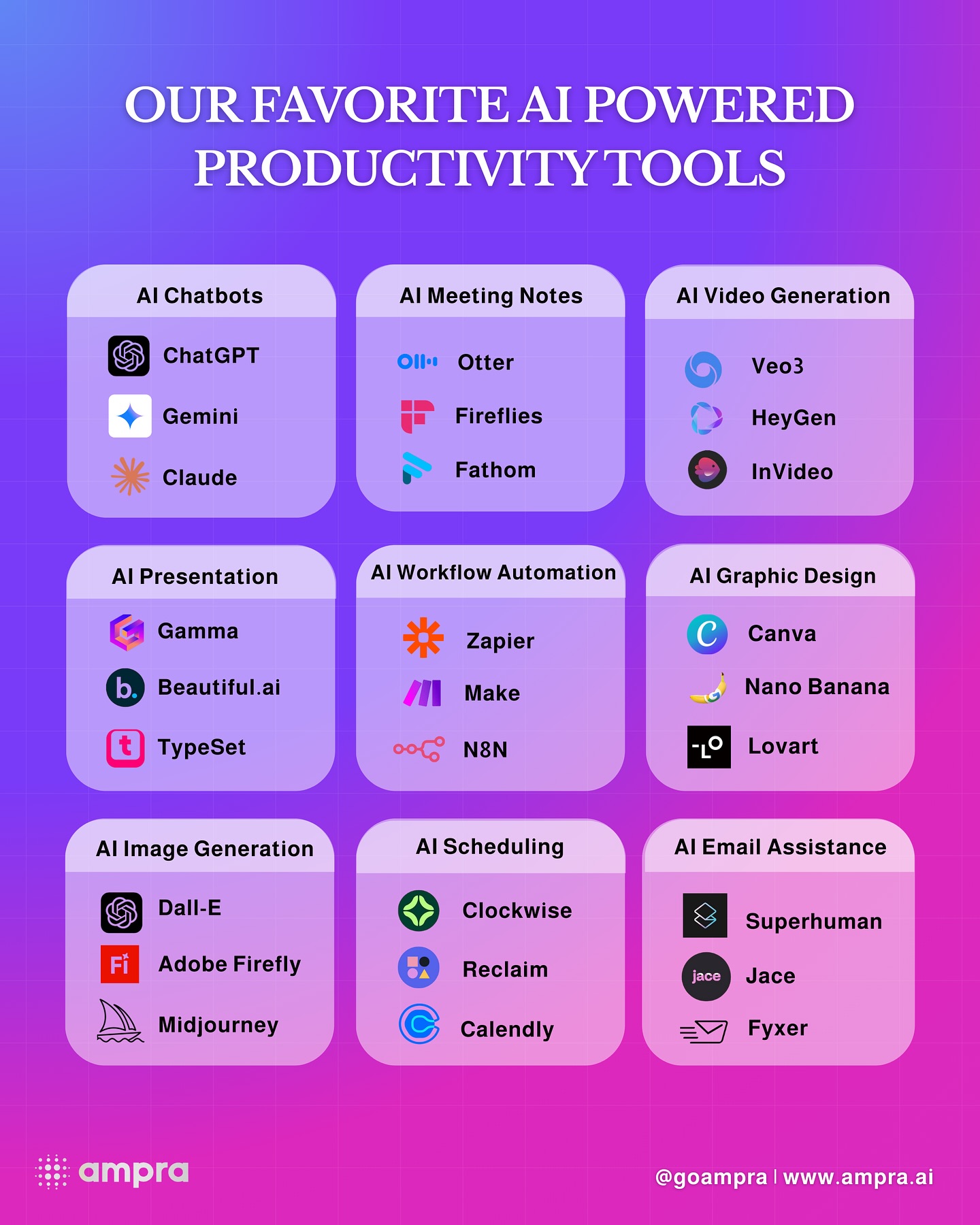
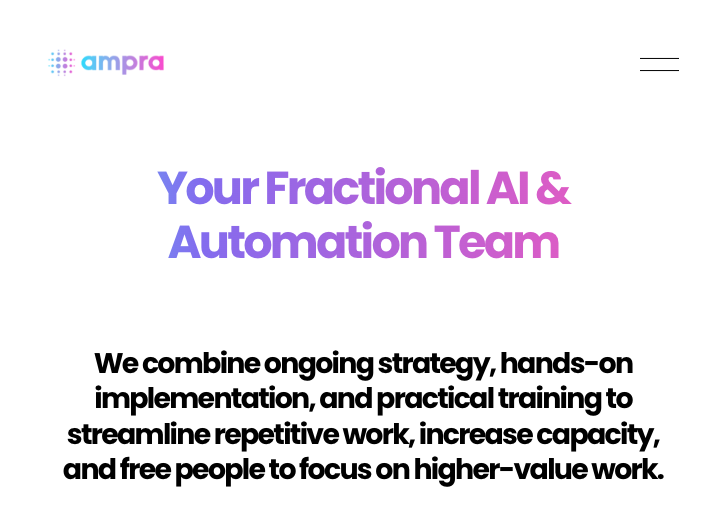
Ampra.ai is a fractional AI and automation team for established small and midsize businesses. We help companies figure out where AI and automation can make a meaningful difference, then work alongside their teams to actually implement those ideas.
Most businesses do not need more technology. They already have plenty of tools. What they need is help identifying the repetitive work, disconnected systems, and manual handoffs that are slowing people down. We start by understanding how the work actually gets done, where the bottlenecks are, and which improvements will create the most value. From there, we help prioritize the opportunities, build the solutions, train the team, and make sure the changes stick.
What sets Ampra apart is that we combine strategy, hands-on implementation, training, and adoption support. We are not simply consultants who leave behind a list of recommendations, and we are not technologists who build something without understanding the people or the business behind it. Our clients work with both an AI Strategist and an Automation Architect, giving them the business and technical expertise they need without having to build an internal department.
We also take a workflow-first, tool-agnostic approach. We try to make the systems our clients already use work better before asking them to adopt something new. The goal is not to automate everything. It is to automate the right work while keeping people involved wherever experience, judgment, creativity, or relationships matter.
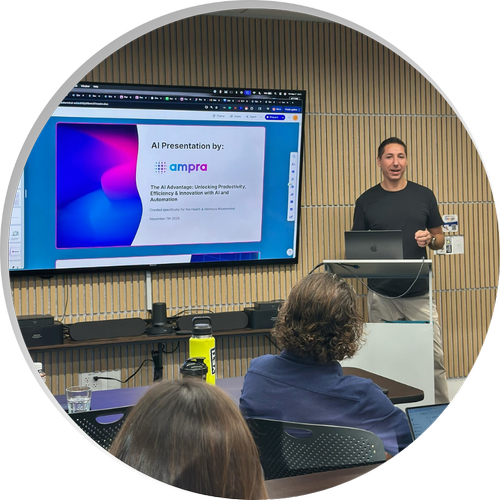
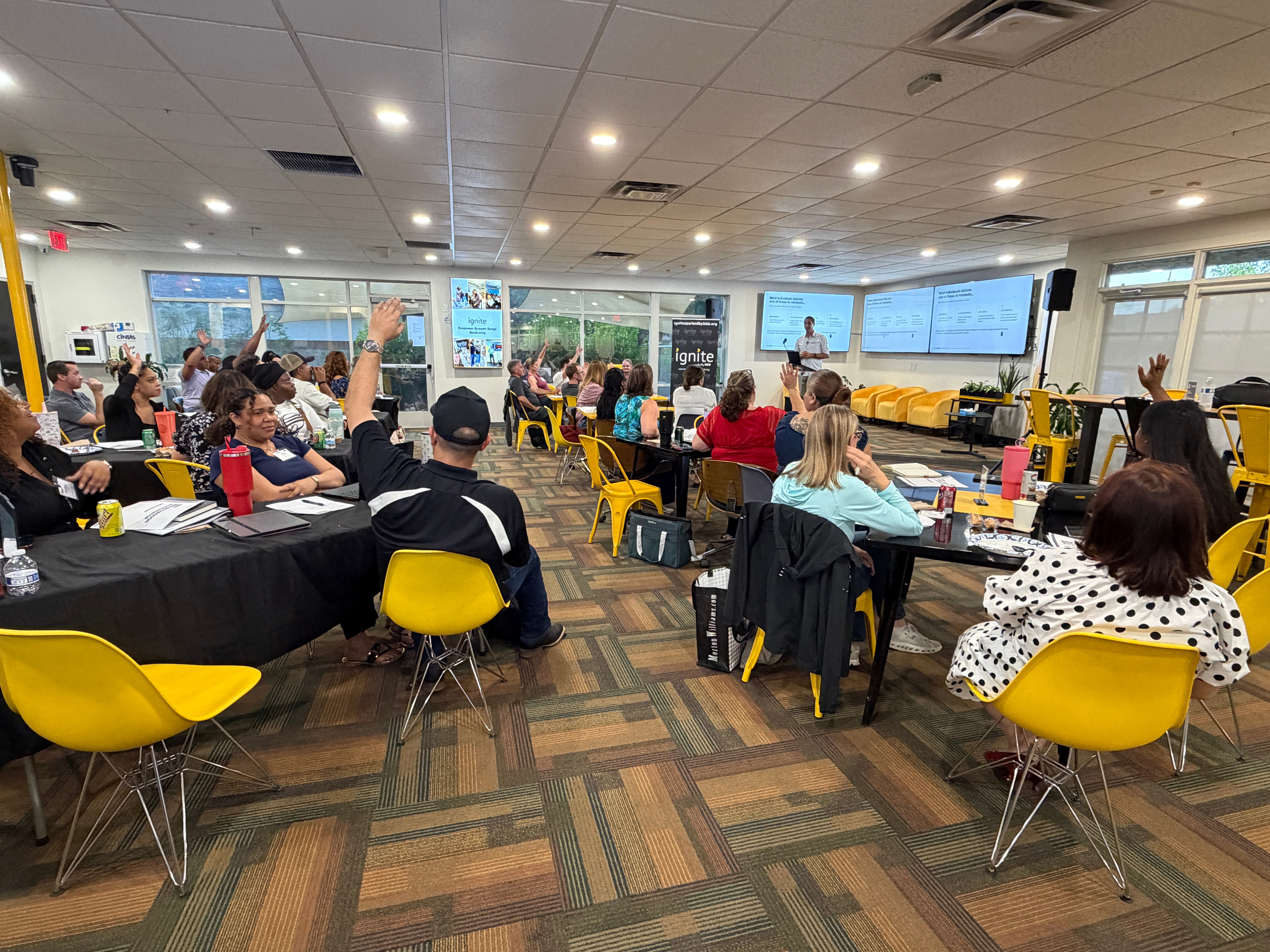
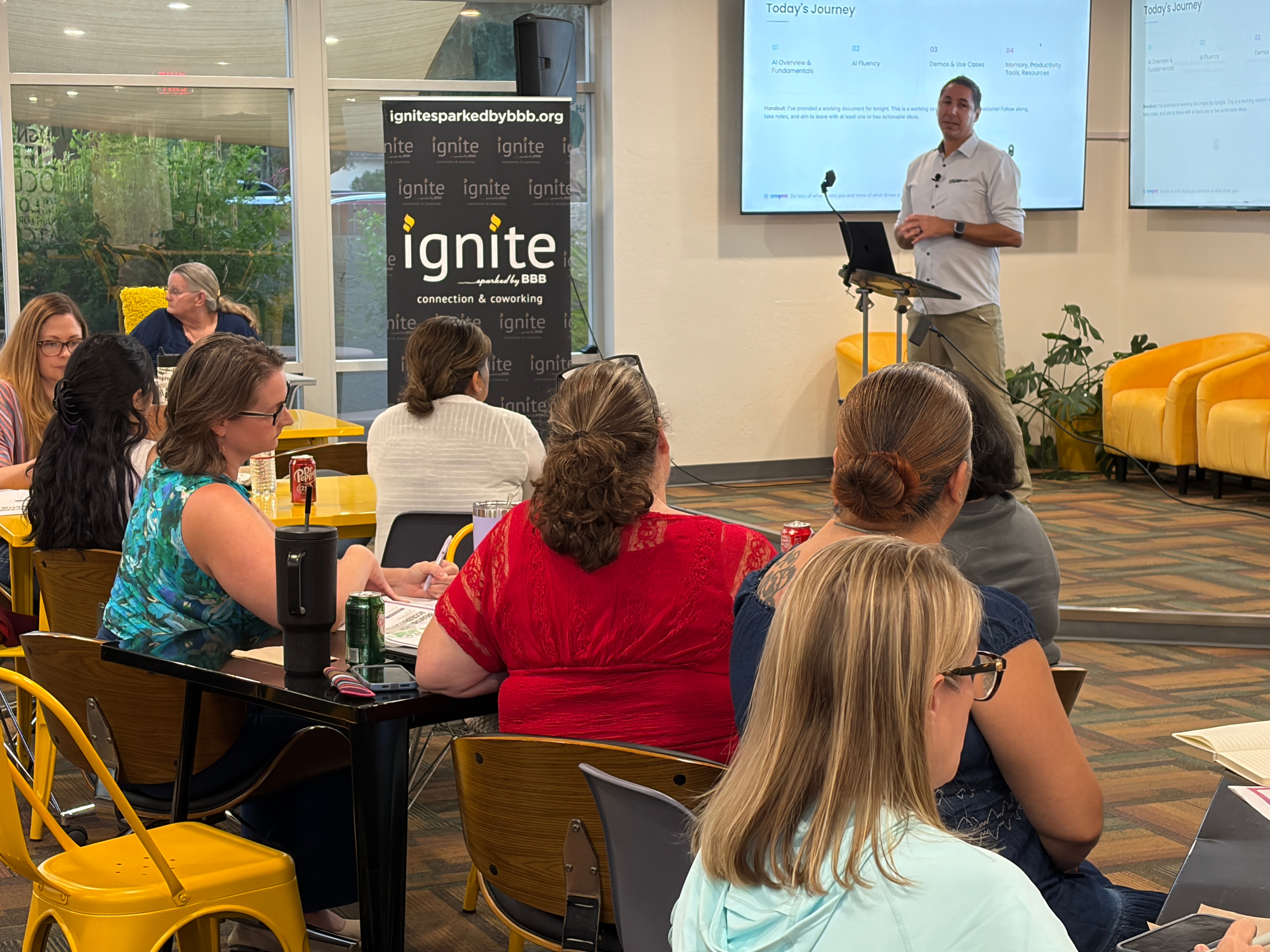
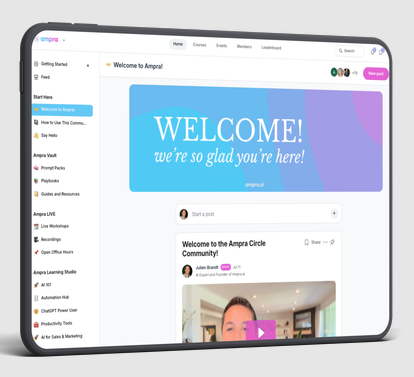
Our services include ongoing fractional AI and automation partnerships, focused strategy and build sessions, and practical AI training for teams. I also run Ampra Circle, a community where business leaders can learn, share ideas, and get ongoing support as the technology continues to evolve.
What I am most proud of is that we have stayed focused on the human side of this work. AI can sound intimidating or impersonal, but our goal is the opposite. We want to use it to make work more human by reducing busywork, creating capacity, and helping people spend more time doing what they are uniquely good at.
Our north star is simple: help people do less of what drains them and more of what drives them.
What were you like growing up?
I was a curious kid and always wanted to understand how things worked. I was naturally entrepreneurial, although I probably would not have used that word at the time. I liked finding ways to make money, working independently, and having the freedom to make my own decisions.
I was interested in a lot of different things. I played soccer and tennis, loved cars, and was fascinated by computers. I spent countless hours playing SimCity on our old Macintosh SE in the late 1980s, which probably says something about my early interest in building and understanding systems. I was also drawn to music, art, design, and architecture. I took AP Architecture in high school and started using Photoshop shortly after it came out, then continued using it throughout college and into my early professional career.
I also started working at a pretty young age. In middle school, I worked for a neighbor who owned a deli and catering company. Later, I worked in high-end restaurants, first as a busser and eventually as a server. That work helped get me through college and taught me a lot about responsibility, customer service, managing expectations, building relationships, and working with different kinds of people.
My interest in travel, freedom, and autonomy was probably influenced by my parents. They were both hippies in their own ways. One attended UC Berkeley in the late 1960’s and spent years sailing around the world. The other lived almost entirely off the grid. I grew up seeing that there was not just one way to build a life, and that it was possible to choose a path that looked different from what everyone else was doing.
Travel became a big interest of mine from an early age. I loved experiencing new places and cultures, but I think what appealed to me just as much was the sense of freedom and possibility that came with it. Freedom and autonomy have always been important to me, both personally and professionally.
Looking back, there is a pretty clear connection between who I was growing up and what I do today. I still love understanding systems, combining creativity with technology, building things, unlocking opportunity, and creating the freedom to follow my curiosity.
Pricing:
- $5,000 for a Fractional AI and Automation team which includes weekly working sessions and ongoing build/development time
- We have options above and below that depending on the needs of our clients and how fast they want to move.
- We also have an online community people can join for $49/mo at: https://www.ampra.ai/community
Contact Info:
- Website: https://www.ampra.ai
- Instagram: https://www.instagram.com/goampra
- Facebook: https://www.facebook.com/goampra
- LinkedIn: https://www.linkedin.com/in/julienbrandt/
- Twitter: https://x.com/julienbrandt
- Youtube: https://www.youtube.com/@goampra
- Other: https://www.ampra.ai/links