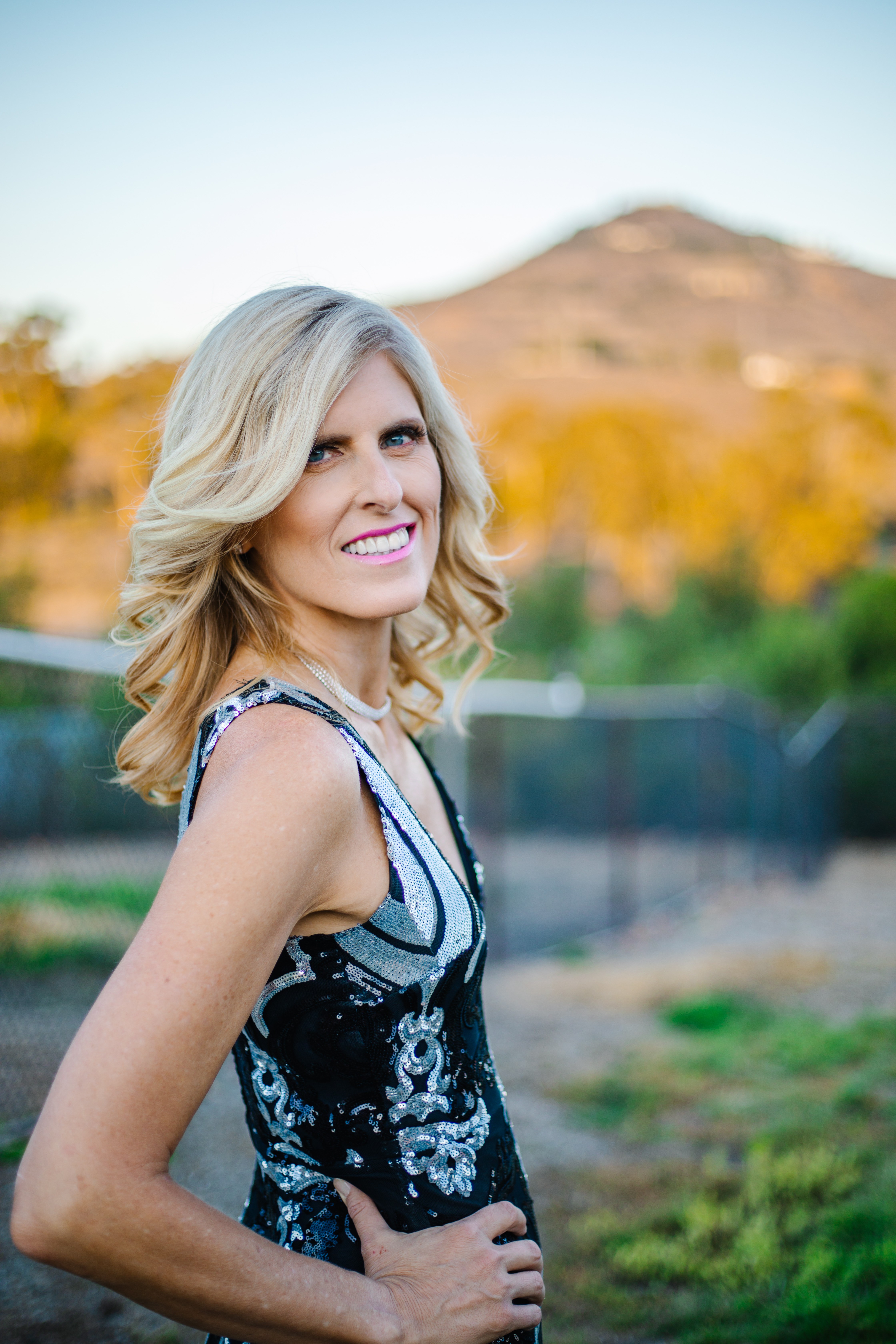
Today we’d like to introduce you to Corrie Blough.
Hi Corrie, can you start by introducing yourself? We’d love to learn more about how you got to where you are today?
I grew up obsessed with dogs and always considered myself an animal lover, although, like many people, I did not initially connect that love with the food I ate.
That began to change when I was 15 and my family moved from Washington to Missouri. For one summer, we rented a house in the country surrounded by cows. My first friend there was a cow I named Brutus. I would spend time with Brutus and then go inside to find hamburgers being served for dinner. That was probably the first time I stopped to consider the connection.
In college, those seeds began to grow, and I became vegetarian, although not always consistently. Then, in 2013, everything changed. I started reading Eating Animals by Jonathan Safran Foer and then spent a weekend learning about factory farming and slaughterhouses on YouTube. At that point, I was married and had two young daughters. I became vegan almost overnight.
Soon afterward, I took my daughters to visit Farm Sanctuary. They joyfully met the cows, pigs, goats, chickens, turkey and sheep. I explained that these are the same kinds of animals people eat. For them, the connection was immediate. They decided they did not want to eat animals either.
But for me, changing what I ate was only the beginning. I felt called to do more. I wanted to rescue farm animals, create a place where people could meet them, and raise my children with a deeper understanding of compassion and responsibility.
I enlisted my husband, Andy, who is a real estate broker, to help find a home where we could have land. We were living a comfortable suburban life in Carmel Valley, and neither of us had a background in farming or running an animal sanctuary. I had a demanding professional career, and our daughters were busy with school, sports, and activities. We did not know exactly how we would make it work. We simply knew that we wanted to try.
Andy found a home on 2.5 acres in Olivenhain. The property had multiple offers, and ours was nowhere near the highest. I wrote a letter to the seller describing our dream of creating a farm sanctuary. He chose us because of that dream. It felt like fate.
When we moved in during the summer of 2016, the property looked nothing like it does today. There were few trees, no barns, almost no fencing, and hard, rocky ground covered with brush. I began animal-care training through Farm Sanctuary and volunteered with the local horse rescue Saving Horses. We slowly built fencing, and by the end of 2017, we had constructed our first barn and rescued our first two goats. Two goats quickly became six. Then came another pasture, another barn, another goat, and eventually a donkey.
Today, Fortuna Ranch Farm Sanctuary is home to 13 rescued goats. We have five enclosed pasture areas, three fenced walkways, and six goat barns. We have deliberately remained small enough to provide lifelong, individualized care while still being accessible to the surrounding community.
Our vision has also grown beyond animal rescue. During COVID, Andy began transforming the land through gardening. What was once rocky, difficult ground now holds more than 200 fruit, nut, and avocado trees, along with berries, vegetables, lettuces, microgreens, and other gardens. We use composted goat manure to build healthy soil and follow regenerative growing practices.
We became a 501(c)(3) nonprofit in 2020 and began welcoming chapters of Teen Volunteers in Action. The sanctuary’s mission evolved into three interconnected areas: animals, plants, and education. For years, we have hosted Teen Volunteers in Action chapters, where young volunteers help care for the property, learn how food is grown, and, sometimes for the first time, form personal relationships with farm animals.
Our latest evolution of our sanctuary movement involves sharing excess produce with people in need, including young adults who have aged out of foster care and are learning to live independently. Volunteers help pick, process, preserve, and prepare the food for donation. The goats contribute to the compost that nourishes the soil, the land produces food, and the community helps bring that food to people who can use it.
That cycle captures what Fortuna Ranch has become. It is a small sanctuary, but it demonstrates how animals, plants, people, and the environment can support one another. We are not asking everyone who visits to change everything overnight. We hope they leave having experienced something meaningful and perhaps carrying home a seed of their own.
I’m sure it wasn’t obstacle-free, but would you say the journey has been fairly smooth so far?
It has definitely not been a smooth road.
When we began, I was new to caring for farm animals, and it was frightening to be responsible for lives when I still had so much to learn. Finding veterinary care that treated farm animals as individuals deserving of sophisticated, long-term care was also difficult. We are fortunate now to work with Shiloh Veterinary Hospital, but early on, there were many moments when we were urgently trying to find someone with the knowledge and willingness to help.
Farm animals can also have complicated health conditions, particularly because many have been bred for production rather than longevity. Providing them with dignified lifelong care can be extremely expensive, especially when several animals develop medical problems at the same time. We have had to learn about specialized surgeries, chronic pain management, mobility issues, cancer, arthritis, hoof care, nutritional needs, and end-of-life decisions.
Some of the hardest experiences have also shown us what commitment really means.
Henry, one of our first rescues, developed a urinary obstruction and would have died within 48 hours without complex surgery. One former dairy goat arrived with horrific mastitis. My husband, daughters, and I worked together every day to treat her painful infection, only to learn later that she had cancer (and 3 years later, she’s still with us living her best life)! Charles came to us at 3 months old after being attacked by a dog at a meat farm. Because he needed to be quarantined and introduced slowly to the herd, my daughter slept outside in a tent near him for weeks while I worked beside him during the day. Mick Jagger eventually became unable to walk normally and moved on his knees for months before we found a combination of treatments that helped him regain mobility and manage his pain.
The daily workload was also relentless. For years, I would get up around 6:00 a.m., feed the animals, clean barns, provide medical care, work my full-time job, and then return to do it all again. When I traveled for work, my family stepped in. There were years when we had wonderful help and years when we had very little. During the difficult periods, sanctuary work could feel extraordinarily isolating.
Rain makes everything harder. Illness does not wait for a convenient time. Animals still need to be fed on holidays, during work deadlines, and when everyone in the family is exhausted. Rescue is not one dramatic moment when an animal arrives. It is a promise to keep showing up every day for the rest of that animal’s life.
There have also been less visible challenges. We spent years building barns, pastures, gardens, and gathering spaces without knowing whether a broader community would ever form around them. We knew the experience our farm could provide, but connecting with people and fundraising were not necessarily our natural strengths.
Slowly, that began to change. We built a large barn space with a prep kitchen overlooking the goat pastures and began opening the property more intentionally. Volunteers, board members, friends, and people with complementary skills started finding us. We now have a barn manager, Ken, living on the property to assist with daily feeding and barn work, which allows me to concentrate more on animal care, programs, and projects. We are hosting community gatherings, meet-up groups and cocktail hours, enabling the community to come experience fresh air, the kindness of animals, and a community of new friends.
Even during the hardest periods, there are moments of complete peace. At night, I cherish sitting beside Mick Jagger while giving him laser therapy for arthritis. Soothing music plays while I cuddle him, and several of the other goats gather around us, quiet and content. There is full trust in those moments.
Those are not dramatic acts that make headlines. They are simply the result of showing up, day after day. That is what sanctuary life really is.
Thanks for sharing that. So, maybe next you can tell us a bit more about your work?
Fortuna Ranch is a major part of my life, but it is not my full-time profession. I have spent my career in law, international tax, and transfer pricing, currently serving in a senior leadership role for a global company. My husband, Andy, is a real estate broker.
Our professional careers may seem very different from running a farm-animal sanctuary, but the skills we developed through our work have been invaluable. We bring different strengths that complement each other. Andy understands real estate, construction, property planning, land management, irrigation, gardening, and the physical development of the sanctuary. My professional work has trained me to analyze complex issues, manage risk, develop processes, lead teams, manage finances, plan for the long term, and build the operational structure behind an organization.
Neither of us started as a farmer, animal-care expert, horticulturist, or nonprofit fundraiser. We studied, volunteered, sought training, found knowledgeable veterinarians and advisors, and learned from experience. That is part of the example I hope our story provides: you do not need to begin as an expert to make a difference. You do, however, need to be willing to learn and to take your responsibilities seriously.
We feel strongly about rescuing responsibly. People who rescue animals often have enormous hearts but love alone cannot sustain a sanctuary. Every animal represents a long-term financial, medical, physical, and emotional commitment. Before accepting another animal, a sanctuary must consider available space, herd dynamics, staffing, fencing, shelter, veterinary access, emergency planning, and the cost of care throughout that animal’s life.
That is one reason we have chosen to remain intentionally small. Our goal is not to rescue the greatest possible number of animals. It is to make a lifelong promise to every animal we bring home and to keep that promise without compromising the care of the animals already here.
Continuing our professional careers has helped make that possible. Our jobs fund much of the sanctuary’s care and infrastructure, particularly because fundraising is not yet one of our strengths. We work, make choices about how we spend our resources, and devote a significant part of our lives to these animals because we accepted responsibility for them.
There is also a broader lesson in balancing these two worlds. People sometimes assume they must leave their career, completely change their lives, or possess specialized expertise before they can contribute meaningfully. That is not true. Professional skills can be redirected toward causes that matter deeply. Someone can help a nonprofit with accounting, legal work, construction, technology, education, fundraising, communications, gardening, event planning, or simply reliable volunteer service.
Not everyone needs to start a sanctuary. In fact, most people probably should not. But almost everyone has a skill that an existing sanctuary or community organization needs.
Can you talk to us a bit about happiness and what makes you happy?
Happiness, for me, is seeing life flourish.
It is watching goats who were once discarded grow old with safety, friendship, medical care, and dignity. It is seeing them form close bonds, navigate their own herd politics, protect one another, argue, reconcile, and then sleep side by side. Their relationships are far more complex than many people expect.
It is sitting quietly beside Mick Jagger at night while I treat his arthritis, surrounded by the rest of the herd. It is the trust of an animal who knows that he is safe and loved.
It is watching a teenager meet a goat for the first time and realize that the goat seeks affection, family, comfort, and life much like the dog waiting at home. It is seeing a child hug a goat and then run excitedly across the pasture because scooping goat poop suddenly seems like the greatest job in the world.
It is watching bees pollinate a fruit tree and later picking food from that same tree. It is remembering that our property was once rocky and barren, and then looking around at more than 200 trees, thriving gardens, healthy soil, busy volunteers, dogs barking and goats resting in the shade.
It is seeing the full circle: goats helping create compost, compost nurturing the soil, the soil producing nutrient-dense food, and volunteers preparing that food for someone who needs it.
My family makes me happy too. None of this would have been possible without Andy or our daughters, Joselyn and Jayda. Our daughters grew up learning that compassion is not only something we feel. It is something we practice, often through inconvenient, messy, physically exhausting work. I am proud of the young women they have become and of the resilience and empathy they developed along the way.
I am also deeply grateful for Ken, our board of directors, our volunteers, and the friends who have supported us. The sanctuary may be on our property, but it has become much bigger than our family. It takes a village to sustain it, and that village is still growing.
What makes me happiest is the possibility of creating something hopeful. Fortuna Ranch cannot solve every problem. We cannot rescue every animal, feed every person, or persuade everyone to live exactly as we do. But we can care exceptionally well for the animals who are here. We can grow and share healthy food. We can teach young people where food comes from. We can create a place where people slow down, connect with animals and the land, and consider how their choices affect the environment and other living beings.
This is our little slice of heaven, and one of my greatest joys is sharing it with others.
Contact Info:
- Website: https://www.fortunaranchfarmsanctuary.com
- Instagram: @fortunaranchfarmsanctuary