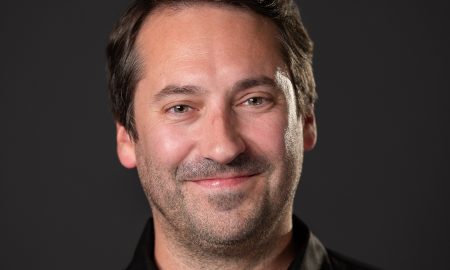
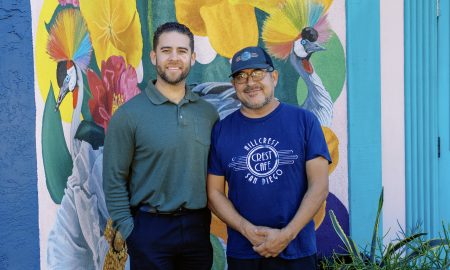
Today we’d like to introduce you to David S. Dawson.
Every artist has a unique story. Can you briefly walk us through yours?
I’ve called many places across the United States home. I was born in Idaho to an American father and a Filipino mother. My Dad was in the navy and he met my Mom during the Vietnam conflict when he was on shore leave in Manila. Legend has it, the self-proclaimed nerd met my Mom on shore leave when he and his buddies were in Manila looking for something to do. He heard an angelic voice singing “Killing Me Softly” emanating from one of the bars. He went in to see who was singing so beautifully. There on stage, alone with her guitar was my Mom. My Mother was very beautiful and an extremely talented musician. My Dad fell for her right then and there. My Mom, however, took a bit longer to fall for my Dad. Eventually he won her over with incredibly well written love letters, and lots of flowers. I think it’s this blend of the intellectual and the artist that has found its synchronicity in myself.
After three kids and ten years together, my parents ended up divorcing. In the end they couldn’t work out their differences, so my sisters and I eventually went to live with Dad who had the more stable environment for our upbringing. Being a nuclear engineer and former Navy man, he kept our lives structured and safe. But he wasn’t all work and no play either. He also encouraged us to play sports and go to the theatre and enjoy art and culture. Mom, who chose a less structured life after their divorce, became our outlet for release from the structure of Dad’s home during our summertime and holiday visits. Time with her was like going to camp. There was no structure at all. We stayed up as late as we wanted, watched hundreds of movies, enjoyed days and days of singing Karaoke and took frequent trips to San Francisco. This dual household existence where the structure of both was so different was a fun way to grow up.
Of course, there was also a dark side to my parents’ divorce as I myself became embroiled in a life of drugs, alcohol and sexual abuse at a very early age. For about three years my parents were separated and coping poorly with this new reality they were creating and without meaning for it to happen, they kind of became absent for large periods of time. Leaving me with a lot of freedom for a third grader. Far more freedom than any third grader should ever be given. And I was lost in a lot of troubling and dangerous situations. My parents never really knew until much later in life that I went through any of that during their difficult separation years. I was a smart kid, and even at a young age, I was able to hide from them the experiences I was going through. Of course, hiding those experiences eventually led me to a dark place in life where I felt nothing but resentment and anger for what I’d been through. Unfortunately, I took that out on them as a teenager and well into my twenties. I was horrible to them both. It took many years for me to process through my pain, and many therapist visits. Eventually I was able to figure out how to manage my feelings and forgive my parents for those years where I lost some portion of my childhood and my innocence in their absence. But it was a long, difficult and emotional journey.
Through all of it though, my parents never made me feel anything less than loved. Sure, they were a bit preoccupied with their own turmoil for a while with sad consequences, but they completely and unconditionally loved their children. No matter what I was going through, no matter how angry I was, or how horrible I was, they always showed me their support and their encouragement to find my way.
I think I chose the path of a filmmaker, ultimately, so that I could tell stories like my own. To tell stories of great heartache, grief, pain and loss that lead to a final destination of hope, growth and love. I believe that is what my personal trials were there for. To educate me in the duality of existence so that I can tell those stories on screen for others to learn from, find comfort in and hopefully see some part of themselves in.
Please tell us about your art.
As a filmmaker I’ve chosen the art of storytelling. My Dad was a writer at heart, and my Mom was a singer. I enjoy this particular medium because it is a collection of many fields of art all brought together to create one cohesive piece. As a producer and a director, I take pride in knowing that I am surrounding myself constantly with writers, musicians, performers, costumers, makeup-artists, sculptors, lighting designers, photographers and much more to create our art together. I think this goes back to my dual upbringing of the intellect and the artist. I thrive in an environment of voices. I love bringing together a collective of people with different backgrounds, different tastes and blending them together to create something magical that none of us could do alone.
This collaborative nature of filmmaking is what really excites me. I’ll be honest, it’s the efforts of making the film with a group of artistic individuals that excites me more than releasing it.
I enjoy telling stories of people on a journey of self-discovery. I find the most compelling stories are the ones that we can relate to on a personal level. I’m not a film snob though. I believe you can tell those stories as effectively in a small indie-drama as you can in a large superhero spectacle. The key factor being that the filmmakers involved have to be dedicated to telling the emotional human story at the core of any tale they choose to tell and not lose that in favor of bigger and crazier set-pieces. No amount of spectacle means anything without an emotional thread to give it meaning and purpose.
Having gone through my own dark times early in my life, I often felt very alone in my suffering. I strongly believe that this sensation of being alone when you are in the depths of grief or depression can be the most destructive aspect of that pain. I found solace in film and theatre during those times. Seeing people on screen and stage going through things that were relatable to my own life had a profound impact on my psyche and helped me feel like I wasn’t actually alone in my pain. That someone out there actually understood what I was feeling. And when my Dad began taking me to see plays at The Old Globe theatre I found even more comfort in seeing my same issues being dealt with in the plays of William Shakespeare! Stories that are hundreds of years old were relatable to my own experiences! I was in awe of this fact. Our emotional journeys are fundamentally the same emotional journeys that our ancestors struggled with throughout time. It was a profound realization for my young mind. The impact of that realization has been a driving force in my personal journey as an artist over the years. It’s what pushes me to tell stories in film.
Given everything that is going on in the world today, do you think the role of artists has changed? How do local, national or international events and issues affect your art?
I hear a lot of people talking about how bad the world is today, and it’s true that there are many bad things that were never an issue before, like climate change. And enormous issues like that lead to some artists making incredible documentaries to try and educate and inspire mankind, as a whole, to change course. This is, I think, some of the most important art that filmmakers can participate in. I think it’s one of the most important aspects of what artists can do. To help change people’s minds. To affect change in the world.
While climate change is scary, let’s be honest, even before science could tell us the dangers of the world around us there has always been someone claiming the sky is falling. Even the Bible ends with the Book of Revelation and the apocalypse.
I don’t feel, however, that anything happening in the world today is particularly unique to our experience. The particulars of the events of the world change, but the overall impact of what is happening and how it affects us is the same as it has always been. Powerful people misbehave. Politicians grab as much power as they can. Poor people suffer while the wealthy turn a blind eye. Is any of this different from Shakespeare’s day? From Jesus’s time? From Babylonia? Not really. The struggles of man have remained constant over time. People are people. Around the world we all struggle with the same basic issues. We have our own particular nuances in those issues. But our emotional response to stimuli is the same. We are all human. I think most of us are just trying to live our lives, provide for our families, and feel loved. In that way, I don’t think the importance, or the impact, of art has changed all that much. I think great art is always a reflection of the artist’s interpretation of the human condition and how it is affected by the stimuli that surrounds them. For some artists that is a global influence like the fear of war and terrorism, for others it is as intimate as the moments between a mother and a newborn child. The specifics may change over time, but the underlying themes and emotional resonance is the same.
My art, recently, has been greatly affected by the passing of my parents and about a dozen other family members and close friends over the past fifteen years. From natural causes to murder and even to my Grandmother being one of eight-hundred people to tragically perish on the MV Princess of the Stars ferry boat accident in the Philippines in 2008, death has been a large part of my psychological and spiritual makeup for a good while now and it is greatly reflected in the films I have made recently. I’m not obsessed with death, but rather with the aftermath of it. With the struggles of the people who have been left behind and must learn to cope with it. This has been my recurring personal narrative, and it’s become the same type of story I am telling through the characters I bring to screen. And this is important, as I’ve had people tell me that they have found comfort in the films we’ve made. That watching our films have helped them cope with their own grief and loss. That is probably the most rewarding response to one of our films that I could ever hope to receive from an audience. It is humbling and it is a reminder that what we do in our art matters, and is important.
How or where can people see your work? How can people support your work?
There are over 30 film festivals in San Diego County every year. My films, as a proud San Diegan, are often screened at a few of these festivals during the year. I highly recommend that people attend San Diego Film Week. I’m a proud part of the team that puts on this annual event that showcases over 100 locally produced short and feature films each year and concludes with the San Diego Film Awards.
My production group, IntelleXual Entertainment can be found online at www.ixe.us and is an easy point for finding links to our films online and to subscribe to my online radio show, The IntelleXual Podcast.
We are also currently building out our presence on Amazon Prime Video. My film THINGS HAPPEN, which won me the 2016 San Diego Film Award for Best Direction can currently be found there for streaming. You might not realize it, but watching a film on Amazon Prime, or YouTube or iTunes and leaving a review and a rating is incredibly helpful to getting a filmmaker’s work recognized and seen by a wider audience. It’s just a moment of your time, but it’s a world of difference for a film’s success in the digital age.
We are always seeking investors/producers for our films. We are currently working on bringing a couple of feature film ideas to life, including a feature film my Dad wrote before he passed away. I’m excited to be an active part of a renaissance of filmmaking in San Diego. It is my dream to build out the business of filmmaking here, as it has been done in Atlanta, New Orleans and Vancouver, BC, so that I can both showcase the city I love on film while also keeping thousands of artists in our city employed doing the thing they love. If anyone is interested in discussing film and helping grow the business of film in San Diego, I encourage them to reach out to me.
Contact Info:
- Website: www.ixe.us
- Phone: 7604569469
- Email: info@theintellexual.com
- Instagram: https://www.instagram.com/theintellexual/
- Facebook: https://www.facebook.com/intellexualentertainment/
- Twitter: https://www.twitter.com/theintellexual
- Other: https://www.imdb.me/davidsdawson


 Image Credit:
Carla Van Wagoner, Mike Peterson, Film Consortium San Diego, Peggy Warny.
Getting in touch: SDVoyager is built on recommendations from the community; it’s how we uncover hidden gems, so if you know someone who deserves recognition please let us know here.