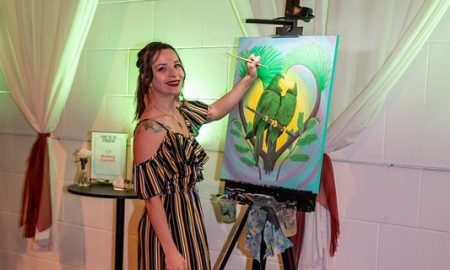
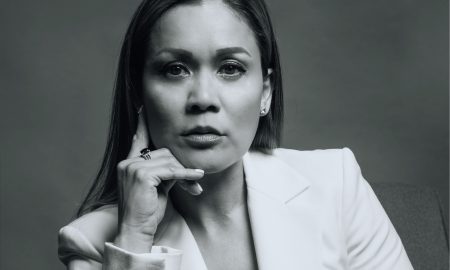
Today we’d like to introduce you to Laura Loegering.
Laura, please share your story with us. How did you get to where you are today?
I have always struggled with answering the question “what do you want to be when you grow up?” I am now 28 and still fluctuate in the determination of my purpose, although now narrowed to a specific field. I grew up in Del Mar, CA and always had a love for the outdoors, adventuring with my friends, and taking care of animals. I probably drove my parents nuts with all the abandoned creatures I tried to rescue (and make my pets), and I definitely gave them a run for their money coming home with scrapes and bruises from all the mishaps I had run into on my daily adventures. During high school, burnout hit very hard and if it wasn’t for the expectancy of attending college, I probably would have waited to take that next step. As it was, I was the daughter of a doctor and an engineer and furthering your education was what you do. I went to school at Cal Poly in San Luis Obispo, where I changed my major, added two minors, and eventually completed the pre-requisite courses for a post-baccalaureate degree that had nothing to do with my major in the first place. I finished my teaching credential during the following year and got a job teaching 5th grade in a small town called Cambria, CA. During the next two years, I figured out two very important factors that determined where I am now: one, I am not meant to be an elementary school teacher, and two, my mind needed to follow my propensity for science and health. During my second year of teaching, I completed online pre-requisite courses for a four-year program in Naturopathic Medicine. That year, I applied, interviewed, and was accepted to Bastyr University California, a Naturopathic Medical School. I am now in my fourth year and will be graduating in June with my doctorate.
We’re always bombarded by how great it is to pursue your passion, etc. – but we’ve spoken with enough people to know that it’s not always easy. Overall, would you say things have been easy for you?
The road has not been particularly bumpy, but there have definitely been some trials along the way. The most important lesson that I have learned about maintaining my enthusiasm and sanity on this journey is the importance of setting boundaries. This is something I absolutely did not do my first year teaching — and it took a lot of enjoyment from my life. I was overly dedicated to pleasing everyone that I gave up any energy that went to restoring my own self. Over the last few years being back in school, I have developed the ability to say no and maintain a life schedule that gives me opportunities to feel fulfilled instead of depleted. Another struggle that I mentioned prior was really honing in on my purpose. Often times I think its hard to figure out exactly what your purpose is, but it is really easy to find everything it is not, and that affects certain people more than others. I am someone who needs to feel that my actions are contributing to a bigger goal, somewhere I want to be in life.
We’d love to hear more about Bastyr University California.
I am currently six months shy of graduating with my doctorate in naturopathic medicine, which is a system of modalities focused on root cause medicine and promoting the body’s ability to heal itself. I have always gravitated toward this philosophy and see some flaws in the way health is managed and treated today in our current system. I plan to work in geriatrics and specialize in the treatment of neurodegenerative disorders, such as Alzheimer’s and Parkinson’s Disease. Anyone with a family member or loved one that has suffered such a condition has experience watching this decline with very little hope as our current treatment options are far from curative. Both my husband and I had grandparents that suffered from Alzheimer’s, and that experience has guided much of our discussion about my pursuit of specializing in the naturopathic treatment of neurodegenerative diseases. I truly believe that there is so much more to be done, and this is where I hope to bring change and promote wellness in this population.
We’re interested to hear your thoughts on female leadership – in particular, what do you feel are the biggest barriers or obstacles?
I think that a barrier to female leadership is determining your exact role in the workplace and balancing that with the social component involved in leading others. For whatever reason, we as a society seem to be more critical of women in the workplace — if you are strict and hold others to high standards, you are a tyrant; if you are relaxed and carefree, you are a ditz. This obviously is not always the case, but it occurs enough that it is worth noting. I think we need to mitigate this barrier through having open conversations about leadership in the workplace, as well as shifting our frame of mind to see the good in situations where we may be challenged by our leaders. While a female boss may be strict, uptight, and unforgiving, we can still find benefit in being held to high expectations. I do think being able to adopt this shift in thinking involves being at a place of peace with your own abilities in the workplace, and knowing your worth and value. Breaking this barrier then involves spending time with oneself to reach a place of self-worth in order to see others for the value they bring. In examining my own future, I hope to exemplify female leadership in being a successful doctor, creating change and instilling hope.
Contact Info:
- Email: laura.loegering@bastyr.edu
- Instagram: @loe_laura
- Other: linkedin: https://www.linkedin.com/in/laura-loegering-246593a7


 Image Credit:
Heather Loegering, Devin Kostrzewski
Getting in touch: SDVoyager is built on recommendations from the community; it’s how we uncover hidden gems, so if you know someone who deserves recognition please let us know here.