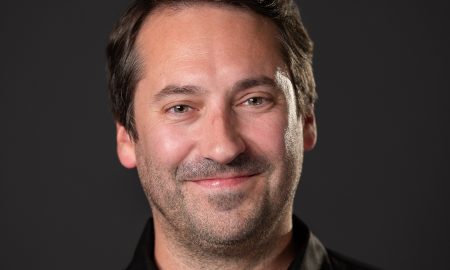
Today we’d like to introduce you to Paul DeLessio.
Paul, please share your story with us. How did you get to where you are today?
I first came to San Diego in 1991 as a Quartermaster working for a small local company called the United States Navy. I was first stationed on Coronado and loved San Diego culture thinking that everyone lived that close to the beach, oddly, that was the closest I have lived to the beach since. I was then stationed aboard the USS Tripoli at 32nd Street Naval Base and went on deployment to the Persian Gulf and Eastern Africa.
We were the first ship off the coast of Somalia for Operation Restore Hope, and I witnessed the devastation a country under anarchy went through. There was no food, power or clean water but profuse gun ownership. In the shadow of this suffering, I received the calling to go into social services with the realization that we may not be able to mediate all disputes but those families that do not want to be part of the fighting must always have a safe nurturing space to call home and flourish.
After another deployment, I honorably discharged from the Navy and went to school, first at Mesa College then SDSU. While at SDSU, I started working at Father Joe’s Villages in family emergency shelters. Father Joe’s fit my realization of family safety perfectly as we shelter and offer wrap-around services that give families the opportunity to be safe and flourish. Seventeen years later, I have a Master’s Degree in Social Work from SDSU and am still working in family emergency shelters at Father Joe’s but also in outreach, assessments, mental health and at the Neil Good Day Center.
I have had the fortune of having many mentors throughout my career as I am surrounded by people driven by mission. Three people that stand out are my wife, Earlene (first social work supervisor) and Fr Gil (licensed therapist). My wife has motivated me to complete all of my educational goals and supported me through wanting to run into walls to get a parking spot. She also makes more money than I do, therefore, supporting Father Joe’s through its mission.
Earlene taught me how to step out of my middle-class worldview enabling me to work with clients in poverty where they are. She has an empathetic tough compassion that clients identify with, feel comfortable with and are empowered by. I remember working for her in our family emergency shelter and she asked me to go get a specific client due to him drinking, I protested saying that I just talked to him, he was fine and how did she know as she did not even talk to him. Earlene looked at me and repeated her request.
I went to get the client and informed him that Earlene wanted to see him. He replied, “Yeah, I’ve been drinking and need some help.” Fr Gil is a perfect example of someone driven by mission. He works tirelessly, with more grey hair that I have, to provide respite to those in need. He, sometimes grumpily, is there in the moment for anyone regardless of their religion, worldview or characteristics.
Instead of taking time off on the weekend, he helps others, instead of taking a break at the end of the day, he helps others, instead of retiring, he helps others.
Overall, has it been relatively smooth? If not, what were some of the struggles along the way?
Working in social services, especially in an expensive city such as San Diego, has its unique challenges. I think of climbing out of homelessness as climbing a trick ladder. The rungs at the top of the ladder are close together and easy to climb, but the rungs at the bottom are far apart and very difficult to climb. We try to move those lower rungs closer together. Working alongside clients struggling with employment, mental health, physical health, addiction, educational and shelter barriers is both challenging and rewarding.
The challenge is that social work is not charity. Charity, the blind giving of items, while needed in some situations, does not always create change. Social work, assisting clients in the struggle over barriers, does create change. We all get frustrated with change, losing weight is my struggle/frustration, but working with our clients through this frustration, even when it is focused on us, is the challenging but ultimately rewarding key element of social work. A key element at Father Joe’s is that we have the resources on site to help clients overcome these barriers.
Personally, living on a student’s then social workers salary has been difficult to do in San Diego. I received the GI Bill from the Navy, but the old GI Bill helped some but was not as thorough as the current Post 911 GI Bill. I worked part to full time during my entire eight years in school. In undergraduate I lived on a sailboat to save money, it was cheaper than an apartment, but the teachers knew me for my moldy books.
Being an older student going back for my masters, I worked full time as a manager at Father Joe’s while going to school full time and doing a 20 hour a week internship. The toll this tight schedule was taking was illuminated when late for a class, I couldn’t find parking and I had the real thought of crashing my car into the side of the full SDSU parking garage, so I could leave the car there as an accident scene and get to class. I did not do this and was able to make it through with the help ofmy wife, the outstanding staff and fellow students at SDSU.
Father Joe’s Villages – what should we know? What do you guys do best? What sets you apart from the competition?
Father Joe’s Villages offers the full spectrum of services for our homeless neighbors from outreach to permanent housing. Though we work on this entire spectrum, our mission is to prevent and end homelessness one life at a time through compassion, empathy, empowerment and dignity.
The area I believe we specialize in, and where I work, is providing an open door, or “opportunity,” to anyone who has fallen on hard times and found themselves at risk of or currently homeless no matter on how many times they have asked for assistance. We assist people off the street who became homeless that morning or have been living in a canyon for 20 years.
I am proud to work for an agency that is focused on caring for others in a comprehensive manner. Father Joe’s gives me the leeway to do high-level data analysis/program development, facilitate a mental health group then go to the Day Center and clean with the clients. Having this daily relationship with people that are currently homeless is vital when doing research and program development. I learn from our clients every day.
What is “success” or “successful” for you?
I know we have been successful with a client when they come to me complaining about their boss. I remember the first time, many grey hairs ago when a client came in and vented about the concerns he and his co-workers had about the way their boss helped their patrons. I felt an odd and undefinable joy from this.
Later, upon reflection, I realized this joy was from when the client spoke about bonding with his co-workers while venting struggles with work. The client not only felt a union into our greater community, the companionship of venting amidst co-workers, but had a purpose in a commitment to best serve his patrons.
Just a few months prior to this he was living alone on the street beat down and defeated. This integration gives meaning and purpose, which is a higher level of satisfaction from just the provision of basic needs. Many of our homeless clients feel disconnected from the country’s larger community; success is reinvigorating this community.
Contact Info:
- Address: 1501 Imperial Ave San Diego C.A. 92101
- Website: www.neighbor.org
- Phone: 619-233-8500
- Facebook: https://www.facebook.com/FatherJoesVillages
- Twitter: https://twitter.com/fatherjoes
- Other: https://www.linkedin.com/company/father-joe%27s-villages


Getting in touch: SDVoyager is built on recommendations from the community; it’s how we uncover hidden gems, so if you know someone who deserves recognition please let us know here.