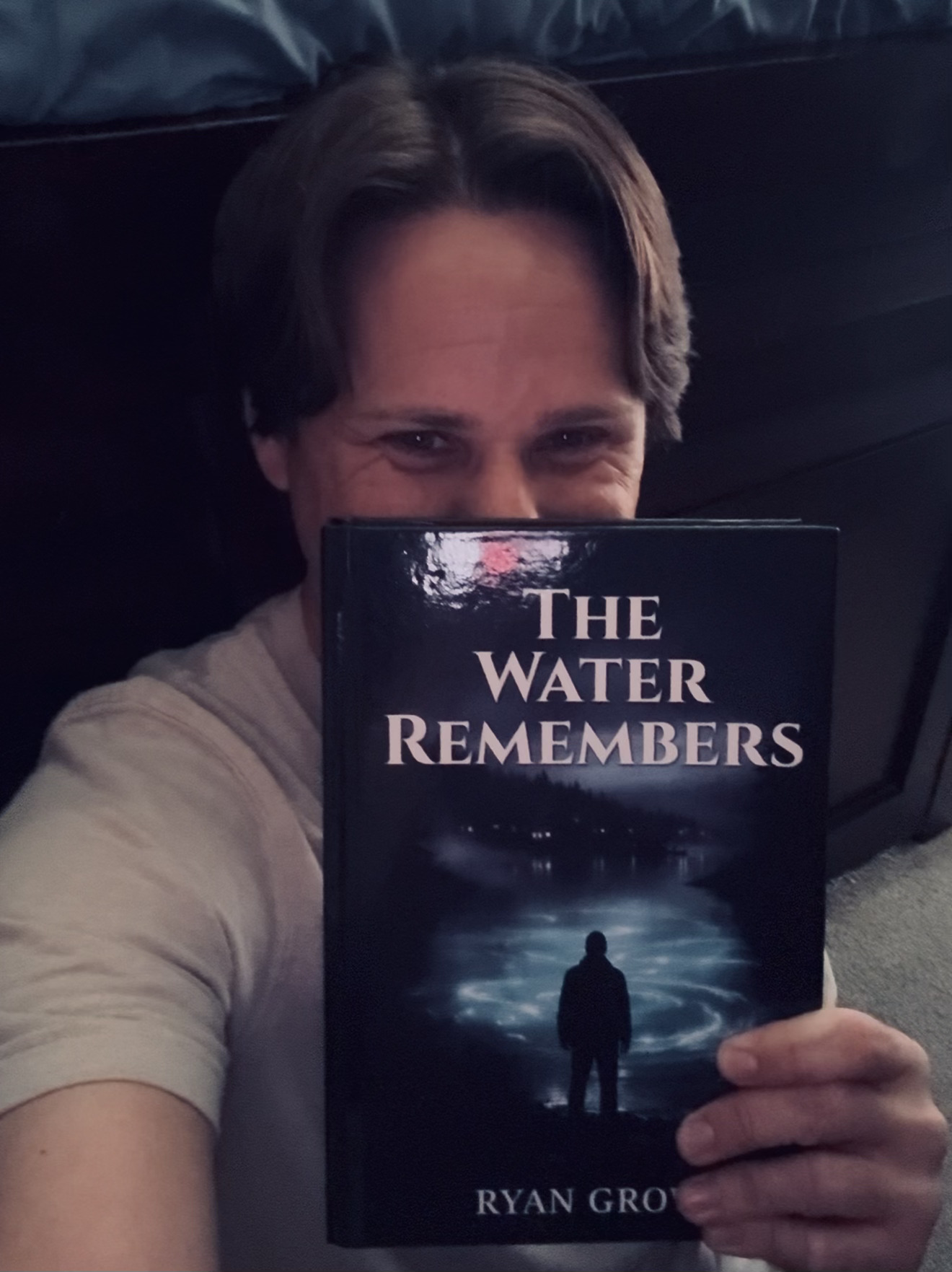
Ryan Grow’s debut novel The Water Remembers is deeply shaped by a period of personal struggle, transforming themes of depression, memory, and identity into a quiet, atmospheric narrative. Rather than relying on traditional tension, the story explores the lingering presence of the past — how experiences remain beneath the surface, waiting to be acknowledged. Through the symbolic role of water as both observer and keeper of memory, Ryan crafts a story centered on recognition and return rather than escape. As readers connect with its emotional depth and introspective tone, Ryan sees this book not as a conclusion, but as the beginning of a broader body of work rooted in place, feeling, and the unseen forces that shape who we become.
Ryan, The Water Remembers was born during a difficult time. How did that period shape the story and themes within the book?
The Water Remembers emerged during a period when I was struggling with depression, when time felt indistinct and movement—emotional or otherwise—became difficult to trust. Writing, at that point, wasn’t about ambition or even clarity. It was something steadier, quieter—a place I could return to each day when everything else felt unanchored.
The novel changed as I did. What began as one kind of story gradually gave way to something more interior, more attentive to the ways memory lingers and reshapes itself. I found myself drawn to the idea that certain experiences don’t dissipate with distance—they remain, waiting, not in a dramatic sense, but in a patient, almost observational way. The inlet became a way of expressing that: not as a force of threat, but as a presence that holds, that remembers.
That shift shaped the tone of the book. The tension isn’t built on pursuit, but on recognition—the unsettling awareness of being known by something you thought you had left behind. In that sense, the story became less about escape and more about return: to place, to memory, and to a self that had been deferred.
Writing a first book is a major milestone. What did the process teach you about yourself, both creatively and personally?
Writing my first book taught me how much of the process has less to do with certainty and more to do with staying present long enough for something honest to emerge. I went into it thinking I needed to control the story, to know where it was going, but the most meaningful parts came when I allowed it to change—sometimes completely—from what I originally intended.
Creatively, it taught me patience and trust. The book didn’t come together all at once; it revealed itself slowly, often in revision, and often in ways that required me to let go of earlier ideas I had been attached to. That was difficult at first, but it ultimately made the story more truthful.
Personally, it showed me how closely writing is tied to how I process things. There were moments when I didn’t fully understand what I was trying to say until I had written my way into it. In that sense, the novel became less about constructing something from the outside and more about uncovering something that was already there.
More than anything, it taught me that writing isn’t about having all the answers. It’s about being willing to sit with uncertainty, to keep going even when things feel unclear, and to trust that meaning will take shape over time.
The title itself feels deeply symbolic. What does “the water remembers” represent in the context of your story?
The title The Water Remembers operates on both a symbolic and narrative level. At its core, it speaks to the idea that experience doesn’t simply disappear with time or distance—it lingers, often quietly, shaping us in ways we don’t fully recognize until we return to it.
In the context of the story, the water becomes a kind of vessel for memory. Not in a literal sense at first, but as a reflection of how the past remains present beneath the surface. The inlet doesn’t pursue or threaten traditionally—it observes, holds, and, eventually, recognizes. That shift from metaphor to presence mirrors Jacob’s own arc, where what he tried to leave behind reveals itself as something that has been waiting for him to acknowledge it.
More broadly, the title speaks to the relationship between place and memory. Certain landscapes seem to hold what has happened within them, and when we return, we’re not encountering something new—we’re encountering something that has been there all along. In that sense, “the water remembers” becomes less about something external and more about the act of facing what has always been part of you.
Now that the book is out in the world, how has the response from readers impacted you so far?
The response so far has been incredibly meaningful to me. I went into this not really knowing how the story would land with readers, so hearing that people are connecting with it—especially with the atmosphere and the emotional core—has been both surprising and really encouraging.
What’s stood out most is how different readers seem to find their own entry point into the story. Some respond to the mystery and the tension, while others connect more with the quieter themes—grief, memory, and the idea of returning to something unresolved. That’s been really rewarding, because those were the elements that mattered most to me while I was writing it.
More than anything, it’s made the whole experience feel real. Writing can be such a solitary process, so seeing the story resonate beyond that has been incredibly grounding and motivating moving forward.
Looking ahead, do you see this as the beginning of a larger body of work or more stories you want to tell?
Absolutely. Finishing this book didn’t feel like an ending so much as the beginning of something. There are a few ideas I’ve been holding onto that I’m really excited to explore, and writing The Water Remembers has given me a clearer sense of the kinds of stories I want to tell moving forward—stories that are grounded in atmosphere, emotion, and a strong sense of place.
One of those ideas does connect back to The Water Remembers. I’ve been thinking about what it might look like to return to that world, whether that’s through a sequel or possibly a prequel that explores the town and the inlet from a different perspective. There’s more there, and I’m interested in seeing what happens if I follow that thread a little further.
At the same time, I’m also drawn to new settings and new characters. So it feels less like choosing one direction and more like building a body of work that shares a similar tone and emotional core, even if the stories themselves take different shapes.
Link:








 Maren Hoflund Is Expanding Holistic Healing Beyond the Treatment Room Through Education, Community, and Accessible Wellness
 How Casey Cantwell Turned a Viral Event Trend Into a Business Built on Celebration and Service
 Scott Hoops on Embracing AI Video Production to Expand Creative Possibilities and Shape the Future of Storytelling
 Emma Gardner on Building Brands Through Storytelling, Community, and Experience-Driven Marketing
 Heidi Greenwood on Reimagining Esquina as a Community Hub Built on Connection, Purpose, and Thoughtful Living
 Enrique Medina on Fatherhood, Purpose-Driven Leadership, and Building Community Through Hospitality
 Theresa Bruno on Creating Space for Midlife Voices and Redefining What It Means to Be Seen
 Gina Gerrato Greenhaus on Early Intervention, Intentional Planning, and Redefining What Makes Students Stand Out
 Desiree Borja on Reframing ADHD, Embracing Neurodivergent Strengths, and Using AI as a Tool for Equity