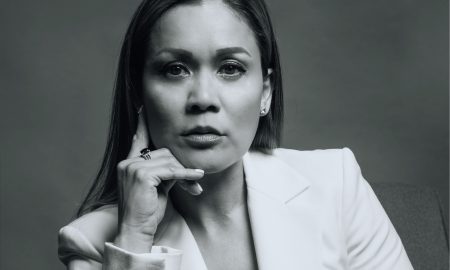
Today we’d like to introduce you to Chris Hobson.
Chris, please kick things off for us by telling us about yourself and your journey so far.
As a kid, I was drawn to music. I studied piano, pipe organ, guitar, sang in choir, played handbells, and started bands, etc. I was completely obsessed with the band Queen, and later David Bowie as a teenager. Neither were cool at the time. I wrote and recorded quite a bit of my own music back then, and I’m relieved that no one has heard it. For fun, I would do things like transcribe the soundtrack of the movie “Labyrinth” into notation.
I went to Berklee College of Music from 1999-2002 and enrolled in a program called “music production and engineering” which gave me access to some very nice recording studios. Although software-based recording was quickly becoming industry-standard, Berklee’s studios were outfitted with classic consoles and tape machines of the 70s and 80s. I was drawn to analog tape, older gear, and techniques, and I used my own music as a test subject.
I moved back home to north county San Diego in 2002, sharpened my recording skills at a studio called “Proxy Music Productions” in Oceanside, and then later at a studio called “Sounden” in San Clemente. I discovered over time that I enjoyed creatively pouring into other people’s music just as much as my own. This last year I had the opportunity to work on some film and TV (“The Glass Castle”, “Chef’s Table” etc.) which is a much different art form!
Can you give our readers some background on your art?
When recording an album, I’m looking for music and performances that move me emotionally. Using the right tools (microphones, processors, recorders) makes this easier to achieve, but it’s really about being present and identifying a special recording when it happens. Once I have a good performance captured, I can improve it with further with editing. This can be tricky because some imperfections increase the emotional impact, while others can be distracting. I have to be aware of the line beyond which performance becomes “too perfect”.
There are times when the job is breathing life and excitement into sterile recordings. Processing through a tape machine or outboard gear, or simply adding a touch of reverberation (simulated room ambiance) can sometimes resurrect a lifeless recording.
When recording classical music, the purpose is generally to create the sense that the listener is right there, so it is important to use microphones the emulate how the ears operate, and preamplifiers and a recorder that are more “transparent”. My job here is to be an invisible link between performance and listener.
There are lots of different hats that I get to wear depending on the project. I am constantly adding new microphones, instruments, and other tools to my collection that keep myself learning and inspired. Techniques are often used as starting points, but there are very few rules. Experimentation, and doing things the “wrong way” can lead to exciting results.
How do you think about success, as an artist, and what do quality do you feel is most helpful?
I’m working with an artist now who told me he’s “making this album because [he] wants to listen to it”, which is the best reason I can think of.
What’s the best way for someone to check out your work and provide support?
I work directly with artist and musicians who typically fund their own recordings, so you can support me by supporting live music, and buying albums produced by local artists.
Contact Info:
- Website: www.hobsound.com
- Phone: 760-685-2712
- Email: chris@hobsound.com
- Instagram: @hobsound
- Facebook: https://www.facebook.com/hobsounds


 Image Credit:
Tony Regalmuto
Getting in touch: SDVoyager is built on recommendations from the community; it’s how we uncover hidden gems, so if you know someone who deserves recognition please let us know here.