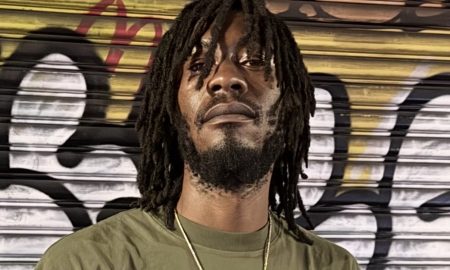
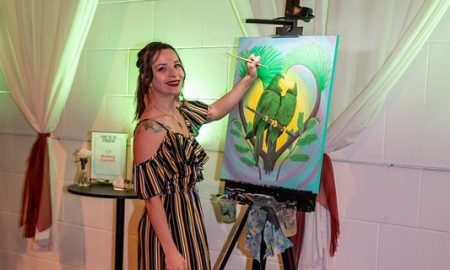
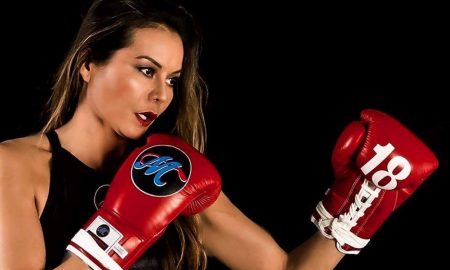
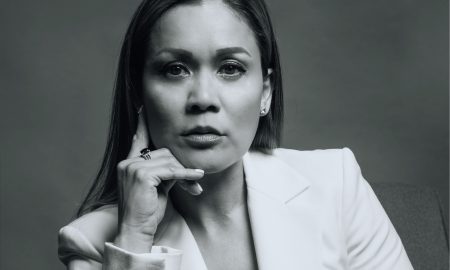
Today we’d like to introduce you to Brian Black and Ryan Bulis.
Brian and Ryan, we’d love to hear your story and how you got to where you are today both personally and as an artist.
Brian: I moved from Illinois to San Diego in 2000 right out of grad school. I met Ryan around 2002 while working in the foundry at Palomar College, His artwork had a humorous sensibility that I connected with-I kinda knew I wanted to become friends with him right away.
Ryan: I grew up in San Diego and met Brian while learning to Bronze Casting. He was making really interesting sculptures based on found objects and images. I feel like I won him over with a series of bronze caste toy animals We were both making work about sweaters, and it seemed to spark our first collaborative work.
Brian: I had just completed performance where I destroyed all my sweaters from the Midwest as part of a Calinoian ( Californian/ Illinoisan) Series. At that same time, Ryan had been weaving this sweater-like object in class. It seemed obvious that we should collaborate on work. And when a small art space offered us a performance venue, we worked out an idea. And that was the beginning of our 15-year collaboration.
Ryan: I had been relearning to knit and had been using string, rope, and baseball guts to make scarfs sweaters and socks. Having seen Brian’s deconstructing sweaters piece, I saw an increased connection between our artistic sensibilities and material interests. That first work was born. In the gallery, I attempted to knit a large scarf while Brian deconstructed my efforts. This was a long performance, and it went well beyond the time of the exhibition.
Brian: Yeah everyone had left the gallery space, but I told Ryan we should finish.
Ryan: We worked until midnight, and then went for coffee.
We’d love to hear more about your art. What do you do you do and why and what do you hope others will take away from your work?
Ryan: After finishing my MFA at UCSB in 2013 I stayed on as a teaching Fellow and then as a lecturer until 2015. In grad school and those following years, I was able to branch out some of my own ideas that would eventually lead back to the work Brian, and I make today. Audience participation and multiple platforms became more important to my individual practice, and when I returned to San Diego in 2015, I Brian and I work on a Kitschmas series that celebrated both the interaction of the audience as a participant as well as the idea that social media, the document, and the object could all be integrated into our performances.
Brian: In December of 2015 we put together our first show in a few years at LUX. Its theme focused on the peculiarities of Christmas. We titled it a Brian and Ryan Kistchmas Special. But it was right after that show that we really ramped up our efforts. In 2016, our residency and show Brian and Ryan: Sports Games & Leisure at SDAI was really the first time we had been given open reign to see some of our larger ideas take shape. We came to the director and led curator Ginger Shulick Porcella with several ideas. We kind of thought she would pick one, but to our surprise, she was like go ahead and do them all.
Ryan: We devoted nearly the entire year to the residency. We schedule regular times in the Balboa park observing trends and performing interventions throughout the park. These events were captured as photographic evidence and made available to the museum-goers as a series of postcards.
Brian: We have been developing the team-like persona known as Brian and Ryan for a long time now. I feel like it’s finally making some headway in the art community. I also think social media platforms like Instagram have helped us to connect with new audiences.
Ryan: The Brian and Ryan personas have been a lesser component of our work until we started using Instagram. The spectacle and competition have seemed to take center stage, and it has been really rewarding to see the Idea of Brian and Ryan and self-proclaimed celebrity take hold in a more concrete way.
Brian: the San Diego art community is evolving. There are a lot of interesting new artists coming onto the San Diego scene and some artists that have been working a long time are starting to get the credit they deserve. We certainly see the potential for San Diego as an art center. There are small art spaces developing all over town that are moving in some really exciting directions, and institutions are taking chances on innovative curators that are expanding San Diego’s art footprint. In fact, Ryan will be taking over directorship of the Boehm Gallery at Palomar College, and I, along with a lot of other folks, are really excited to see where he takes this venue.
Ryan: I am taking the helm of this important gallery founded by Russell Baldwin where John Baldessari, Bob Matheny, Richard Allen Morris, and Robert Irwin all showed early in their careers. This is also been a great venue in recent years under the Directorship of Sasha Jonestein since 2016 and Ingram Ober from 2009 -2016. I hope to honor the history of this institution and carry on the great work of my predecessors.
Brian: When we get together to develop work, it’s a lot of back and forth. In the concept phase, Ryan tends to be meticulous while I’m more impulsive. It’s in this tension that drives our thought process, and when an idea is right, we both usually recognize it immediately.
Ryan: I agree, we definitely have to push and pull an idea, so it hits all parts of our guiding philosophy. I tend to be more satisfied seeing an idea on paper, and Brian likes to see objects in a tangible form. I feel like we will start working off paper more and embracing the impulsive approach more. See what something looks like and let the idea play out. Sometimes the solution is so easy, and other times it’s a bit more of a fight. In the end, we do seem to see eye to eye.
Brian: Our focus has moved to include the audience and the community in our dialogue. And it is that expansion of our conversation that has helped us to grow as a team and in our individual art practices.
Ryan: In our collaborations, we appropriate iconic activities and images that challenge preconceptions of communication, masculinity, identity, and athleticism. We look to archetypes and play with the icons and themes in classic storytelling to inform our new work.
Brian: When we design work, we aren’t attempting to force-feed a solution to our audience. I’m far more interested in having the audience walk away with unresolved questions. If our work approaches that level, I am happy.
The stereotype of a starving artist scares away many potentially talented artists from pursuing art – any advice or thoughts about how to deal with the financial concerns an aspiring artist might be concerned about?
Brian: Studio space to create work is a big issue in San Diego. If this city wants a thriving art community, it has to support reasonably priced spaces for artists to work. Otherwise, a lot of talent shows and money will continue to leave San Diego. At the same time, alternative art spaces are thriving and supporting visual artists.
Ryan: It’s rare when an artist is only an Artist. We have limited resources and as fully formed humans have a variety of demands and desires that must be considered in making a life. If the art doesn’t financially support your life, you gotta bring home the bacon somehow, but finding other forms of income can be taxing on your time and energy. I find that the balance can be stuck, but not without support. I know I owe a great deal of thanks to Brian, his family, my Family and my Fiancé for all their support, time, and understanding. It is important for the city to consider the way artists are supported to encourage a sustainable, diverse contemporary art community.
Brian: My advice to any artist is to take advantage of all the shows and art-related events in San Diego. Support the museums. But don’t forget to check out all the great alternative art spaces. Often its easier to get to know the people running these smaller spaces and San Diego has a pretty tight-knit art community.
Do you have any events or exhibitions coming up? Where would one go to see more of your work? How can people support you and your artwork?
Ryan: This fall we showed at MOCA Tucson where we hosted a hot dog eating contest at their fall art fundraiser. Then on September 22, we participated in the Happening Encuentro de Arte Contemporaneo performing, Brian and Ryan: Importante/Impotente Partido de Tennis. For this performance, we played a series of tennis matches with altered rackets.
Brian: Then in December, we bring our annual Brian and Ryan Kitschmas Show to Vivid Space Gallery, and we are designing a Kitschmas installation for the Porto Vista Hotel lobby space. Both of these spaces are doing a great job highlighting local artists, and we are excited to work at both of these Little Italy venues. Our Kitschmas events twist and exaggerate the wonders of the season but still leave viewers with an uplifted holiday spirit.
Ryan: A little further down the road in September of 2019, we will be curating Bodies Seen and Unseen at San Diego Art Institute. This performance and installation based exhibition has been a long time coming. We aim to give a platform to many artist that work in ambitious formats that tend to predominate show in one night only or short-term exhibitions. We hope to support project that are interactive, accumulate, and developed over the duration of the exhibition. Our hope is over the course of the two-week exhibition that every visit back to space, you will see something new.
Brian: The concept for this show is one that Ryan and I have been discussing for several years. And we are really grateful the SDAI is giving us the opportunity to make this happen.
Contact Info:
- Website: brianandryan.com
- Email: bryrian@gmail.com
- Instagram: bryrian
- Facebook: https://www.facebook.com/brianandryan/
- Other: https://www.pinterest.com/bryrian/


 Image Credit:
All photographs by Ryan Bulis
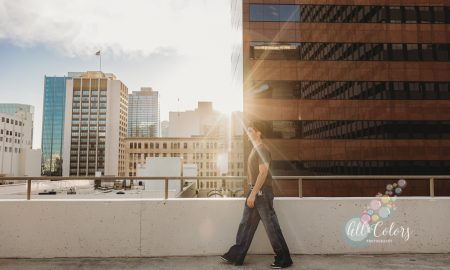
Image 3 of Downtown San Diego performance by Dan Dadmun
Getting in touch: SDVoyager is built on recommendations from the community; it’s how we uncover hidden gems, so if you know someone who deserves recognition please let us know here.