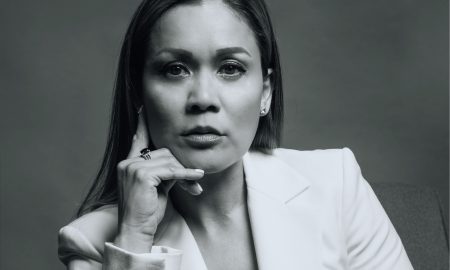
Today we’d like to introduce you to Grace Chen.
Grace, we’d love to hear your story and how you got to where you are today both personally and as an artist.
I always had an interest in drawing from a young age, but it wasn’t until I started spending a lot of time on sites like DeviantArt in middle school that I started to take it a little more seriously. One thing in particular that got me really interested was watching speedpaints on Youtube, time-lapsed recorded videos of people’s work on their art. It was really enlightening to be able to see all the neat tricks you can do in Photoshop to make your life easier. Locking layer transparency, selecting by layer area, using adjustment layers, and things like that. That’s when it really clicked for me, the idea that there was a real methodical process to making great pieces of art and it wasn’t just some crazy magical art talent.
I started saving the works of artists I liked and using them as motivation to keep improving my skills. I analyzed them over and over again to better understand what parts they did well and why I like their work so much. I regularly dedicated time to doing studies to improve my weak points. It’s from this self-study that I’ve managed to improve to where I am today. There’s a surprising amount of resources online for art, and I think it’s becoming more and more common to find artists nowadays who are mostly self-taught. It also helped that I had artist friends in high school who were also largely self-taught. It was really interesting to learn from the different ways we approached art and seeing their work motivated me, even more, to make stuff myself.
Funnily enough, a lot of people around me don’t actually know that I do art. People in high school know me as someone who got good grades and went off to study computer science at Caltech. People in university know me as a senior year undergraduate who has been fairly involved in student government. Art is an important facet of my life, but at the end of the day, it’s a hobby for me. And so one of my biggest challenges is trying to balance the rest of my daily life with my art, especially given the infamously difficult and rigorous work at Caltech. I think a lot of people who do art alongside a more typical day job understand the struggle of trying to find that unsteady balance between the two.
That being said, despite the time conflict between academics and art, the two have in some way helped out one another in my life. The intuitive way of making artwork is so uniquely different from the methodical repetition of solving math problems that it really forced me to re-consider how I learn and what kind of study habits I can apply in both scenarios. It’s also really nice to have my work and hobby be unrelated. If I get really tired of working on an art piece, I can go work on my databases homework for a bit and come back later with a fresh mind, and vice versa. I get bored if I’m working on the same thing for more than a day or two, so it’s this unique interaction that makes me happy to continue managing my time between the two.
We’d love to hear more about your art. What do you do and why and what do you hope others will take away from your work?
I primarily make digital illustrations, ranging from portraits to environmental paintings to clothing design. I grew up playing a lot of video games and watching anime, and I’ve been told it shows quite obviously in my work. In particular, I like fantasy MMORPGs (massively multiplayer online role-playing games, e.g., World of Warcraft), and JRPGs (Japanese role-playing games, e.g., Final Fantasy) the most. Most of my work is fanart for whichever anime or games I’ve been into – the past year or two, that’s been Boku no Hero Academia and Guild Wars 2. I’ll also do original work every now and then.
I draw a lot of inspiration from video game concept art. I really enjoy character design and clothing/armor design, and I have a soft spot for painting environments. Recently, I’ve been playing around with colors, lighting, and composition more. Color used to be one of my weaker points, so I’ve been trying very hard to work on that aspect by planning the color scheme early on, thinking about the lighting conditions, and hand-picking colors instead of relying on adjustment layers.
One of the biggest motivations for my art is my own self-improvement. I care a lot about my own improvement, and I get restless if I haven’t made anything unique or particularly impressive recently. There was a pretty competitive atmosphere in terms of academics at my high school, particularly among a lot of the Asian-American students. That kind of attitude definitely became a part of my normal life, even though I didn’t face a lot of the same academic stress that a lot of my friends did. I knew that, compared to my peers, I didn’t do as many math competitions, science fairs, or groundbreaking research with famous professors. And so I felt like if I was going to draw, I better make it damn worth my time and get really good at it. That was a big motivating factor in my improvement, and even now I take a lot of pride in being able to continuously improve and push myself to the next level. It makes it even more satisfying when I can look back and see how far I’ve come.
What do you know now that you wished you had learned earlier?
It’s incredibly important as an artist to persevere and take pride in your own work. I think we all know the familiar feeling of looking at your own work and feeling like it’s the worst thing you’ve ever made. Or running into an artist’s block for months on end and feeling like you can’t come up with anything interesting or unique anymore. The reality is that this happens to everyone – pretty much every artist out there has thousands of unused works that they don’t share online because they don’t like it. And even those who make art for a living have to deal with having no inspiration but needing to meet deadlines anyways.
The difference is accepting that this happens sometimes and working through it anyways, even on days where you don’t feel motivated to draw anymore. Learn what strategies work for you to get your inspiration back, or at least get into the groove enough to meet a deadline. For me, I step away from my work and start doing other things. I’ll watch a new show, play some games, or do some figure drawing. Even if you’re not consciously working on a piece, getting new thoughts and ideas from other sources is important for your subconscious to be able to come up with stuff. And if it turns out you don’t like the end product, there’s something to be gained from looking back at it anyways and analyzing what went well and what could be improved. Everything you make is a step in improving, and you should take pride in what you’ve done so far.
Do you have any events or exhibitions coming up? Where would one go to see more of your work? How can people support you and your artwork?
You can see my work all together on zettanoia-art.tumblr.com. I’m also on Twitter and Instagram under the alias zettanoia. If you’re interested in any of my work, I sell prints! You can find my INPRNT store linked on my Tumblr page, or contact me via email.
Contact Info:
- Website: zettanoia-art.tumblr.com
- Email: zettanoia@gmail.com
- Instagram: https://www.instagram.com/zettanoia/
- Twitter: https://twitter.com/zettanoia


Image Credit:
Personal Photo Credit: Aris Taychameekiatchai
Getting in touch: SDVoyager is built on recommendations from the community; it’s how we uncover hidden gems, so if you know someone who deserves recognition please let us know here.