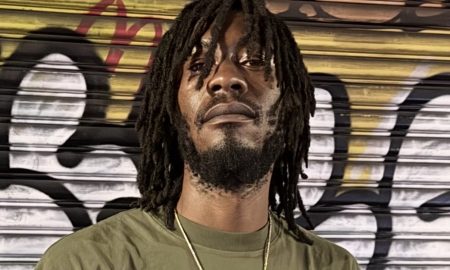
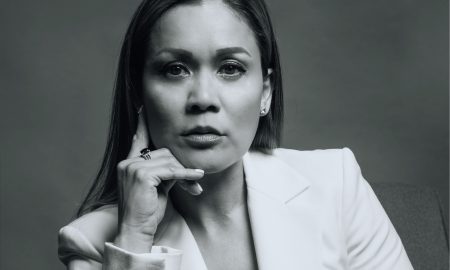
Today we’d like to introduce you to Joshua Moreno.
Joshua, we’d love to hear your story and how you got to where you are today both personally and as an artist.
I was born and raised in a small agricultural town in the Central Coast of California called Watsonville. Early on, I demonstrated an interest in drawing and sculpting. My grandmother tells me that when I was around three or four, I would entertain myself in the living room for hours drawing, coloring, or constructing things using toys and objects around the house. Growing up, I spent a lot of time outdoors with my cousins building makeshift shelters, riding bikes, and shooting at random things with bb guns on our family ranch.
Freshly graduated from high school, I moved to San Diego in 2006 to be closer to my mom and sister. I didn’t have the grades to get accepted into a four-year university immediately, so I took courses at Southwestern Community College with a declared major in cultural anthropology. Just as I was about to transfer to UCSD, I enrolled in a ceramics and a sculpture class taught by two professors I absolutely loved and made me fall hard for art. Once I got into UCSD in 2009, I changed my major to studio art with an emphasis in sculpture. I have been making art ever since.
For the past seven years, I have been working in art education, taking on roles such as a gallery educator at the Museum of Contemporary Art San Diego and high school teacher where I’ve taught courses in art history, filmmaking, and studio art.
We’d love to hear more about your art. What do you do and why and what do you hope others will take away from your work?
I make paintings, drawings, sculptures, and installations. Presently, I am pretty fixated on creating installations.
I’d say that through installation, I often try to seek opportunities to draw attention to and collaborate with ephemeral and elemental qualities of spaces such as their light and air conditions. For a solo exhibition at Helmuth Projects this past summer, I taped opaque plastic along the perimeters of architectural features within the space to make visible, the interaction between the shifting natural light and airflow generated outdoors with the preexisting and consistent electric lights and fans inside the entire building. Additionally, I inserted white making flags into all of the pre-existing holes within Helmuth Projects made by nailing, drilling, or stapling. I saw this as a way of marking time and bringing attention to the previous purposes of the space, using a material that had the potential to interact with the changing conditions within the environment.
Other sites of installations include a storage closet at the San Diego Art Institute, artist studio at Space4Art, and an abandoned home once occupied my Mexican agricultural workers. I am pretty into the history, functions, and cultural significance of installation sites which often determine the choices I make in their transformation. Objects such as completed or in progress artworks in an artist studio or family heirlooms in an abandoned home are intentionally placed within to construct narratives about the history, present, and hypothetical future of such sites. Because the context in which these objects are treated closely mirrors reality, it is often unclear what elements of the viewer experience are shaped by me or a consequence of the natural happenings within the space. In these instances, I see my installations as environments intended to elicit heightened sensorial awareness and a re-evaluation of the spaces and objects that surround us.
Given everything that is going on in the world today, do you think the role of artists has changed? How do local, national or international events and issues affect your art?
I think the role of the artist is distinct and self-defined. I do, however, notice some general themes in contemporary art. Given the current political climate, art has been undoubtedly pretty charged and socially driven, but that is not necessarily a new concept in regards to the history of art.
Global issues that are connected to the relationship between humans and the environment are examined in my practice and expressed in a nondidactic manner. Issues are more engaging to me when they aren’t presented as issues, but rather objective situations that are the natural result of cause and effect.
Do you have any events or exhibitions coming up? Where would one go to see more of your work? How can people support you and your artwork?
July – September 2019, I will exhibit a site and time specific installation located inside the abandoned home of my great grandfather situated in Watsonville, CA. In this ongoing project, I populate the now dilapidated house that members of my family occupied from 1964 – 1997 with objects that relate to memory, family history, and the plight of the Mexican farmworker in California. This will be available to the public by appointment only and can be reserved via email.
On September 28, 2019, I will invite the public to experience a site and time specific installation that examines naturally occurring phenomenological effects that take place in Balboa Park, San Diego.
People can support by experiencing my work in person and inviting me to be a part of exhibitions.
If you are interested, feel free to contact me at stopjoshgo@gmail.com.
Contact Info:
- Website: www.joshuamoreno.com
- Phone: 6193851949
- Email: stopjoshgo@gmail.com
- Instagram: www.instagram.com/stopjoshgo


 Image Credit:
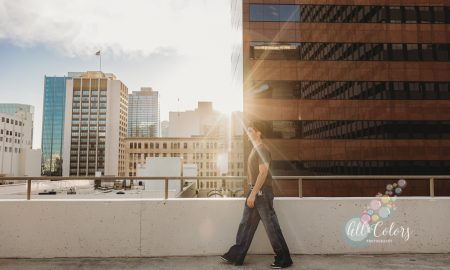
Reena Racki (Portrait of me), Kasey Smith
Getting in touch: SDVoyager is built on recommendations from the community; it’s how we uncover hidden gems, so if you know someone who deserves recognition please let us know here.