Today we’d like to introduce you to Matt Smith.
Matt, we’d love to hear your story and how you got to where you are today both personally and as an artist.
I grew up in Mission Hills, and I lived there with my mom and dad until I was 18 and went to study composition at the Cleveland Institute of Music. While I was a student in San Diego, I performed with the San Diego Youth Symphony for five years, and played trombone and sang in a bunch of productions at the San Diego School of Creative and Performing Arts, where I attended high school.
I started my band, Iridas, shortly after finishing graduate school at CIM. It’s ultimately the product of a lot of things that were on my mind at the time, and like all art, the reasons for doing it have changed, but the core concept remains more or less intact. In the beginning, it was a little bit about “sticking it to the man.” I’d become a little fed up with what I saw as classical music’s ivory tower perfectionism and misguided anti-populism. I wanted to improvise, to make beats, to experiment with other genres. I was fascinated by electronic music, rock, and the idea that a performance isn’t necessarily meant to be a fixed, static masterpiece – rather, it can be a window in time through which the performer and audience alike can shift their point of regarding slightly and cast the work in question in a new light, changing it is it is rediscovered. This is actually the origin of the name “Iridas,” from Terence McKenna’s suggestion that consciousness is “an iridescence upon the matter.”
Since the project began and picked up new members, the agenda has changed a bit. We sometimes perform pieces from the classical canon, and we perform them traditionally because these are traditions which deserve preservation and it is an honor to have enough training that we might be effective custodians of these monumental achievements of human imagination. But we also do A LOT of other stuff. I’m a classically trained pianist, but I also do jazz, and I still play trombone. I also write all of our music, do the arrangements, and I am heavily involved in recording and mixing. Besides me, we have Megan Shung, who plays violin in every style you can think of (from gyspy fiddle to heavy metal), and also plays the Erhu, a Chinese violin with two strings and a very different sound. Our “violist” is Dimitri Yevstefeev, who also plays violin, mandolin, and guitar. Finally, we have Mikala Schmitz, a cellist (also guitarist) who is just at home in a symphony hall as she is on the touring stage with a rock band. It’s really wonderful to make music with eclectically-minded people, especially the sort who are absolutely at the top of their game and never fully satisfied with their own eclecticism.
We’d love to hear more about your art. What do you do you do and why and what do you hope others will take away from your work?
We’ve spent a lot of time trying to figure out how to explain ourselves to people, and what we’ve settled on for better or worse is that the music just has to speak for itself. The best way to describe Iridas’ sound is to cite our influences. We’re all classical trained musicians who have gone on to experiment with other stuff – we all play jazz, and we’ve explored just about anything else we can get our hands on. That said, our music is shaped most directly by my personal influences as a composer. On the classical side of things, I always go back to Debussy and Ravel, but I also really love music of the later twentieth century and today. I’m a huge admirer of people like George Benjamin, Thomas Ades, and Georg Friedrich Haas, and the classical avant-garde will always be very close to my heart. On the jazz side, I owe a lot to Bill Evans – if I had to pick a favorite pianist, it’d be him. Modern jazz is incredibly exciting to me too, though; I’m a big fan of Hiromi Uehara and Tigran Hamasyan, for example. I grew up loving bands like Radiohead, the Red Hot Chili Peppers, Outkast, and Muse. I’ve grown into a deep admiration for current artists like Flying Lotus and Kendrick Lamar, and I’m getting new ideas all the time from everything I can get my hands on, beaten path or no.
My hope is that what people will get out of listening to our music is that it’s a good thing for art to challenge us, but also that challenging music doesn’t have to be unpleasant. I want people to find their groove, but I don’t necessarily agree with the idea that it should all be good vibes and heady pleasures. I hope that it makes people think about what art can do, and what it means for something to be beautiful. I hope that it brings people closer because I think it’ll turn out that jazz fans and metal fans aren’t that different from each other. We all love music, and we should find things in each other’s music to love. I think we can demonstrate that and I’m proud to be trying.
What do you think it takes to be successful as an artist?
I think there’s some utility in separating aesthetic success from commercial success. It goes without saying that there are some very unpopular masterpieces and some very popular things that are, well, not exactly masterpieces. Everyone needs to recognize that both outcomes require a huge amount of work and creativity. Making good art is time-consuming and challenging, to be sure. Making something commercially successful is also a monumental task, and I kind of see things like web design and advertising to be forms of art in their own right, and I really appreciate the imaginations of people who are good at those things because I’m not.
When it comes to making “good art,” I frankly think that that’s a discussion best left to the ivory tower. I don’t know what makes art good, I just know what I like, and I know when something that I’m working on is in good enough shape to show people. I don’t think about making something that’ll knock people’s socks off, I think about making something fully realized. I want to get my music to where further tinkering doesn’t result in a more fulfilling experience for a hypothetical listener. I don’t know if that makes it good or not, but it definitely makes it finished, and that’s step one.
Step two is how you get your stuff to an audience, and I’m grateful to have bandmates that understand how to do that better than me. It’s probably worth pointing out that creating for yourself is fine, but I think being a successful artist involves engaging with a community of other artists, and that doesn’t happen unless you share your work. We live in a world where finding in audience is simultaneously easier and harder than it’s ever been, but I really think it’s important to have people who enjoy your stuff and maybe even like to talk about it with each other.
Do you have any events or exhibitions coming up? Where would one go to see more of your work? How can people support you and your artwork?
Our website is www.iridasmusic.com, and you can also find us Facebook, Instagram, and YouTube. We perform shows as often as we can in Southern California, and show dates can always be found on our website/social media. We also have a newsletter (link on website) for fans who want all the updates – we just send it out once a month, no spam.
Contact Info:
- Website: https://www.iridasmusic.com/
- Email: info@iridasmusic.com
- Instagram: https://www.instagram.com/iridasmusic/
- Facebook: https://www.facebook.com/iridasmusic/
- Other: https://www.instagram.com/musicbymattsmith/
 Image Credit:
Image 1:
Left to right: Matt Smith, Mikala Schmitz, Megan Shung, Dimitri Yevstefeev.
Photo by Josh Spencer.
Image 2:
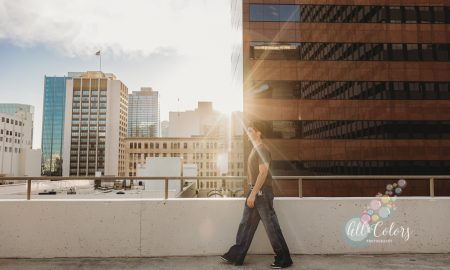
Matt Smith
Photo by Ty Levey.
Getting in touch: SDVoyager is built on recommendations from the community; it’s how we uncover hidden gems, so if you know someone who deserves recognition please let us know here.