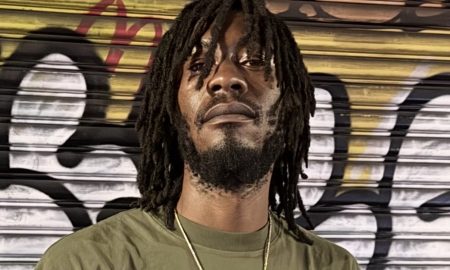
Today we’d like to introduce you to Noé Olivas.
Noé, we’d love to hear your story and how you got to where you are today both personally and as an artist.
I grew up in a working-class Mexican family in the neighborhood of Linda Vista. Growing up, my parents taught my brother, sister, and I the importance of work ethics and education, as many immigrant families do. I, myself, struggled in school. My learning disability would hold me back in certain subjects, such as English. With the support of my family, I found unconventional routes to navigate the educational system and make it work for me. Art was an important pedagogical tool. Not only did it allow me to find my voice in a visual format and think critically, art allowed me to further my education.
I strongly believe in the words of bell hooks from her book Teaching Community: A Pedagogy of Hope: “Education as the practice of freedom affirms healthy self-esteem in students as it promotes their capacity to be aware and live consciously. It teaches them to reflect and act in ways that further self-actualization, rather than conformity to the status quo.” I am currently pursuing a Master in Fine Arts at the University of Southern California at the Roski School of Art and Design.
We’d love to hear more about your art. What do you do you do and why and what do you hope others will take away from your work?
My work investigates the Mexican American experience through the lens as a Californiano. My artwork takes into consideration the relationship between labor and leisure as it fits into the conceptions of femininity and masculinity, specifically by evaluating the Mancha or stain of machismo and its correlation to patriarchal culture.
By forming sculptures, drawings, and prints that play with and reshape cultural references, I explore my experience growing up in a working-class family through the use my family’s personal archive and other found domestic and utilitarian objects and materials. My work aims to highlight how these objects portray and mimic language, particularly Spanglish with its rhythmic convergence of two languages spoken in Latin American homes.
Integral to my practice is also the notion of style and coolness and the possibility for these qualities to be modes of survival that allow people access to power.
What do you think it takes to be successful as an artist?
To me, success is finding your voice and position with care and celebration. To share it and be responsible for it.
Do you have any events or exhibitions coming up? Where would one go to see more of your work? How can people support you and your artwork?
You can support me by supporting art education, local artists, art communities, art grassroots organizations, art centers, art non-profits, art institutions, and art galleries. The art world is small. We all run in the same circle. Supporting them is supporting me.
Contact Info:
- Website: www.noeolivas.com
- Instagram: @calmatetupedo


 Image Credit:
Jill Grant
Getting in touch: SDVoyager is built on recommendations from the community; it’s how we uncover hidden gems, so if you know someone who deserves recognition please let us know here.