Today we’d like to introduce you to Elizabeth Hammack.
Hi Elizabeth, can you start by introducing yourself? We’d love to learn more about how you got to where you are today?
I come from a long line of makers — painters, woodworkers, quilters, embroiderers, crocheters, even gingerbread architects — but I viewed art as a hobby rather than a viable career path. I pursued architecture instead, earning a degree in the field before completing a graduate program in community planning with a specialization in historic preservation.
My professional life eventually expanded to include teaching courses in freehand drawing, architectural history, and community planning. In the drawing classroom, my priority is simple: I want my students to enjoy the process. I remember vividly what it felt like to dread a class. After my second semester of architecture school, I nearly changed majors because the weekly requirement to share a drawing caused severe anxiety. I was consistently the weakest example, and when I asked for help, my instructor dismissed me. The program discouraged taking classes in the art department. I was on my own, expected to naturally display a skill that I had never been taught.
That experience shapes the way I teach now. On the first day of every semester, I share my story and then offer the advice I wish someone had given me: “Drawing is a learnable skill. It’s just paper. Bad drawings lead to great drawings. Don’t overthink it. When in doubt, just scribble.” My goal is to create the kind of classroom I needed — one where all skill levels are accepted and support is provided.
Parenthood reshaped my life in unexpected ways. When I began homeschooling my three sons, my creative hobbies took a back seat. It wasn’t until the unstructured days of COVID that I rediscovered my love of painting — a passion that had been largely dormant since college. Since then, creativity has reclaimed a central place in my life. Whenever our schedule allows, I return to myself, working in paint, ink, linocut, and pencil.
Would you say it’s been a smooth road, and if not what are some of the biggest challenges you’ve faced along the way?
Most artists question their skills at some point—many of us do it in the middle of every painting. I spent more than twenty years believing I wasn’t “doing art right” because my work didn’t look perfect. Architecture students sketch constantly, both for their craft and for fun, but I was often disappointed with my results… except when I wasn’t paying full attention. That’s when I learned that if I stopped overthinking, drawing became more enjoyable, and the results improved.
I once asked my grandma how she chose colors for her embroidery, and she said, “Well, Elizabeth, you just do what you think looks nice.” It’s such valuable advice for any creative—our work is as much about enjoying the process as it is about producing a finished piece.
For me, the biggest hurdle is time. I’ve had to adjust my expectations and carve out creative pockets in our household schedule. Sometimes that means smaller paintings I can finish in an afternoon or quick pieces that become backgrounds for my homeschool blog. I rarely leave the house without my “go basket” of painting supplies, just in case I find a few spare minutes between carpools and appointments.
Appreciate you sharing that. What else should we know about what you do?
I specialize in watercolor and ink, mediums that naturally invite a bit of messiness and require the artist to surrender some control. It took me a long time to embrace that—after all, I trained as an architect and community planner, fields where precision and logic usually rule. Watercolor purists will say that “blooms” and “bleeds” are mistakes. I embrace them. I love that the medium has a mind of its own and that my paintings remain wonderfully unpredictable.
Networking and finding a mentor can have such a positive impact on one’s life and career. Any advice?
My advice is simple: talk to people. My children grumble when my Midwestern friendliness kicks in—I can strike up a conversation in the grocery store aisle, at school pickup, or in a museum gift shop without a second thought. But it’s especially valuable to talk with people you think you already know. I’ve discovered unexpected songwriters, photographers, writers, and artists within my own social circles just by being curious.
Don’t be afraid to step into opportunities that feel outside your comfort zone. One shared painting with a neighbor led me to my next ambition of picture‑book writing.
Be curious and open to opportunities.
Contact Info:
- Website: https://www.snapdragonartstudio.com
- Instagram: https://www.instagram.com/snapdragonartstudio


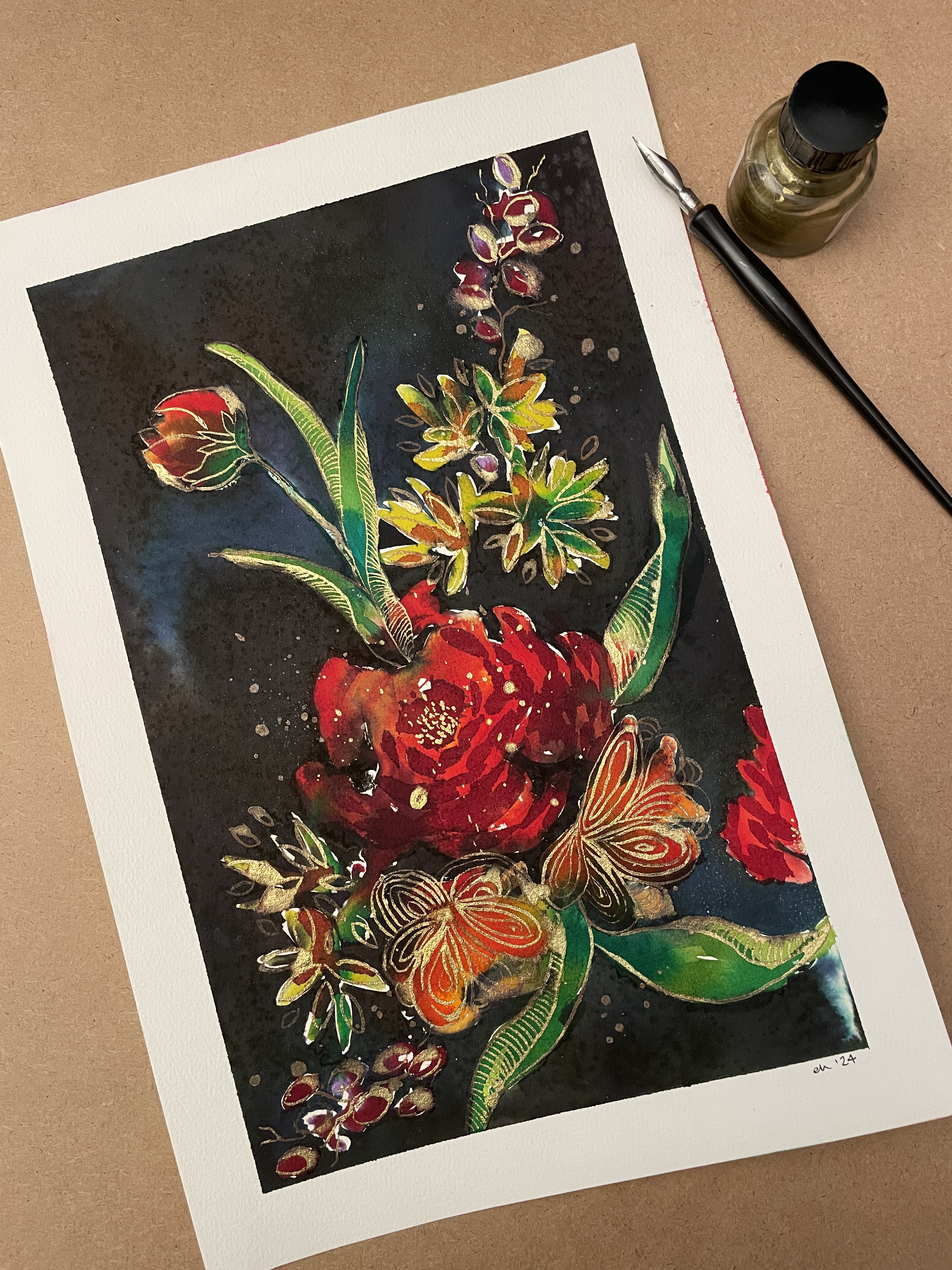


Image Credits
Kara Young