Today we’d like to introduce you to Issa Hourani.
Issa, we’d love to hear your story and how you got to where you are today both personally and as an artist.
I was born in the states but my family and I moved overseas to Jordan where I lived there for 13 years. Growing up in a conservative household overseas in Jordan and my father being middle eastern, anything related to the arts was considered as a hobby and not something one could pursue and accomplish anything with, making me focus more on my science courses.
When it comes to dance, most start at a young age. For me, I never would have guessed that I would end up a dancer/choreographer. Seven years ago, I was attending college to pursue medicine and one semester I needed one more unit to be full-time. Instead of piling on another science course, my friend Marissa suggested that I should take a dance class with her. What turned out to be a performance class rather than a dance technique class, had me work extra hard to keep up with those that had dance experience. When we performed at the end of the semester, and I heard the audience cheer, I knew this was something I wanted to do. So I took ten dance classes a semester from ballet, jazz and contemporary to middle eastern, Afro-Caribbean dance, salsa, and hip hop; on top of late night rehearsals, a rigorous science course load and job at Disneyland requiring a 160-mile commute round-trip. Shortly afterwards, I started working on choreography and honing in on my choreographic voice. And find things that I wanted to share with others within this newfound passion of mine.
We’d love to hear more about your art. What do you do and why and what do you hope others will take away from your work?
My movement incorporates somatic practices; thinking of awareness of the body in space and feeling parts of the body we usually neglect. Moreover, adding a mixture of fluidity and sharp staccato accents adds more dynamics and a clearer texture to the viewer. I feel that both technical, commercial, and natural movement are parts of my human experience as a dancer, and there is no reason for me to have to suppress any of them while seeking my most honest, virtuosic and beautiful dance.
When it comes to choreographing, I range from works that tell specific narratives, works about metaphysical concepts, and others that are purely abstract. However, even though pieces that might be storyless, does not mean they are meaningless. My pieces aim to entertain, shock, stir emotions, make people think and take them on a journey. My pieces have a tendency to be fall under more abstract or conceptual works as opposed to narrative work because I want people to reflect their own human history into the piece.
I have found that teaching about dance has been one of the most satisfying experiences, teaching about how it encompasses an array of topics; art, physical, psychological social and biological sciences. Bringing awareness to dance as one of the most holistic experiences known to humanity is extremely gratifying as it enlightens others that dance goes beyond a sequence of steps, that one can actually create an entire universe overtime through choreographic works and studies. I want to continue to build bridges between the dance ideology gaps; the more technical, “commercial” dance and the postmodern approaches to art making.
In addition to wanting to become a dance educator, I want to continue to explore the knowledge of others and aim to discover my body’s reactions, potential, and ways to grow beyond my underlying patterns. I believe that approaching everything a as a student student seeking enlightenment and enrichment is key. The idea of aimless exploration and allowing the honesty of curiosity and the honest bodily responses to create what it wants whilst relieving our brains from our inner and outer critics opens up countless new pathways to continue learning.
The stereotype of a starving artist scares away many potentially talented artists from pursuing art – any advice or thoughts about how to deal with the financial concerns an aspiring artist might be concerned about?
Do your research, find opportunities to showcase your work, attend art events where you can make connections, introduce yourself and ask if you can meet for coffee to pick their brains on how they got started or simply via email exchange. Fellow artists understand the challenges that they faced when they were trying to get their work out, so there is a good chance that someone is willing to help or give advise. Follow social media pages and don’t be afraid to reach out to them as well. If you ask, there is a 50% chance that they will reply. If you don’t ask, there is a 0% chance of a reply. Another great opportunity is making connections with faculty at the schools you go to, see who they know, talk to them about the field. Artistic careers heavily rely on connections and networking! As awkward as it might be to walk up to someone and make conversation, remind yourself that you are doing this for the passion you love.
Do you have any events or exhibitions coming up? Where would one go to see more of your work? How can people support you and your artwork?
I started Issa Dance Company last summer, and I’m currently working on a website for my company and a YouTube channel to have my works for people to enjoy. I apply to various showcases and festivals around Southern California, and I keep my company’s Instagram page up-to-date with upcoming performances. My Instagram page is @issadanceco
Contact Info:
- Email: issadanceco@gmail.com
- Instagram: https://www.instagram.com/issadanceco/


 Image Credit:
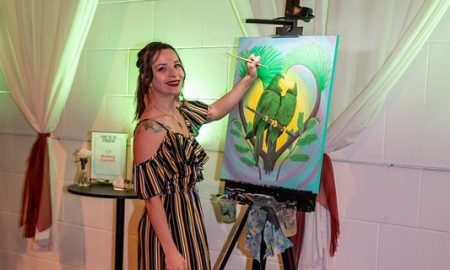
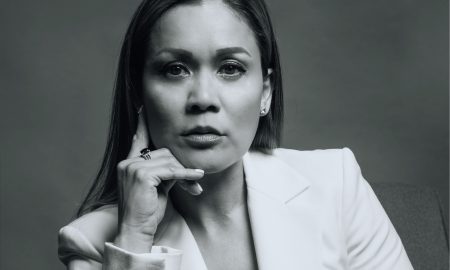
First two : Raw Artists San Diego 2018
3rd: MoraCosta College Publicity
4th: Jim Carmody
5th: Skye Schmidt
6th: Trubliss Photography
7th: MiraCosta College Publicity
Getting in touch: SDVoyager is built on recommendations from the community; it’s how we uncover hidden gems, so if you know someone who deserves recognition please let us know here.