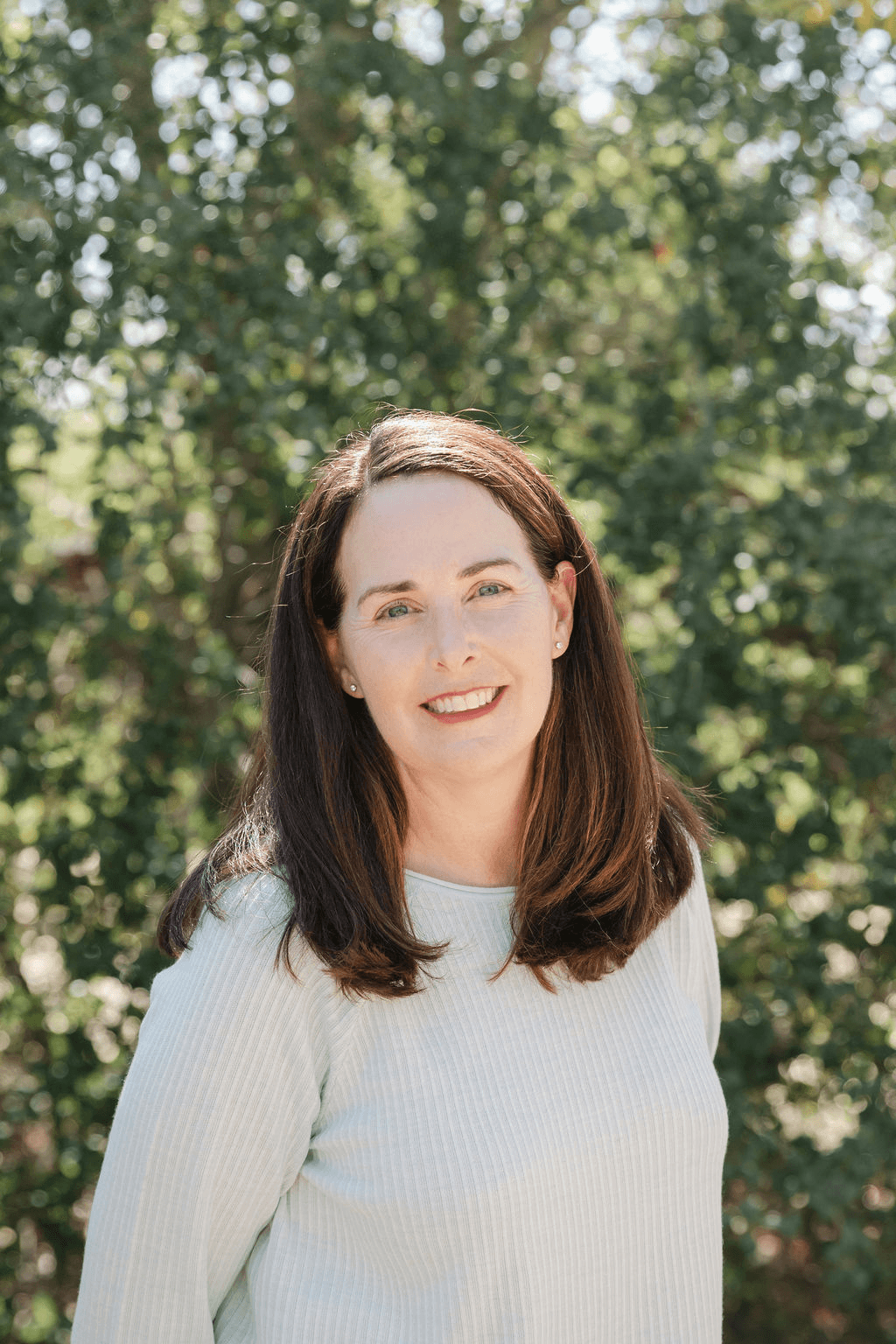
Today we’d like to introduce you to Jennifer Morrissey.
Hi Jennifer, so excited to have you with us today. What can you tell us about your story?
I was supposed to be an artist.
I studied art at UC San Diego. I created installations, photographs, paintings and drawings. But the deeper I got into the art world, the more I started questioning whether I wanted my life to revolve around making things alone in a studio.
I wanted something bigger than myself. I wanted work that connected me to people and let me serve a community. That realization pulled me toward nonprofits, and once I found that world, I never really looked back.
One of my first jobs was at KPBS-FM, booking guests for “These Days” with Dan Erwin. At the same time, I worked at People’s Food Co-op in Ocean Beach to make ends meet.
Eventually I landed my first full-time nonprofit job doing public relations and marketing at the Museum of Contemporary Art San Diego (MCASD). From there I became deputy director of the Timken Museum of Art in Balboa Park.
The Timken was small, which meant there was no staying neatly inside a job description. I did fundraising. Marketing. Outreach. Education planning. Whatever needed to be done. That kind of all-hands-on-deck work became a way of life for me in nonprofits. You wear a lot of hats because the mission is bigger than any one job description.
That turned out to be pretty good training for the rest of my career.
I went on to work at the University of San Diego and UC San Diego, then at Voices for Children, which advocates for children in foster care. In 2018, I joined the Mission Trails Regional Park Foundation, where I serve as executive director.
On paper, art museums, universities, foster youth and an 8,000-plus-acre regional park might not look like a super straight line. But to me, they are. The common thread is community service.
I grew up with that idea. Before I was born, my parents served in the Peace Corps in Tanzania. My father practiced medicine and my mother worked as a public health nurse. Later, after my father’s medical residency in St. Louis, our family moved to Stockton in California’s Central Valley to establish the region’s first heart program.
They built their lives around the idea that your skills should be put to use for the greater good.
I found my own way to put that lesson into practice.
Today, instead of making art, I help raise funds to conserve land, improve a City-owned public park, create educational opportunities and give people more ways to connect with nature and with one another.
Can you talk to us a bit about the challenges and lessons you’ve learned along the way. Looking back would you say it’s been easy or smooth in retrospect?
The road has had plenty of detours, tight budgets and moments when the math was not mathing. Anyone who’s worked in nonprofits knows that resources can change quickly. Budgets are often tight, staffing is limited and you are constantly asking yourself how to have the greatest possible impact with what you have.
One of the hardest parts is that nonprofit leaders spend a lot of time proving the value of work that we already know matters. You are continually making the case for why a program deserves funding, why a project is important, why your organization is worthy of investment. At the same time, you know that the funding decisions you make affect real people and their jobs and families. When people’s livelihoods depend on the decisions you make, that’s the part of leadership that can keep you up at night.
I’ve spent most of my career at relatively small organizations, where there is rarely the luxury of doing just one thing. You learn to wear a lot of hats, change direction quickly and solve problems without necessarily having all the resources you wish you had.
And, like so many women, I’ve balanced all of that with raising a family. That means taking a work call after a night up because of a kid’s ear infection, squeezing in back-to-school night between deadlines and knowing that sometimes the people who need you most are at home while the work still needs you too. You figure it out, often imperfectly.
But I also think those constraints teach you to be resourceful. When you don’t begin with unlimited money or people, you learn to build partnerships, make a strong case for your ideas and keep looking for scrappy, creative ways forward.
As you know, we’re big fans of you and your work. For our readers who might not be as familiar what can you tell them about what you do?
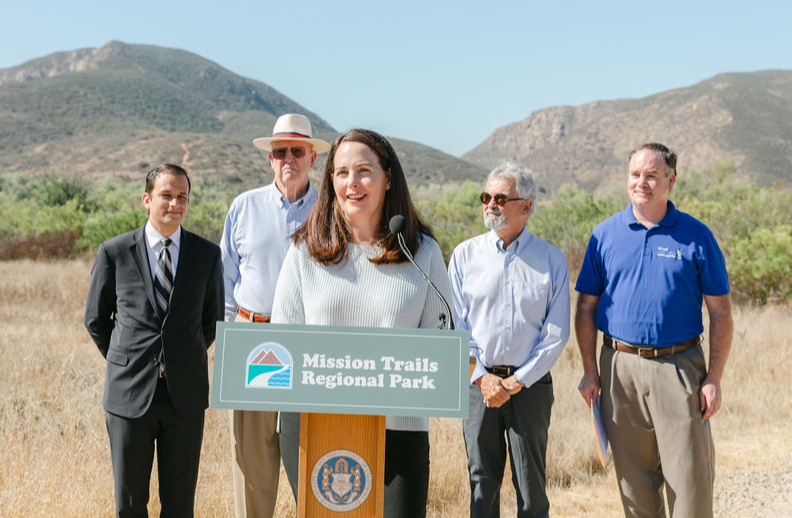
I’m the executive director of the Mission Trails Regional Park Foundation, the nonprofit organization that works in partnership with the City of San Diego to help preserve, protect, improve and expand Mission Trails Regional Park.
Because we’re a small nonprofit, I continue to wear a lot of hats.
A big part of my job is identifying things the park and community need, figuring out how we can make them happen and then finding the funding and partners to actually do the work. That can mean fundraising for a major conservation or park maintenance project, building relationships with public agencies and community stakeholders, supporting education programs or simply helping more people understand why this extraordinary place is worth protecting.
What I love most is seeing the impact in a very tangible way. Mission Trails can be a child’s first experience hiking in nature. It can be where someone goes every morning to clear their head. It can be a classroom, a wildlife refuge, a gathering place or simply somewhere to feel a little farther away from the city while still being right in the middle of it. Sometimes the impact is quieter. I love walking into the Visitor Center and seeing longtime volunteers sitting together, talking over snickerdoodles, catching up and laughing. They came to give their time to the park, but along the way they built friendships, community and a real sense of purpose. That means a lot to me.
I’m especially proud of how much the Foundation has grown and what that growth has allowed us to do. Our budget has grown roughly tenfold, our staff has expanded significantly, and we are taking on projects at a scale the organization had never attempted before.
One of the most exciting examples is land conservation. We launched a land-acquisition effort that has already helped add 108 acres of permanently protected open space to Mission Trails. We have also greatly expanded our education, conservation and stewardship work. In 2025, the Foundation was recognized as a California Nonprofit of the Year, which was meaningful because it reflected the work of an entire team, including our staff, board, volunteers, donors, partners and the City employees we work alongside every day.
If there is something that sets me apart, I think it’s that I have a pretty deeply ingrained belief that anything is possible.
I get that from my parents, especially my dad. He has always taken on ambitious things, both professionally and personally, and I grew up with this idea that you don’t automatically rule something out because it is difficult or because no one has done it before. My default setting is possibility.
That mindset has served me well in nonprofit work, because so much of the job is figuring out how to make something happen when you don’t have all the money or people you wish you had. My instinct is usually: Okay, but how could we do it if we tried?
We love surprises, fun facts and unexpected stories. Is there something you can share that might surprise us?
Something people may not know is that my interest in public service extends beyond my nonprofit work. I serve as a Planning Commissioner for the City of Lemon Grove, where I have lived with my family for more than 20 years, and I am currently seeking a seat on the Grossmont Healthcare District board.
Healthcare might seem like an unexpected direction for someone whose career has centered on arts, nonprofits and conservation, but it has been around me my entire life. My dad is a physician and my mom was a nurse, and I’m actually one of the few people in my family who did not go into healthcare.
For me, getting more involved locally feels like a natural extension of everything else I’ve done. I’ve volunteered, donated, advocated and tried to support the causes I care about. At a certain point I started asking myself: What else can I do?
There is so much need in our communities, especially underserved communities like Lemon Grove, and I believe local government and local institutions can make a real difference in people’s everyday lives. I want to be part of that.
Contact Info:
- Website: https://mtrp.org/
- Instagram: https://www.instagram.com/missiontrails_regionalpark/
- Facebook: https://www.facebook.com/missiontrailsregionalpark
- LinkedIn: https://www.linkedin.com/company/mission-trails-regional-park-foundation/