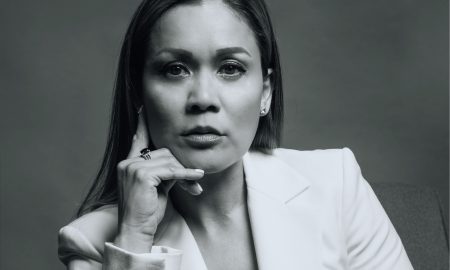
Today we’d like to introduce you to Dana Rowley.
Dana, please share your story with us. How did you get to where you are today?
I graduated college with a Sociology degree, but also with two internships in FM radio under my belt. I loved radio – especially the behind the scenes promotions work – I had no idea work could be so fun. So I pursued that path after graduation and eventually landed myself a full-time position – 40 hours per week at minimum wage, success! Haha. After about a year that turned into a salaried position and my mid-twenties self couldn’t have been happier. I truly loved what I did, had access to all the free concert tickets I could handle and worked with my best friends. But what I didn’t realize at the time was that I started in radio the same year the iPod was invented. Combined with the economic downturn of 2009, I came into work on a January morning and was asked to pack my desk up and leave. I found myself back home with a severance packet and my travel mug still full of coffee. Surreal.
This kicked off a year-long exploration of what was next. I knew the job and industry I loved was forever changed and the career path I thought I was on was much less viable. So, I spent the next year working part-time gigs, a few more internships and doing a lot of soul searching to figure out what was next. One of my internships landed me at a sport headphone company that made waterproof headphones for swimmers and surfers. I did both activities, combined with my love of music – it seemed like a natural fit. The company was called H2O Audio and were a small, late stage startup based in Pacific Beach. I started as their community manager, using my experience promoting radio personalities to run their blog and social media presence. After a few months, they hired me full time.
Because they were small, I was able to work my way up quickly and was in charge of all the marketing efforts for the company by my third year there. In the three years I was there, I worked under three different CEOs – never a marker of stability for a business. In the last year, the company underwent a full rebrand, changing their name, logo, packaging – everything. A process I managed and directed working with a creative agency in Solana Beach. What I didn’t know at the time was that the rebrand was a last effort to dramatically increase the sales of the company, and when the results didn’t meet expectations a few months after launch, the investors decided to close the doors. That made me once again out of work. Downsized twice before I’d turned 30.
This experience made me lose faith in traditional employment, and though working for myself sounded incredibly scary, I figured I was already at the bottom and didn’t have much to lose. I could look for another job, or look for clients, so I went for the later. I’ll be the first to admit I just dove into working for myself without much planning or research. At the time, the craft beer scene was booming in San Diego and I wanted to use my branding experience to help new breweries in town – so I named my company “The Mash Marketing” – since making a mash is part of the brewing process. What I didn’t realize is that most breweries – new ones in particular – are super strapped for cash and have no interest in hiring branding help. Fortunately, a previous co-worker and friend from H2O Audio knew of a local tech startup who needed marketing help. He made the introduction and from one meeting, the company offered me a 6-month contract. That was the kick start I needed and I’ve never looked back. I’ve also still never worked with a brewery, haha! I’ve had some slow times and some great projects and after 6+ years of being self-employed, it would take one heck of a perfect job for me to go back to traditional employment.
Overall, has it been relatively smooth? If not, what were some of the struggles along the way?
About as smooth as heavy grit sandpaper! My career as a self-employed marketing consultant has certainly had ups and downs. I learned that giving more than 50% of your time to anyone client is a bad idea. It doesn’t leave you enough room to gear up new projects so that you have work when the current project goes away. I learned that you have to constantly be prospecting. There is no real “downtime” when you work for yourself (not meaning like breaks or vacations – everyone needs those) but that you always have to be promoting yourself, looking for opportunities and keeping leads coming in, even if you think you don’t need them. I learned that being self-employed is as much about selling yourself as it is about the work your doing. And after weathering one really slow period where I truly didn’t know how I’d pay the bills from month to month, I learned that I’m more resourceful and stronger than I think. Now that I’ve weathered that slow time, I feel more prepared to face one again and much less scared. I feel like if I weathered it once, I can do it again.
As for advice for young women just starting out – I don’t think I have much advice that’s female-specific, I think it applies to everyone, but maybe women more so. Be curious. As lots of questions. No one expects you to have all the answers when you’re 22, even though application processes and interviews can make it seem like people want you to. Also, don’t apologize unless it’s warranted. I hear so many women say, “I’m sorry” when it’s completely unnecessary or when what they mean is “excuse me”. I’m sorry if for when you were truly wrong. Don’t apologize for speaking up, asking for clarification or making clear what you want.
What should we know about The Mash Marketing? What do you guys do best? What sets you apart from the competition?
As a freelancer, consultant, solopreneur, whatever you want to call it, for over six years, my number of projects and clients is well into the double digits. I’ve covered a wide range of services, types of businesses and industries. Through that variety, I’ve continued to hone in on where my innate strengths are and how to capitalize on them. I’ve also determined what sort of work makes me excited and while I don’t think I would call marketing my “passion” I do enjoy it and think it’s a helpful and important role for any business. Currently my work is an interesting mix that falls into three, not all marketing related, buckets. I manage a business accelerator program for a non-profit called San Diego Sport Innovators that pairs Sports and Active Lifestyle companies with experienced mentors to help entrepreneurs and CEOs strengthen their plans to sustainably scale their business. I’m also the San Diego Ambassador for Upwork.com. Upwork is the world’s largest freelance marketplace and my role is to host events and webinars to help freelancers connect with each other and learn how to grow their freelance careers. And, I still work on projects as a marketing consultant, focused specifically on Brand Strategy. I’ve found I have a real aptitude for helping businesses understand who their customers are, how to reach them, and how to position themselves against their competitors.
What I’m most proud of in the all the work I do is my integrity. I always approach each project looking for how I can help, not how I can profit. I offer information freely, knowing good intentions have always resulted in good work for me (even if it’s not always a 1 to 1 ratio). I do what I say I’m going to do, when I say I’m going to do it, I’m diligent in communication and very honest about my skills and expectations. To me, I don’t really see another way to do business, but I’ve learned that consistently following through on the above is really rare and definitely helps me stand out in the world of contingent work.
Do you have any advice for finding a mentor or networking in general? What has worked well for you?
Given that I actively pair mentors and companies all the time, I have tons! Since I’ve realized I’m getting kind of long winded in these answers, I’ll offer up a few bullet points:
– Don’t stress about it. A mentorship doesn’t have to be formal and it doesn’t have to be with a highly successful executive. Mentors can come from anywhere – peers, friends, strangers you met at a coffee shop. If you’re looking for guidance, just keep an eye out for it and you’ll find it in the least likely places.
– Ask good questions. I saw a quote once that said “The answers you get are only as good as the questions you ask.” And I have found that to be SO true. Asking good questions is a learned skill and it also requires good listening skills. As I’ve continued to work on this over the years, it’s become really obvious to me how few people REALLY listen well and process the information they’re given. The more you can do that, more you’re in a good place to ask intelligent questions, really get to know someone and get good advice. In my experience some of the most successful folks are really humble and won’t offer up gems of information unless asked.
– Be specific. If you do have a mentor in mind and aren’t sure how to approach them, be specific in your ask. Most successful people have to be judicious with how they spend their time. Don’t just ask for a meeting or to go get coffee. Let them know specifically what you want to learn from them. In my experience an ask that says “I really admire what you’ve done, and I’m very curious to find out what encouraged you to take the leap and form your own marketing agency.” Is much more likely to get an answer than “I’m looking for a mentor and really admire what you’ve done, can we set up a time to get a coffee or lunch?”. You’d be surprised how often I see the later…
Contact Info:
- Website: www.themashmarketing.com
- Email: dana@themashmarketing.com
- Other: www.upwork.com/o/profiles/users/_~01797bb4449da5acb4/


Image Credit:
Preeya Manoorasada, Ashley Oneil, Prime Hall, Kristy Petroff
Suggest a story: SDVoyager is built on recommendations from the community; it’s how we uncover hidden gems, so if you or someone you know deserves recognition please let us know here.