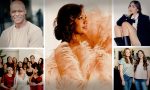
Today we’d like to introduce you to Fedella Lizeth.
Alright, so thank you so much for sharing your story and insight with our readers. To kick things off, can you tell us a bit about how you got started?
I was born & raised here in San Diego, that is unceded Kumeeyaay land, with two very loving parents. My dad having migrated here from Nicaragua when he was younger, and my mom being a first-generation Italian American, I hold first and second-generation placements here. I am the oldest of three.
Growing up, I was mainly living around central San Diego. I moved around a lot after my parent’s divorce when I was 7 years old. I’ve resided in neighborhoods like Normal Heights all the way to Sherman Heights. I went to Roosevelt Middle School and San Diego High School right along the 7-bus route that stretched from La Mesa all the way to Downtown. I went everywhere as much as I could. My families at the time primarily lived in places like Little Italy, used to be known as Woptown, and more north, Oceanside. San Diego’s region was in my hands.
Movement granted me experience and an awareness to a multitude of cultures whether that is through music, food, people, and ways of living. I grew up mostly amongst the Latino community here, where a lot of us kids were first generation, experiencing a lot of the same things, such as being the pioneers of our families and achieving goals that our families had worked really hard to get us here for.
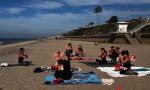
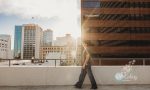
I started documenting my life at a young age, whether that was through whatever camera I could get my hands on. Though, I wasn’t photographing seriously until 2018. When I picked up my first film camera at an Amvets thrift store. I grew up shopping at this store for everything I needed. So, to find something that became so significant later, at a place that harnessed my childhood, means a lot. For the next five years, I have had a commitment to documenting not only my way of life or my family’s way of life but to showcase a true community’s perspective of living in San Diego, one that my fan base understands and resonate with. One that normalizes our unique experiences, cultural backgrounds, and ways of living through photography. One that hasn’t been told on mainstream media. I wanted to really mend the disconnect between the raw, beautiful experiences and people who are from here and the butchered, tourist-appealing narrative the city has put in front us like a curtain.
I’m sure you wouldn’t say it’s been obstacle free, but so far would you say the journey has been a fairly smooth road?
I don’t think anything successful is going to be easy. I learned a lot over the years. I started with teaching myself and hadn’t gotten maybe what one would validate a proper education about photography until 2020 when I decided to take an Introduction to Black and White Photography class at San Diego City College to learn the basics I couldn’t figure out and also to learn to develop and process my film. Before though, I frequent a lab mostly and had went to different labs or researched different manuals for the film cameras I used because information and access to them was so difficult to obtain without having big bucks. I learned quickly that film photography is an expensive hobby. These cameras are special, vintage in their stature but contemporary in what they will do. Being young and still having to figure out life, working full time and going to school full time, having to support myself first, it was hard to support what quickly became my passion.
However, because film photography became my passion, and inspiration was in every corner of the world for me, I knew I couldn’t let something like a financial struggle decide my fate. I invested myself through and through to learn and pursue my passion for documentation, and specifically with film.
Film is such an interactive and engaging practice. To produce one good photo, you have to talk with the camera. Ask if it’s okay, seriously. And work with all it has to give. Maintain its cleanliness and upkeep. It’s also a very humbling process because as I started learning, I’ve lost a few good roles, or my camera (due to its old age) just gives out in the middle of a shoot, and I just have to accept it.
This process has allowed me to develop an attachment with my camera. Where when I am holding it up, aiming at my subject, the camera and I are one and one. She is my eye, and I am asking her to see the subject for what they are.
It didn’t take a long time to be comfortable with the camera in hand. I think it took more time being comfortable with showing others that this is what I do. And to ask permission to others to let me do this.
Now, I learned I don’t need permission to pursue a photographic career, as a queer woman of color, as someone who started from the bottom and doesn’t have the fanciest things, and only has faith and dedication to preserving my culture.
Appreciate you sharing that. What else should we know about what you do?
I have been photographing for five years now. I started when I was 18 and am now 23 years old. During this time, I have shown work in about 20 galleries, many community spaces, and some bigger ones, including the Athenaeum. I have been published in Bob Dominguez’ “La Tierra Mia” first & second edition in 2020. I have led seminars for places like the UCSD Cross Cultural Center and spoken to classrooms such as young women at the Lindsay Community School in Barrio Logan or seniors at Hoover High School in City Heights. I have also been featured in ABC10’s “Latin in America” in 2022, where I got to discuss my life experiences and my passion for photography along with having a spread in the San Diego Union Tribune in January 2023 written by Seth Comb discussing my work, my foundation, and principles. These are the things I am most proud of. It took a lot to recognize the true worth in myself not only as a photographer but as a woman. However, I will always preach that my successes are never just my own but my communities too. I’m only a voice, and there is more than one. And my truest joy comes from giving other joys. So, when I see people I love and care for rooting for me, supporters new & old, I am always working hard for them.
Are there any books, apps, podcasts, or blogs that help you do your best?
I read a lot of self-guide books. This is something I have always done since I was 14 and taking the bus 7 everywhere. My favorite book is Siddhartha by Herman Hesse. I read this when I was 14 and it completely changed my way of thinking about faith. Then I went on to other books such as the Four Agreements, the Power of Now, and Khalid Hosseini’s A Thousand Splendid Suns, and texts like Persepolis. I have always been spiritual and political. Later on in my adult life, I checked back in with myself and began reading again. I enjoy Chicano authors such as Ana Castillo, as well as Gioconda Belli is a Nicaraguan woman that detailed the revolution, where my family comes from, in Nicaragua. Lately, I have been reading My Grandmother’s Hands: Racialized Trauma and the Pathway to Mending Our Hearts and Bodies. These books have always helped me understand the ins and outs of life and where to take my experiences. How to heal and not to hurt. The lessons I learn are manifested into all that I do, including my work.
Contact Info:
- Website: fedellalizeth.com
- Instagram: @fedellalizeth


Image Credits
Fedella Lizeth