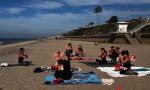
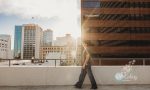
Today we’d like to introduce you to Ian Duffy.
Hi Ian, so excited to have you with us today. What can you tell us about your story?
From the Bedside to Building Empires: The Story of Ian Duffy
My name is Ian Duffy. I’m a 32-year-old real estate investor based in San Diego, California. But my journey didn’t start here. I grew up in northeast Pennsylvania, raised by two parents in healthcare—my dad, a pain management physician with over 35 years of experience, and my mom, a bedside nurse turned nurse manager. Naturally, I thought the healthcare path was my only option. I didn’t know any better.
I started college at Temple University in Philadelphia as a biology major, taking courses like organic chemistry and thinking I was bound for medical school. But after two years, I realized I was fighting to survive a system designed to weed people out. The rigid structure and burnout of the pre-med path didn’t resonate with me. So I pivoted.
I switched majors to kinesiology and then completed the fastest accelerated nursing program in the country—right there in Philadelphia. Becoming a nurse was one of the best decisions I ever made. It allowed me to work directly with people, to help them when they needed it most, and to build a career that had meaning.
At the same time, I had already started traveling the world. In my early 20s, I experienced early financial success through sales during college. That unexpected income gave me the freedom to start exploring—over the next decade, I visited more than 20 countries. Travel taught me more about myself than anything else in life—who I am, what I value, and what I want out of this short time we get here: freedom. It exposed me to different ways of thinking, diverse cultures, and incredible people who challenged the lens through which I saw the world. I truly believe travel is the greatest killer of ignorance, and it helped me become the person I am today.
After graduating, I started my nursing career on night shift at one of the most underfunded hospitals in Philadelphia, caring for the city’s most underserved patients. The work was rewarding, but also mentally, emotionally, and physically draining. By the winter of 2019, I finally decided it was time to chase my lifelong dream: moving to California.
I had a job lined up at UCSD in San Diego, but my California nursing license would take two months to process. So I bought a one-way ticket to Southeast Asia to backpack while I waited.
That’s when everything changed.
My first stop was supposed to be the Philippines. But due to a layover in mainland China—on what turned out to be day one of the global COVID-19 outbreak—I was denied entry upon arrival. So I pivoted again, this time to Bali, Indonesia. After traveling for almost three days straight, I finally arrived in what would become one of the most magical places I’d ever seen. But just six days later, Trump made a national announcement: American citizens abroad needed to return home immediately.
I flew back to the U.S. and went into quarantine. While I was isolating, the government passed emergency legislation allowing nurses to work across state lines without needing new licenses. That same week, I got a call from a recruiter offering me a position in New York City—ground zero for the pandemic. I didn’t hesitate.
Five days later, my parents dropped me off in NYC. I walked into the most terrifying situation I’d ever faced in my life.
My very first shift I was assigned to a makeshift ICU built in the basement of a hospital—a 22-bed negative pressure unit converted from an old library. We had no supplies. Limited masks. We were using trash bags for gowns. We were mixing different concentrations of life support blood pressure medications because the pharmacy couldn’t keep up with the demand. If your patient’s IV bags went dry, they’d go into cardiac arrest. It was chaos. It was non-stop adrenaline. And every hour felt like impending doom. Every patient I treated was paralyzed, sedated, on a ventilator—and every one of them died.
I’ve shared more intimate moments with complete strangers and their families in those rooms than I have with some of my own family. We were all just trying to hold the line. I didn’t fully process the trauma until years later, but by month three of NYC, I was spiraling. I couldn’t sleep. I stopped eating. My body was shutting down.
That’s when another opportunity appeared—this time in Southern California. I signed a travel-nursing contract on a Wednesday and started my first shift Friday night. I flew cross-country with no apartment, a backpack full of clothes, and no backup plan. But something inside told me I had to be there. And I was right. I found home in San Diego.
Over the next four years, I worked in ICUs at Scripps and UCSD as the pandemic evolved. The work was relentless—night shift after night shift, with new variants and no end in sight. I started to feel a deep misalignment between the person I was and the career I was living. I loved my patients. I loved helping people. But I couldn’t help noticing how much of healthcare had turned into a profit machine.
When I finally worked at one of the largest healthcare systems in the state, I saw it for what it was. Decisions weren’t made with patient care in mind—they were driven by profits, metrics, greed and politics. I saw patients harmed due to lack of resources. I saw providers so burnt out they couldn’t safely function. And it broke something in me.
Then one dinner changed my life.
I went out with some fellow travel nurses and was introduced to a group of real estate developers. They told me how they’d once been broke, living out of their cars—now they were managing multi-million dollar portfolios and building generational wealth. They were free. Energized. Alive.
I was hooked.
At first, I thought I’d become a realtor. But I quickly realized I’d just be trading one burnout job for another. What I really wanted was to be an investor. A builder. A developer. I started attending every meetup I could find. I asked a million questions. I learned how to underwrite deals, raise capital, create a plan, and see value others missed.
And I didn’t just learn—I acted.
I took every dollar I’d saved from travel nursing and invested in real estate. Today, I’m part of several ground-up development projects in San Diego and Nevada. In just a few years, those investments will make me more money and give me more freedom than an entire career at the bedside ever could. More importantly, they’ve given me my time back.
I’ve learned the truth about how wealth is built in this country. It’s not from working harder. It’s from leveraging assets, tax advantages, and smart partnerships. The government rewards owners. It punishes employees. And no one teaches you that—not in school, not in nursing orientation, not in your 401(k) info packet.
And that’s the problem.
I started talking to other nurses about what I was doing. At first, people didn’t get it. They thought I was crazy. But now they’re seeing the results. They’re asking questions. They want in. So I built something to help them.
In early 2025, I co-founded Scrubs2Estates Capital with two partners—a capital fund that helps nurses and healthcare workers invest in high-yield real estate opportunities. Our goal is to help them escape burnout and build real, lasting wealth. Nurses spend their entire careers putting everyone else first. Our mission is to help them finally put themselves first.
My father is still working at 67, unsure if he can retire. That’s not going to be me. I’m putting every dollar I have on the field over the next five to ten years—because I’ve seen the blueprint. I’ve met the mentors. I know where this road leads.
My new goal is simple: impact. I want to show other nurses that they do have options. That they’re not stuck. That they don’t have to wait until they’re 65 to live their lives. I want to help them invest, build, grow, and live with freedom.
I’ve always been a nurse at heart. I still am. I just traded scrubs for blueprints. Instead of saving lives at the bedside, I’m now helping people reclaim their lives through ownership and opportunity.
Looking back, everything had to happen exactly how it did—every shift, every trauma, every turning point. If I hadn’t left Philadelphia, walked into that basement ICU in NYC, if I hadn’t bought that one-way ticket, if I hadn’t said yes to San Diego—I wouldn’t be here.
But now I am. And I’m just getting started.
Alright, so let’s dig a little deeper into the story – has it been an easy path overall and if not, what were the challenges you’ve had to overcome?
Has it been a smooth road? If not, what were some of the struggles along the way? The biggest struggle was understanding that I feel like I was lied to for my entire adult life. My parents told me that the way you work towards freedom and wealth is nights, weekends, and holidays, and investing in your mutual funds in 401k. I don’t think they had any malintent, but I feel like we were lied to as kids in terms of how the world works, but we were lied to because they were lied to. There’s a difference why some families never break out of the poverty line, and while other people live the coolest lives imaginable. It comes down to education and wanting to know more to get better, and it’s all about collaboration. It’s always who, not how.
Thanks for sharing that. So, maybe next you can tell us a bit more about your work?
Right now, I specialize in ground-up real estate development—turning underutilized land into high-density housing opportunities. My focus is on the city of San Diego, where we take advantage of zoning overlays and development incentives that allow us to build more units than traditional zoning would normally permit. We’re not reinventing the wheel—we’re simply following the proven paths of successful developers before us. With enough grit, persistence, and the right team, these deals are very possible and incredibly powerful.
What sets me apart is that I didn’t come from a family of investors or developers. I had no blueprint handed to me. I found this path on my own, while burned out at the bedside as a critical care nurse during COVID. And now, I’m not just doing this for me—I’m building something bigger. My mission is to bring other healthcare workers with me and show them the same path to financial freedom and fulfillment. As my partner always says, “A rising tide lifts all ships”—and that’s exactly what I’m here to do.
How do you think about happiness?
It’s funny—back in high school, I got in trouble one day and was called into the principal’s office. She asked me what I wanted out of life, and I told her, “I just want to help people.” She laughed at me. And to this day, I still don’t understand why. Because deep down, that’s always been my truth.
I believe I was put on this earth to be a healer—not just in medicine, but in life. I genuinely think goodwill compounds faster than money. My goal is simple: to leave this world knowing I made a positive impact on as many lives as I could. That’s what fills my cup. That’s what keeps me going.
Contact Info:
- Website: https://scrubs2estates.com
- Instagram: @scrubs2estates
- Twitter: @scrubs2estates