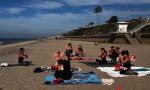
Today we’d like to introduce you to Jennifer Bright.
Alright, so thank you so much for sharing your story and insight with our readers. To kick things off, can you tell us a bit about how you got started?
My earliest memories are saturated with the scent of pine and damp earth. Growing up in New England, the woods behind my home weren’t just a backyard—they were my first classroom, my sanctuary. Family camping and hiking trips taught me a fundamental truth: the natural world is the greatest master designer. I was always captivated by the intricate patterns on a moth’s wing or the complex texture of a fern. This deep, unshakeable connection to the earth became the quiet foundation of who I am.
I spent nearly two decades navigating the dazzling, high-stakes world of high-end couture. I thrived on the meticulous design and powerful aesthetic. But the city, despite its brilliance, felt increasingly distant from that foundational connection. It took two major catalysts—a move to the wonderfully biodiverse landscape of San Diego and a serious health scare—to make me realize my heart was homesick for the wilderness. The constant pursuit of man-made perfection suddenly felt empty. I had achieved corporate success, but I was missing my wild purpose. I realized I had been chasing beauty in a boardroom when the truest design, the most profound patterns, were waiting for me outside. I was homesick for the wilderness.
Having earned my pension, I took a decisive leap into early retirement. My next career exploration began with a radical act of self-discovery: backpacking the John Muir Trail. It was a brutal, beautiful, soul-deep education. Stripped of every luxury and relying only on my own grit, the Sierra taught me the power of self-reliance, radical gratitude, and confidence. Enduring the fear and the pure joy of the wilderness, I unlocked a profound clarity: As long as you have your health, shelter, food, and a support system, you have everything you truly need. That single perspective made every future life and career decision simple.
So, I leveraged my corporate expertise—the strategic planning and business skills—and offered it to small nonprofits. This bridge led me, inevitably, to Nature Collective. The moment I saw the preservation work at the dynamic San Elijo Lagoon, I knew my life’s chapters had converged. I fell in love with the mission, the precious wildlife that depends on this system, and the passionate community that sustains it.
Nature Collective’s mission to ‘drive a passion for Nature for All’ is my personal calling. My time in nature is integral to my identity, and now my mission is to ensure that everyone, especially those in urban environments, has access to that same transformative connection. I am now an advocate, working to protect the most essential and powerful design of all: our open spaces and the wildlife they shelter.
Can you talk to us a bit about the challenges and lessons you’ve learned along the way. Looking back would you say it’s been easy or smooth in retrospect?
The short answer is: No, it hasn’t been smooth—it’s been a constant, challenging education in patience and resilience.
Leaving the corporate world for a nonprofit wasn’t just a career change; it was a fundamental shift in business models. In corporate business, resources were relatively abundant, and success was measured by profit. In conservation, every win is hard-fought, and success is measured by the survival of a species or the protection of an acre.
In a nonprofit, we have less red tape, which allows for agility and rapid response to environmental threats—a huge benefit. However, this often means compensating for resource scarcity. You’re not just strategizing; you’re wearing multiple hats and constantly improvising because resources are lean. That lack of predictable, robust operational funding is a stark contrast to my previous life.
Securing funding is the single most persistent challenge. We aren’t selling a product; we are selling the future health of our planet. This becomes exceptionally difficult in today’s environment, where conservation efforts often face political assaults on the environment, impacting crucial grant availability and regulatory support. It feels like we are not only fighting to save the wetlands, but also fighting to keep the legal and financial ground from shifting beneath our feet.
In conservation, you must submit to the will of dynamic, uncontrollable nature. The very subject of our work—the San Elijo Lagoon and its dependent wildlife—is inherently unpredictable. We can have a brilliant restoration plan, but a single, unprecedented weather event driven by climate change can force us to rethink and strategize a plan of action. This requires a level of flexibility and persistence.
There is also the constant, difficult tension between preserving open space and the pressure for economic development. We are constantly in negotiation, fighting to demonstrate that a healthy, protected environment is not an obstacle to prosperity, but the bedrock of long-term community health. It’s a high-stakes competition for land that is both precious and finite.
In my first career, I managed processes to create luxury. In my second, I manage unpredictability to protect necessity. Every day is a difficult, beautiful fight to secure what the world truly needs: clean water, safe space for wildlife, and a connection to nature for all.
It hasn’t been smooth, but it has been the most purposeful and rewarding work of my life. The challenges are simply indicators of how essential the mission is.
Can you tell our readers more about what you do and what you think sets you apart from others?
Nature Collective connects lands and hiking trails, provides experiences for people to fall in love with nature, and protects the beauty all around us. We’re a nonprofit that stewards lands like the San Elijo Lagoon – and offers engaging events for one and all.
What truly makes me happy now is experiencing convergence—the feeling that all the disparate threads of my life have finally woven together into one cohesive purpose, directly serving the thing I loved most as a child: the wild, natural world.
There is nothing more satisfying than seeing the tangible results of our work at the Nature Collective. Watching the San Elijo Lagoon thrive, knowing that the habitat we protected allowed a certain bird species to fledge, or seeing native plants take root where invasive species once choked the life out of the soil—that is powerful, real happiness. It’s moving from abstract business goals to living, breathing success.
My happiness is amplified when I witness someone else—especially a child—experience that transformative moment in nature that I had decades ago. Seeing a city kid’s face light up with wonder as they discover a tide pool creature or touch the bark of a tree is confirmation that our mission to drive a Passion for Nature for All is working. I want everyone to feel the grounding, simplifying power of the outdoors.
After years in the demanding, high-pressure corporate world, I now find deep contentment in the simplicity of my perspective. The John Muir Trail taught me what is truly essential, and my work every day reinforces that lesson. When I’m walking through the lagoon and feel the salt air and the sun, I’m happy because I know I am precisely where I should be, doing the work that matters most.
Pricing:
- Nature Collective is a 501(C)(3) nonprofit organization, you can donate to protect nature at NatureCollective.org/donate
Contact Info:
- Website: https://www.naturecollective.org
- Instagram: https://www.instagram.com/sdnaturecollective
- Facebook: https://www.facebook.com/SDnaturecollective
- LinkedIn: https://www.linkedin.com/company/sdnaturecollective
- Youtube: https://www.youtube.com/@NatureCollective
- Other: info@naturecollective.org