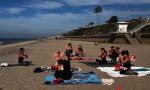
Today we’d like to introduce you to Jennifer Salazar.
Hi Jennifer, thanks for joining us today. We’d love for you to start by introducing yourself.
Growing up in Compton, my childhood was shaped by the harsh realities of being undocumented, living in deep poverty, and navigating the daily turbulence of an abusive home—circumstances that made safety feel temporary and dreams feel out of reach. But everything changed when a teacher encouraged me to join the Mathematics, Engineering, Science Achievement (MESA) Program, a lifeline for students like me that offered mentorship, academic support, and a glimpse into a world I didn’t yet know existed. MESA became my constant through more than 18 years of my life, giving me a community that believed in me long before I learned to believe in myself. One of the defining moments of my journey came in 2015, when my teammate and I traveled to compete at the National Engineering Design Competition (NEDC), where top MESA teams from across the United States faced off in an intense engineering challenge. Standing there as a young Latina who grew up undocumented in Compton—a girl who once didn’t even know what engineering was—I helped lead my team to win first place nationally with our prosthetic arm design. That victory didn’t just put a medal around my neck; it cracked open a possibility I had never dared imagine: that I belonged in engineering. That belief carried me to the University of California, Irvine, where I earned my degree in biomedical engineering and continued working with MESA, this time guiding younger students through their own engineering projects and becoming the mentor I had once desperately needed. Today, as a Staff Engineer working in new product quality for neurovascular medical devices, I transform complex concepts into safe, life‑changing technologies for patients—work that feels like the fulfillment of a promise I made to myself years ago. My connection to MESA continues as a Statewide Industry Advisory Board Member, where I help shape opportunities for the next generation of underrepresented STEM students. And beyond the work I do in labs and boardrooms, I find grounding in movement and community—as a Zumba instructor, weightlifter, and runner—drawing strength, joy, and healing from the same sense of forward momentum that carried me from a childhood of survival to a career defined by resilience, purpose, and hope.
Alright, so let’s dig a little deeper into the story – has it been an easy path overall and if not, what were the challenges you’ve had to overcome?
No, it hasn’t been a smooth road—not even close. My journey has been marked by obstacles that shaped me long before I ever knew what engineering was. Growing up undocumented meant living in constant fear and uncertainty, always aware that something as simple as a question about where I was born could unravel everything. Poverty added another layer of weight—there were times when food, stability, or even a quiet space to study felt like luxuries. And living in an abusive home meant that I often had to build my dreams in the dark, holding on to hope in an environment where hope wasn’t always encouraged. Those realities didn’t just make the path harder; they made the idea of having a path at all feel impossible at times. I had to learn how to push forward without a roadmap, how to advocate for myself when I was scared to speak, and how to build resilience in moments when giving up would have been easier. But overcoming those experiences didn’t just prepare me for engineering—they shaped the way I lead, the way I mentor, and the way I show up in every room. Every barrier strengthened my conviction that representation matters, that access matters, and that students who grow up in circumstances like mine deserve to see proof that they can make it, too. My road wasn’t smooth, but it made me who I am, and it’s the reason I fight so fiercely to open doors for the next generation.
As you know, we’re big fans of you and your work. For our readers who might not be as familiar what can you tell them about what you do?
In my role as a Staff Engineer in New Products Quality at Terumo Neuro, I work at the heart of neurovascular innovation, supporting the development of life‑saving medical devices used to diagnose and treat conditions like strokes, aneurysms, and other cerebrovascular disorders. The products I work with include complex devices such as microcatheters, access catheters, embolization devices, delivery systems, and other components that guide clinicians through some of the most delicate vessels in the human body. My job is to make sure that every new device we bring to market is not only innovative, but safe, reliable, and capable of performing flawlessly when a patient’s life depends on it. As a quality engineer, I specialize in building the entire quality foundation around a product—from risk management and design verification, to manufacturing controls, inspection methods, and regulatory compliance. I’m known for being the engineer who can take a problem that seems ambiguous or overwhelming and break it into clear, structured, evidence‑driven steps. I collaborate across R&D, manufacturing, regulatory, and clinical teams to ensure that every potential failure mode is understood, every risk is reduced, and every design decision is backed by data. What I’m most proud of is the quiet but profound impact this work has: patients will never know my name, but they will trust the device in their body, and that trust is built on the quality systems I help create. What sets me apart is the perspective I bring. I grew up undocumented, in poverty, and in an abusive home, which meant I had to develop resilience, clarity under pressure, and resourcefulness long before I ever stepped into a lab. Those experiences now fuel how I approach engineering problems: I stay calm in chaos, I notice details others overlook, and I care deeply about the human beings whose lives depend on these devices. Pair that with my lifelong connection to the MESA Program—now as a Statewide Industry Advisory Board Member—and I bring not only technical expertise, but a mission‑driven commitment to representation, equity, and opening doors for others. My work is about more than medical devices; it’s about building safer technologies, better systems, and a more inclusive future for the next generation of engineers.
How can people work with you, collaborate with you or support you?
People can collaborate with me in many meaningful ways, but the most impactful place to start is with the MESA Program, the organization that transformed my life and continues to shape thousands of young engineers every year. MESA thrives because of its volunteers—people who show up to judge engineering design competitions, mentor student teams, support hands‑on build days, lead college or career workshops, speak on panels, or simply stand in the room as representation for students who rarely see engineers who look like them. Every single event, from local MESA days to regional qualifiers to the statewide and national competitions, depends on volunteers who believe in giving students the chance to dream bigger. For those who want to deepen their impact, donating to MESA is one of the most powerful ways to support our mission. Donations make it possible to provide materials, cover travel costs for low‑income students, expand access to STEM resources in underserved schools, and keep life‑changing programs running for the next generation of innovators. Professionally, I’m always open to collaborating with engineers, educators, community leaders, and companies who share a commitment to equity in STEM, whether it’s through outreach partnerships, mentorship programs, or industry initiatives that open doors for underrepresented talent. Supporting me ultimately means supporting the students who come after me—the ones who just need someone to believe in them before they learn to believe in themselves. And if you want to support in a lighter, sweatier way… you can also catch me teaching Zumba in Northern San Diego. Consider it community building and cardio.
Contact Info:
- Instagram: https://www.instagram.com/vida.with.jenny?igsh=NTc4MTIwNjQ2YQ%3D%3D&utm_source=qr
- LinkedIn: https://www.linkedin.com/in/jennifersrbarrientos/