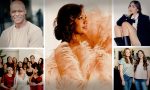
Today we’d like to introduce you to Kirsten Ashley Wiest.
Hi Kirsten Ashley, thanks for sharing your story with us. To start, maybe you can tell our readers some of your backstory.
I got started in music when I was 5 years old. My grandmother put me into piano lessons to help with brain development and coordination, but I believe she also secretly hoped I would take to music unlike my cousins before me. She asked my piano teacher to include a wide variety of repertoire in my studies, but to focus primarily on classical style music, and thus my ears were opened to the sounds of the classical music world from a very young age. As I grew older, I did not want to continue piano lessons. I thought practicing was boring and that sitting at a piano indoors was far inferior to running around outside with my friends. I unsuccessfully tried to quit multiple times, but my love for music kept bringing me back,
In fifth grade, my school did a grade-level field trip to the Dallas Opera (I grew up just north of Dallas, Texas) to see Puccini’s “Madame Butterfly”. I remember that most of my classmates were antsy in their chairs, waiting for it to end. But I was absolutely captivated. When Butterfly came onstage to sing her big aria, “Un bel di, vedremo”, I immediately fell in love and knew in that moment that learning to sing opera was what I wanted to do. It was the coolest, weirdest, most superhuman thing I had ever experienced.
I joined by school’s choir and band immediately after that experience, playing flute and learning to sing the same register of the flute. In 7th grade, I told my choir director that I wanted to grow up to be an opera singer, and she let me know that voice lessons would be the best way to get started down that path. I asked my parents for voice lessons for my 13th birthday — the only present that I wanted. They said no, but my grandmother (the same one who put me into piano lessons) said she would pay for one month of voice lessons for me to see how it goes. I attended my first one the week after my 13th birthday, and the rest was history.
I did classical and show choirs and sang in All-State Choirs, won and placed in numerous solo competitions, and went on to receive a Bachelor’s, Master’s, and Doctorate in Vocal Performance. I now perform nationally and internationally as a soloist, specializing in world premieres and the music of living composers. I also teach music and voice at two schools, San Bernardino Valley College and University of California Riverside, and serve on the Board of Directors for the Arrowhead Arts Association, a nonprofit organization that brings music education to the San Bernardino mountains.
Can you talk to us a bit about the challenges and lessons you’ve learned along the way. Looking back would you say it’s been easy or smooth in retrospect?
Not at all a smooth road! My parents have always viewed my choice to go professionally into the arts as not a well-informed decision, instead wanting me to go into the medical field where my knowledge of anatomy, physiology, and the human body shine alongside my passion for connecting with and helping others. However, I like to utilize music, and especially singing, to do the same in my teaching and performing.
Outside of that, the difficulties with my musical life really began when I was a junior in high school. My school’s choir director decided he no longer wanted me in his groups just as my solo voice was beginning to blossom in my private vocal instruction and as I was winning competitions and awards for my solo singing outside of school. During my senior year, he had me successfully removed from choir with full institutional support. Although I was still enrolled in the course, I had to spend the period sitting in the library doing music theory assignments instead of making music with the group.
This same choir director’s wife was music faculty at a university I had applied and auditioned for and was set to attend the following fall. His wife had my admission revoked at the school, and I was forced to choose another university to attend.
Once at my new university in the fall, I found that I did not like it (although I had an amazing voice teacher who is a current friend today) and set out on transferring to another university for the remaining three years of my study.
The following fall, I attended a new school 1,500 miles away and studied voice with the Director of Vocal Studies. During my first (sophomore) year of study with her, she told me weekly how she was convinced that I had an eating disorder, and didn’t focus too much on my singing in our discussions. It was especially hard because one of my roommates in the dorms did have an eating disorder and watching her go through that made it more difficult to be accused of having the same.
During my second (junior) year, I suffered medical issues that required emergency intervention, leaving me with a fractured jaw. I was unable to open my mouth at all for months as doctors searched for a cause. During all of this, I kept singing as best as I could with a closed mouth. I ended up singing my junior recital with a mouth that would barely open — it turned out my bursa was ruptured and my jaw was slightly dislocated with a stress fracture found too late to do anything about. My choir director failed me that year.
My senior year of undergraduate study, I told my voice teacher I intended to apply and audition for graduate school in voice. She laughed out loud and told me, “Don’t waste their time!” I applied to and auditioned for three schools and was accepted into every single one of them. She was surprised, frequently telling me so, and remained unsupportive.
During my Masters work, I was facing more medical challenges. At 21 years of age, during my first year of grad school, I had reconstructive hip surgery, leaving me unable to walk properly for nearly a year as I recovered. I stayed in school and tried to do my best, but the physical aspect of recovery was a struggle. I failed choir again during this time. I had my other hip surgically reconstructed the following year, at the age of 22 during my second year of grad school. I went to school in a wheelchair for weeks since I was unable to stand or walk for prolonged periods of time. I performed our school opera in a wheelchair that had to be carried onto the stage.
Since then, I have continued to face many challenges, some of which include adjusting to motherhood, and later adjusting to single motherhood, and what that all has meant in relation to who I am as an artist with a challenging schedule.
Appreciate you sharing that. What else should we know about what you do?
I specialize in world premieres and the music of living composers. I am a classically-trained coloratura soprano with a passion for the evolution of classical vocal music. I do opera, chamber music, recitals, frequently solo with orchestras and choirs throughout southern California, record for commercial release, and so much more. I collaborate with composers and commission new works. I teach singing holistically, integrating both top-down and bottom-up techniques.
My focus in my artistry and teaching is integrating the whole human experience. I do not shy away the depths of the human psyche, and in fact prefer to explore them.
I enjoy focusing on contemporary classical music because of the challenge and artistic freedom that it provides. Standard opera from the previous centuries is amazing and wonderful in all ways, but there are so many preconceived notions of how it “should” sound and be presented that I find it to be stifling to work in except on rare occasion. With new music, there is no notion of how it needs to go — you are literally bringing it to life! There is so much creative freedom in this. I find deep joy in giving breath of life into the black and white compositions from a page. I enjoy creating over recreating, and even approach my singing of older works from the framework of “What can I bring to this piece that is new and different than everyone else who sings it?”
Risk taking is a topic that people have widely differing views on – we’d love to hear your thoughts.
I think taking risks is imperative to grow as a person and as a musician. All we have is the present moment, and if what you ultimately want isn’t what you immediately have, then you need to be willing to take risks to get there.
I risked a lot when I moved halfway across the country, not knowing a single person, with nothing but a suitcase and two boxes, for undergraduate study. I risked a lot when I went to graduate school against the advice of nearly every person in my life at the time, paying for it and my living expenses entirely with student loans. I risked losing my entire career when I decided to have a child, and again when I decided to divorce my musician husband. But these risks have all cleared out the old in order to welcome the new. And the new has always been better than I could have imagined.
Growth is about taking risks. Sometimes the risks are calculated, and sometimes they are free-falls. Both can serve in different ways.
Contact Info:
- Website: https://www.kirstenashleywiest.com
- Youtube: https://www.youtube.com/@kirstenashleywiestsoprano