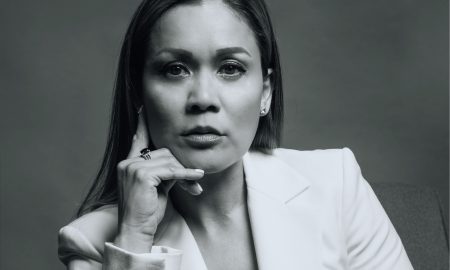
Today we’d like to introduce you to Mark Arica
Hi Mark, thanks for joining us today. We’d love for you to start by introducing yourself.
I remember being very into art when I was a lot younger. I attended Zamorano Fine Arts Academy which was an elementary school with a strong emphasis on art. I would eventually go to Bell Middle then Morse High School, where my curiosity for art faded away due to the environment and certain peer pressures that I was surrounded by. My time in middle school was probably the most impacting because I was dealing with a lot of things emotionally and spiritually, which would later affect my career choice once I got into college. I attended Southwestern Community College in Chula Vista (SWC) and majored in psychology hoping to eventually work in education whether as a PE teacher or school counselor. I remember the last psych class I took where I had a professor, within the first few meetings, told the class, “if you want to major in psychology, expect to be in school for the rest of your life”. I probably should’ve taken those words with a grain of salt, but it was enough for me to no longer want to pursue psychology. I couldn’t see myself being in class all the time. I needed constant change. That decision leads me to want to pursue physical therapy by way of getting into massage therapy first. During my massage therapy education, I knew someone who had an interest in photography because they were taking a class where it was a prerequisite. That curiosity leads me to find out, unbeknownst to me, that there was a film camera that was sitting in the house I was living in that belonged to my parents. It was a Minolta X-370n, in perfect condition protected by a dusty camera bag. I believe my passion for photography at that time, was from being stripped away from the visual arts after I left Zamorano Fine Arts Academy. I also believe it was why I never really connected with a lot of kids in middle or high school, just a very small handful. I was surrounded by an environment and pressures that I didn’t want to be around. I decided to re-enroll at SWC and take a photography class. That’s where I met someone who would eventually be a long-time collaborator, Jeremy Sazon, now Jeremy Sazon-Kjaer. The funny thing was, I met him in photography class, but he was never doing any photography assignments. Hardly knowing him, I thought he was going to be a failure in class and I didn’t want to be associated with him. He was just using the school computers to edit his house party videos! I was a photographer! He was nuts! Around that time, in an unrelated class, I had a classmate who was a rapper and wanted to do a music video. I was hesitant because I had never done video “professionally” and kept reminding them that I was just a photographer, but I would try. I applied what I knew in photography in video and it turned out like crap. It was a rap music video. From what I saw, there was camera shake. So what did I think to do? Oh! Let’s actually shake the camera! Well, they liked the video, I didn’t. I was striving to always do better than my last, so I kept doing music videos. Jeremy helped in a lot of them. The one thing I felt was slowing me down was the lack of personnel to help me do these videos long-term. I would eventually take my first video class at SWC around 2014 where I later met some of the crew I continue to work with to this day: Edwin Franko, Elisha Cecil, Ricardo Arriaga, Tayo Oyekan, Richard Martinez, to name a few, the “CAM Club” at SWC led by Edwin. It was some of the most creatively fulfilling experiences and we got to do so many projects together. What I enjoyed the most was the frequent collaborations with other filmmakers and “groups” and the valuable relationships we met along the way. Mentioning my education and career interests earlier was important because those choices and curiosities have affected me to this day. I always wanted to work with people and be part of something. I strived in team environments and helping someone or something see the bigger picture. When I was directing music videos, I was still able to be the school counselor when I was directing actors. When I work with a crew, that’s me as a PE teacher leading a group to success. Who I am today also has a lot to do with the spiritual journey I went through in middle school and has affected how I try to carry myself to others and always be in service while also being creative in the visual arts.
We all face challenges, but looking back would you describe it as a relatively smooth road?
It has not and still been a smooth road. I value the people around me and am always thankful for them. I deal with social anxiety but I’m thankful that they are still willing to create with me even though I might not show up at the wrap party. The personal struggles are psychological and I’m constantly working at it. It is also why I am trying to be a lot more mindful than I was before about mental health. The other struggles I have experienced are stereotypical in a creative, collaborative environment, where you deal with creative differences and is a constant back and forth trying to find common ground, which isn’t a bad thing. Another is a cultural struggle. Being a Filipino American, we can deal with certain pressures that may or may not be fitting for how society is today.
Thanks for sharing that. So, maybe next you can tell us a bit more about your work?
I started with directing music videos, small commercials, short films, anything to give me a reason to film something. I would always act as the director and cinematographer, so I have constantly bounced back and forth between one or the other, or sometimes both depending on the project. When I was directing, I enjoyed visualizing a script or song and putting them on the screen. I worked with the actors/talent in conveying certain emotions or do certain actions that would serve the narrative. I enjoyed working with people to help carry that vision. As a cinematographer, I found a passion for working with directors that felt similar with their visions and figuring out how to tell their story both technically and emotionally through cameras and lighting. I think what sets me apart from others is my “why”, and that I’m always asking “why” so that any creative decisions we make collectively has a meaning behind it. The exciting thing is a person’s “why” is usually derivative from something that is personal to them, whether it is from an emotion they have felt, or an experience that they have gone through, I think a person’s “why” is unique to them. If there is no direct reason, I think we can still find something. So I believe my “why” is what sets me apart. Technology is so advanced that this field of work is accessible to almost everyone. Most of us carry a little camera in our pockets every day. What makes us unique is our own interpretation to what we see and why we did something. What I like to believe is that someone wants to work with me because they believe I can bring a different perspective on their story or project, whether technical or emotional. I enjoy working with a team to create a world or a scene. Whether I’m working with the production designer to figure out colors, materials of something, types of lighting we would see in a shot. Then there’s the communication with the lighting and grip team to see what is the best way to light something or to create what’s needed for a certain shot or effect. There’s also the camera team that helps make sure that the camera is ready to go, the shot is in focus, and that we can continue filming with as little issues as possible. All these conversations and problem solving is what I enjoy most about filmmaking.
In terms of your work and the industry, what are some of the changes you are expecting to see over the next five to ten years?
I believe that the visual arts are going to continue to be a huge contributor to our culture. I also think that technology has advanced quicker than we can adjust to, that it can be very stressful because many people will be using the technology to convey a message, share a story, etc., and we don’t know how it can impact society down the road. I’m interested in the kinds of stories that will be told that can hopefully steer society in a path that encourages everyone to just be positive around others. I hope that technology now and within the next 5-10 years, gets put in the hands of people that know how to use the power of visual storytelling to shed a light on the stories of people who otherwise were left in the dark.
Contact Info:
- Email: markaricavp@gmail.com
- Instagram: https://instagram.com/markaricacine
- Youtube: https://youtu.be/Srd2DDBzguA


 Image Credits
Ricardo Arriaga Israel Palacio