Today we’d like to introduce you to JJ Jones.
Hi JJ, so excited to have you with us today. What can you tell us about your story?
I was born and raised on Kumeyaay land also known as San Diego, and I started martial arts when I was seven years old. Martial arts has been a constant thread throughout my life. I grew up practicing judo and eventually Brazilian jiu-jitsu, becoming a black belt in both. Those practices taught me discipline, humility, how to work through adversity, and probably most importantly, how much I enjoy helping other people learn.
My journey into sumo actually started in 2007, before I ever stepped into a dohyō. Someone randomly gave me a flyer for a sumo tournament. I never made it to the tournament, but I hung that flyer on my wall. For whatever reason, it stayed with me. It became this reminder that I wanted to try sumo someday. At the time, I had no idea that nearly ten years later I would finally get the opportunity to practice it, or that I would eventually become a national champion and represent the United States internationally.
I started training in sumo in 2016, traveling from San Diego to train with the LA Sumo Club. Coming from judo and Brazilian jiu-jitsu helped me physically, but I quickly learned that I couldn’t just do judo or jiu-jitsu in a sumo ring. I had to learn to actually do sumo. I spent years developing the fundamentals, training several times a week, and learning to appreciate the traditions and rituals that make sumo what it is.
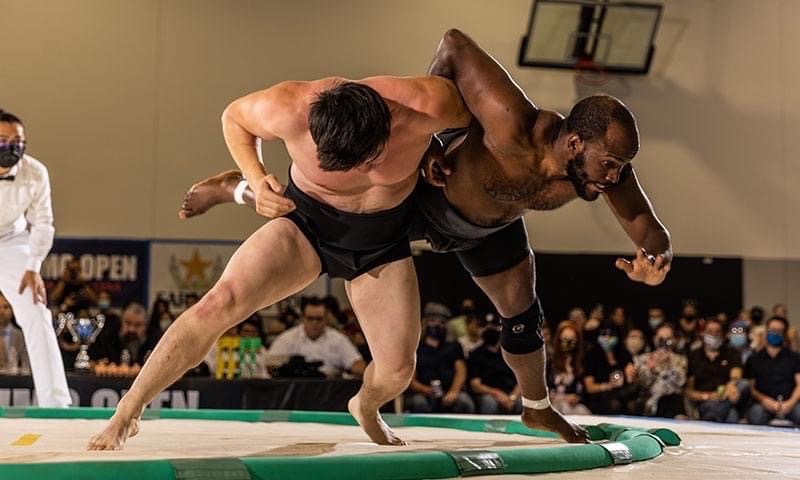
I competed for the first time in 2020. In 2021, I won the North American Championship, which earned me the opportunity to represent the United States at the 2022 World Games. My wife, Christina Griffin-Jones, was also competing, and we became the first married couple to compete in sumo at the World Games.
But my journey has become much bigger than my own competition career. In 2021, Christina, our friend Mengkin Ragan, and I started Honu Sumo in San Diego. We wanted to create a place where people could learn and practice sumo while honoring its traditions and the people, especially Japanese Americans, who have carried the sport in the United States forward before us. We also wanted people to understand that sumo is for everybody, in every Body.
Today, I’m a sumo athlete, coach, martial arts professor, and community organizer. I’ve had the opportunity to coach U.S. athletes on the world stage, organize sumo tournaments here in San Diego, and help create opportunities for people who may not have traditionally seen themselves represented in the sport.
A big part of where I am today comes from understanding what it feels like when access is the thing standing between you and an opportunity. As a teenager, I had an opportunity to represent the United States in judo but couldn’t participate because my family didn’t have the resources to make it happen. That experience stayed with me. Through Honu Sumo and the Maximum Effort Foundation, I’ve tried to turn that experience into something positive by helping remove some of those barriers for other athletes.
So when I look back at that flyer I put on my wall in 2007, I think about how much can come from simply holding onto a dream. I didn’t know where it would take me. I just knew that someday I wanted to try sumo. Now I get to help other people find their own place in it.
We all face challenges, but looking back would you describe it as a relatively smooth road?
No, it definitely has not been a smooth road. There have been a lot of challenges, and honestly, some of those challenges have had very little to do with actually wrestling.
Once I started competing, I also had to learn how to be comfortable being uncomfortable. I came into sumo with more than 20 years of judo and Brazilian jiu-jitsu experience, so I had to learn how to take those skills and not let them overshadow learning sumo on its own terms. There were plenty of times when I had to go back to the basics and remind myself to trust the process.
Another challenge has been access. I’ve experienced firsthand what it feels like to have an opportunity in front of you but not have the financial resources to take advantage of it. As a teenager, I had an opportunity to represent the United States in judo, but my family couldn’t afford for me to participate. That experience has stayed with me and is one of the reasons I care so much about making sure other athletes don’t have to walk away from an opportunity simply because they can’t afford it.
I’ve also seen how much people bring into the dohyō from the outside world. Some people come to sumo thinking their body isn’t big enough, while others have spent their whole lives being told that their body is too big. Fat phobia and body shaming are real barriers. Part of my work is helping people realize that those limitations don’t have to define what they can do in the dohyō.
Building Honu Sumo has come with its own challenges too. We’re growing a sport, organizing tournaments, creating opportunities for athletes, educating people about what sumo actually is, and trying to honor the history and traditions of the practice at the same time. There isn’t always a blueprint for that.
But I think the struggles are part of why the work means so much to me. I’ve learned that progress doesn’t always look like winning a championship. Sometimes it’s seeing someone step into the dohyō for the first time. Sometimes it’s helping someone believe that they belong there. And sometimes it’s creating an opportunity for someone else that I wish I had when I was younger.
We’ve been impressed with Homu Sumo, but for folks who might not be as familiar, what can you share with them about what you do and what sets you apart from others?
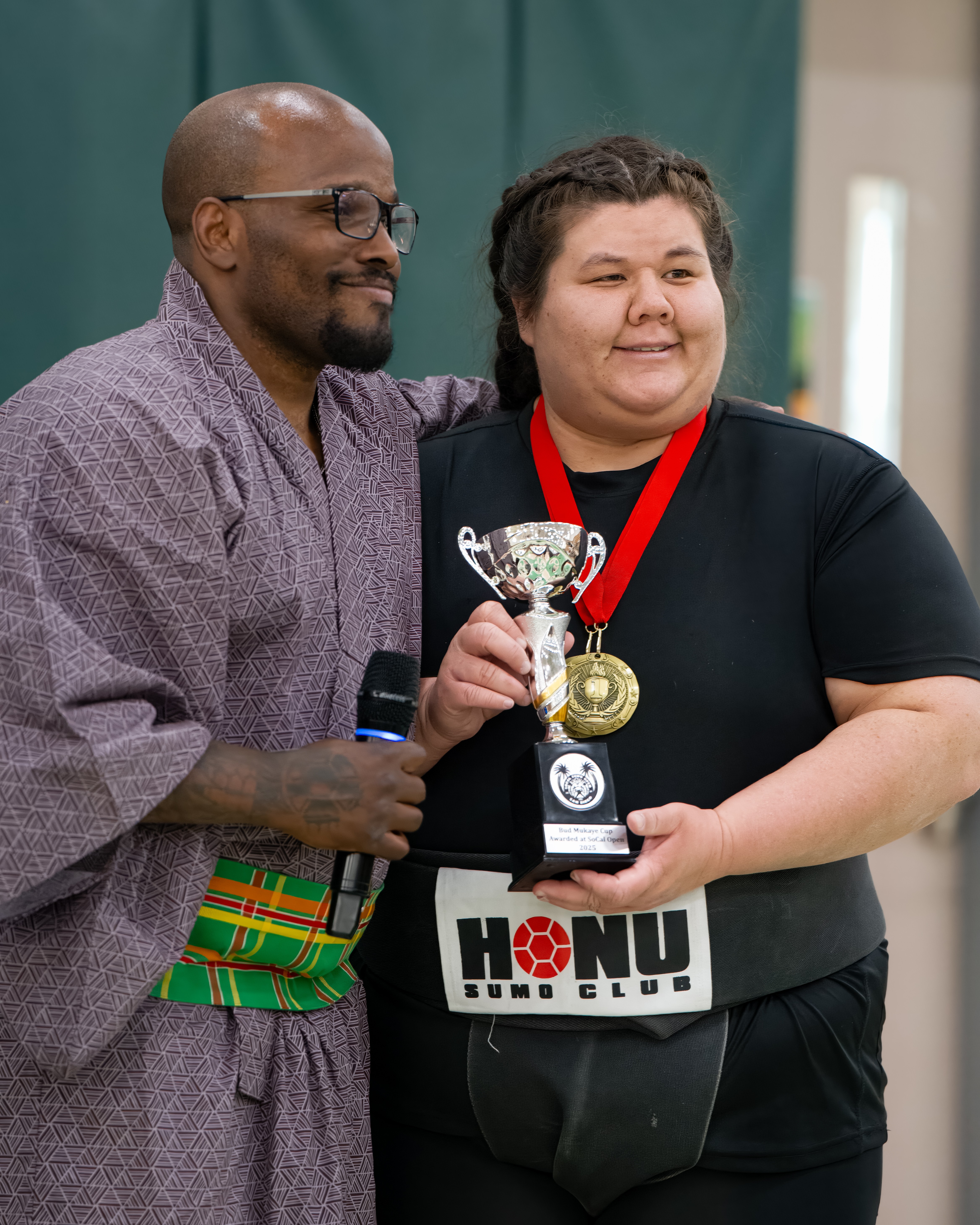
Honu Sumo is a Southern California based sumo club founded in 2021 by myself, my wife Christina Griffin-Jones, and our friend Mengkin Ragan. At its heart, Honu Sumo is about creating a place where people can practice sumo, learn its traditions, challenge themselves, and find community.
We welcome people from different martial arts backgrounds, as well as people who have never practiced a martial art before. One of the things that makes Honu Sumo special is that we believe sumo is for everybody, in every Body. You don’t have to look a certain way, come from a particular background, or already consider yourself an athlete to belong in the dohyō.
We are also very intentional about honoring the history of sumo in California. Honu Sumo is not the beginning of that history. Japanese San Diegans practiced and celebrated sumo generations before us, including during some of the most difficult periods in our community’s history. We see ourselves as part of that continuing legacy and have a responsibility to honor the people who practiced sumo before us.
What sets us apart is the way we bring together tradition, athletic development, community, and access. I come from a background in judo and Brazilian jiu-jitsu, so I understand how different grappling arts can complement one another, but I also believe strongly that when you step into the dohyō, you have to learn to do sumo. We teach traditional elements like shiko, chiri-chozu, mata-wari, butsukari, and suri-ashi while also helping athletes understand how their existing skills can complement their sumo practice.
I’m particularly proud of what we’ve been able to build around competition and community. We organized the SoCal Sumo Open in San Diego, bringing together athletes from around the country and introducing new audiences to the sport. But the number of competitors or medals isn’t what makes me most proud. It’s seeing someone walk into practice who never thought they belonged in a sport like sumo and watching them eventually step into the dohyō with confidence.
I want people to know that Honu Sumo is more than a place to learn how to wrestle. It’s a place to learn about yourself, connect with other people, experience Japanese culture and tradition, and discover what you’re capable of.
Ultimately, we’re trying to grow sumo while helping people understand what makes the sport so powerful. We want to see more people practicing, more people competing, more people learning its history, and more people recognizing that there is a place for them in sumo.
What would you say have been one of the most important lessons you’ve learned?
The most important lesson I’ve learned is that you can do more than you think you can, but you have to be willing to keep showing up.
When I look back, there are so many things I never could have imagined for myself. In 2007, I was just a guy who got a random flyer for a sumo tournament and put it on his wall. I didn’t know if I would ever practice sumo. I certainly didn’t know that one day I would become a national champion, represent the United States on the world stage, or coach athletes competing internationally.
I’ve learned that sometimes the goal is not to have the entire path figured out. You just have to take the next step. Train again. Try again. Learn something new. Get back in the dohyō.
I’ve also learned that success means more when you use what you’ve learned to create opportunities for other people. Becoming a national champion is something I’m proud of, but I’m even more proud when I see someone else accomplish something they once thought was impossible for them.
For me, that’s what maximum effort really means. It doesn’t mean you have to be perfect or that you have to win every time. It means you give what you have, you stay humble enough to keep learning, and you don’t let other people’s limitations become your own.
That lesson has taken me much further than sumo ever could have.
Contact Info:
- Website: https://www.honusumoclub.com/
- Instagram: https://www.instagram.com/honusumo/
- Facebook: https://www.facebook.com/p/Honu-Sumo-100085373795604/
- Twitter: https://twitter.com/honusumo
- Youtube: https://www.youtube.com/channel/UCMVSYnlS33PJOvwVTwjK6qg/featured