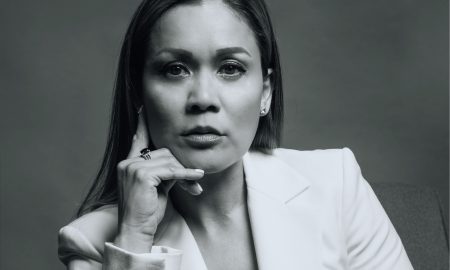
Today we’d like to introduce you to Amy Villanova.
Amy, please share your story with us. How did you get to where you are today?
I am in my 20th year of teaching. I started my education career at a middle school in Orange County and also taught in Santa Monica before moving to San Diego. I taught for two years at San Dieguito Academy before moving to Canyon Crest Academy in its second year. I have a very Southern California educational pedigree, undergrad (BA in Music with specializations in Flute Performance and Music Education) from UCLA, my teaching credential from SDSU and my Masters of Music Education degree from the USC Thornton School of Music. I am a combination of my family’s business, my dad is an award-winning composer and my mom is an award-winning educator, so I got to take the most fun parts of both of their careers and turn it into mine.
We’re always bombarded by how great it is to pursue your passion, etc – but we’ve spoken with enough people to know that it’s not always easy. Overall, would you say things have been easy for you?
My path is nothing like what I thought I should be doing, nor what I WOULD be doing with my training, and I am loving the adventure. I think the biggest challenge I had/have is trying to compare my work with the image I had growing up about what this job “should be”. Making peace with that difference, and not turning it into a qualitative distinction has been very freeing. I am so very proud of the high quality work my students do, but we don’t have a very traditional program.
Many people in my profession experience “Imposter Syndrome” or the feeling that we don’t belong in the circles we work in, or maybe are unqualified or are filled with self-doubt. It is very common among younger teachers and especially female teachers in high visibility/advanced school settings. We have not had as many female role models in our profession, although that is slowly changing as more women are taking the helm of university and high profile music programs. It just wasn’t something that was commonly done a generation ago. Feeling like we have something of value to share can be a challenge, but it is worth pushing through. Working through this has definitely given me the spark to keep working harder, to keep pushing my own limits until I felt like I “belonged”, so in a way, it helped me to continuously try to improve my craft, but it also has kept me from engaging in opportunities at times.
The best advice I can give anyone starting out is that if a door is opened for you, jump through it-you belong, or you will figure out how to belong quickly. Likewise, if you have the opportunity to open a door for others, you should do it every time. We get so much farther together by encouraging each other and supporting each other’s goals, than by being territorial, or by hoarding all the opportunities for ourselves. I am constantly learning from my students and colleagues.
So, as you know, we’re impressed with your business – tell our readers more, for example what you’re most proud of as a company and what sets you apart from others.
The teacher’s role has changed as our technological world has evolved. My most powerful job is now to become a facilitator. A project that I recently facilitated has grown into something truly special. I have had the opportunity to work with high school students at Canyon Crest Academy in San Diego, as well as the students of Conservatorio Guillermo Tomas in Guanabacoa, Cuba and the Cuban folklojazz group, Los Hermanos Arango to bring together traditional “classical” Cuban Folklorico music, and classical western orchestral music.
What started as a casual jazz masterclass with some visiting musicians (Los Hermanos Arango) became a conversation about future dreams. Their leader, Feliciano Arango, spoke about his dream to bring together a symphony orchestra, and the folk music of his Cuban ancestors. I jumped in and said that we had an orchestra that would love to try to take on that type of project. It was the most fortuitous and completely unexpected project. We were able to move the project along with the help of my dad, Jay Chattaway. He is an Emmy and Grammy-winning composer, who had significant experience working with Cuban jazz musicians. He created the orchestrations for this project.
On their next trip to the US, Los Hernanos Arango shared a concert with the Canyon Crest Symphony Orchestra. It worked! My dad continued to work on a few more pieces for the project, and this November, we traveled to work with the amazing students at the Conservatorio, to help bring this project back to its home. In Cuba, classical music is the music taught in schools. They have a fine tradition of classical arts in music and dance, based on their political history. The folk arts are rarely taught or are considered extras. This particular project was nothing like what the students were used to, their music sounded like cinematic underscore at times, like jazz at other times, and in other spots was very modern, but when it combined with the traditional music, it created a blend of “classic” traditions that was very new. Their director talked about the perception of classical music to be a dead language, but in this case was very much evolving, which was exciting to see.
Another interesting piece of this project was the celebration of the Yoruba saints, which for some of the student was difficult to understand, as practicers of Christian faiths. They were able to engage in a discussion about celebrating other’s cultures and history without actually practicing those beliefs if that was a concern. In the traditional Cuban religion, the percussion patterns are heavily linked to religious practice. Not only does this project blend two forms of classical music, but it really elevates a tradition that in some circles has been pushed aside.
It is exciting to see this project grow and evolve from a shared conversation to become a fully realized concert experience. It will be performed again in the US at several universities when Los Hermanos Arango return to the US on future tours. It is their hope to bring it to symphony orchestras and universities all over the world, to share the beauty that is Cuban traditional music, in a way that our classical music patrons can understand. On a personal level, it was such a joy to share this experience with my dad, and become close to our Cuban friends, who are a family ensemble made up of the four very talented musical siblings, and also their very musical children. The friendships gained through this partnership are the unexpected gifts that I will truly treasure.
Were there people and/or experiences you had in your childhood that you feel laid the foundation for your success?
I think that my experience growing up in the arts has set me up to be successful in my professional and personal life. Learning an instrument has taught me patience, perseverance, how to set attainable goals, how to push for excellence. It has taught me how to take critique and feedback and apply it without destroying my self-esteem (still working on that, to be honest). Growing up in an artistic family and in high performing arts programs has taught me how to communicate with others, how to collaborate and how to support the team effort. There will always be opportunities to shine individually, but in our art, our biggest success was when we worked best together. An arts career is not for everyone, but training in the arts could be a benefit to every career path.
Contact Info:
- Website: www.cca-envision.org
- Email: amy.villanova@sduhsd.net
- Facebook: www.facebook.com/EnvisionIM/


 Image Credit:
Margaret Soss Photography (headshot)
Suggest a story: SDVoyager is built on recommendations from the community; it’s how we uncover hidden gems, so if you or someone you know deserves recognition please let us know here.