Photo credit: Chris Wojdak Photography
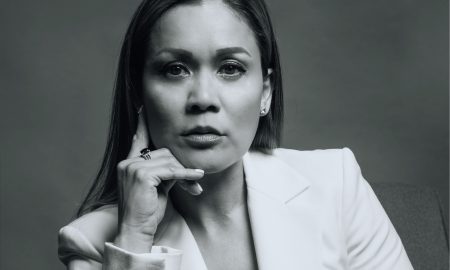
Today we’d like to introduce you to Darlene Tando.
Can you briefly walk us through your story – how you started and how you got to where you are today?
Growing up, I always knew I wanted to help people. My thoughts went from nurse to teacher and eventually landed on therapist. When I found out about the Master’s in Social Worker degree, I knew becoming a therapist with a background in social work was the perfect fit for me. I attended UCSB for my Bachelor’s in Psychology and then headed further south to get my MSW from San Diego State. My emphasis was on “Children, Youth, and Families”, as this was the population with which I had always wanted to work. After graduation, I earned my pre-licensure hours at a residential treatment facility for children and then moved on to work at the Naval Medical Center San Diego as a therapist in the Child and Adolescent Mental Health Department. In early 2006 I was ready to fly on my own and establish my own private practice. As a way of getting new clients, I advertised on Craigslist. Since I had never before worked with gender identity, my ad said nothing about that. Here is a snippet from that ad:
“Although I specialize in working with children, I also work with adult individuals and couples. I find that my warm and empathetic approach that works so well with children also helps to create a safe, therapeutic environment for adults which promotes progress in therapy.”
Perhaps it was the way the ad was phrased that made someone who needed help being recognized as their true identity reach out to me? I was contacted by someone who was transgender and needed a therapist’s letter to begin Testosterone and to get top surgery. I informed him of my lack of experience in this field but was happy to help in his quest to transition. The concept never confused me or seemed complicated to me. It all seemed so simple; if you do not feel authentically recognized as you are, why wouldn’t you want to make changes in order to be true to yourself, and understood by others?
This client was traveling about an hour and a half to see me, which was my first clue there was not a plethora of other therapists working with this population. He connected me with his case manager from the former S.T.A.R. program, “Supporting Transgender Access to Resources”. The care manager reiterated the lack of therapists for this community and was soon sending me MANY more transgender clients. I did my best to get equipped for the details of my newfound duties; writing letters for hormone treatment and surgery, helping clients access resources, assisting them in the coming out and transitioning process. I read books, attended conferences, and attended monthly community meetings at the LGBT Center here in San Diego. Soon I was leading a weekly support group in addition to the clients I was seeing one-on-one. I am so grateful to all the people and clients I interacted with during that time; I learned so much from them and became more invested in my work than ever.
At first, my gender/identity-focused therapy was only with adult clients. Soon, my name was “out there” and I began seeing gender-expansive and transgender children. Since my specialty had always been working with children and my newfound specialty was in regards to gender/identity, this was a beautiful and serendipitous melding of the two. Since that first meeting with that client in 2006, my career has taken me to a place where now most of my work is centered around supporting transgender clients and teaching others about how to do this in a non-pathologizing and affirming way. Because of a blog I established in 2010, I was approached by a book series to write the book about gender identity in children. “The Conscious Parent’s Guide to Gender Identity: A Mindful Approach to Embracing Your Child’s Authentic Self” was published in July of 2016. After speaking for years at various gender conferences around the country, I was asked to join forces with Dr. Johanna Olson-Kennedy and Aydin Olson-Kennedy as a part of “Transyouth Care”, a two-day symposium that teaches parents and providers about supporting transgender youth.
Overall, has it been relatively smooth? If not, what were some of the struggles along the way? Any advice for other women, particularly young women who are just starting their journey?
I would say overall, I have had a pretty smooth road to the place where I am today, professionally. I have had a lot of support in my journey and a lot of people who believe in me. I remember when I was in graduate school, getting licensed seemed so far away. I wanted to own and run my own private practice, but the professors warned this was somewhat rare and hard to do. Still, it was my dream and I pursued it as soon as I felt I was in the position to (with a little prodding from the aforementioned believers). I have learned that just because something is hard doesn’t mean it’s impossible. With a lot of hard work, commitment to the process, and tenacity, most things can be within your reach.
I would say one of the biggest challenges is that owning a private practice is not only providing therapy, it is operating my own business. All the clinical and therapeutic skills in the world won’t help me understand billing and insurance better, won’t help me balance my books, and doesn’t help me understand taxes or make establishing a corporation any easier. All of these things have caused me to reach deep into the left side of my brain, the side that tends to get used less often for us warm-fuzzy therapeutic folk! An added challenge is that I do everything on my own (aside from my amazing accountant who has been a life-saver in the tax department). I do all my own scheduling, all my own billing, everything that running and managing this business entails. It takes a LOT of time outside of the actual face-to-face therapy sessions. I believe that therapy should be accessible to everyone, so I have been committed to being in-network with many different insurance agencies. The paperwork and phone calls involved in this aspect of my practice is probably one of my biggest headaches, but as a social worker at heart I won’t give up being able to take my clients’ insurances whenever possible.
Another challenge I face in the work I do is the emotional impact. I’m an empath; I sense and absorb others’ feelings more than I would like to admit. When I feel things, I feel them strongly. I believe this makes me a good therapist, but it also drains me. I have to be diligent that I don’t drain myself completely so there’s nothing left for my personal life. I have to be careful I have enough emotional energy left to contribute to my two amazing children and any other relationships I hope to nurture and maintain. I do find that I have to be selective about those I spend my out-of-work time with; those who inspire me, build me up and enhance my emotional well-being.
We’d love to hear more about your work and what you are currently focused on. What else should we know?
There are many different ways to describe the work I do. In simple terms, I have often said I am a “gender therapist”, but that doesn’t always encapsulate it in the best way. I work with individuals who either express gender outside of what is “expected” for their gender assigned at birth, or those who identify as a gender (or genders) that do not align with the gender they were assigned at birth. While I don’t like Gender Dysphoria as a diagnosis (and certainly not in the DSM!), the term dysphoria itself is useful in its representation of the pain and distress many of my clients feel in regards to the incongruence between their gender assigned at birth and their authentic gender.
Often times, dysphoria is equivalent to pain. So, a big part of my job is sitting with my clients’ pain. It’s not pain I can take away, as much as I wish I could. It’s not pain I can understand fully as a cisgender individual. But over the years, I have aligned myself with this pain in a way that I think helps my clients feel supported, understood, and I hope, comforted. Many of my clients are transitioning socially, hormonally, surgically, and I walk with them along this path. Often times, it is my job to advocate for access to these interventions. I truly believe transition is a compassionate intervention for easing dysphoria, and withholding access to these things is an unnecessary way to cause suffering. While talk therapy can be hugely beneficial in mitigating the pain of dysphoria and navigating the journey of transition, access to medical supports in transition is often a more crucial part of decreasing dysphoria.
In addition to the pain I witness on a daily basis, there is also tremendous joy associated with one seeking authenticity. There is joy in letting loved ones know who one truly is; there is joy in accessing desperately needed interventions, there is joy in finally being recognized as the gender one truly is. There is joy in finding community and being connected to others who understand. To be witness to this joy is one of the biggest privileges in my life, and I will forever be grateful to my clients who allow me into their worlds.
A big part of my job is helping parents and families understand the authentic gender identity of their child, and knowing the best way to support them in their authenticity. While over the years, more and more therapists in San Diego now work with gender and identity, most of these clinicians only see adolescents and adults. I have remained one of the few clinicians who work with gender-expansive and transgender children. I find assisting these children in living authentically early extremely gratifying, as it is often something my adult transgender clients had so desperately needed. While I’m deeply committed to serving each family individually, instilling hope and understanding, I’m also deeply committed to changing the narrative of listening to individuals, including very young folk, about their gender. For too long, we have operated from a distress model that mandates individuals enter into a certain amount of distress before they are heard and allowed to be seen authentically. This needs to change. Cisgender and transgender kids and adults know their authentic gender. We need to start listening better.
One last thing I want to say is that while I feel I have valuable information to share as someone who has been doing this work for the past 14 years, and have learned a lot from the clients I have served, I do believe in the shift to centering trans voices. Transgender individuals and providers should have the platform as often as possible because those are the voices that will most authentically echo the needs and the heart of the matter when it comes to making positive changes for the transgender community.
Have there been any women who have inspired you in your professional journey? Why?
Tracie Jada O’Brien was one of the first care managers and advocates I met when first coming on the scene in 1996. Tracie is a strong, beautiful, passionate woman who has overcome many personal hardships to become a role model of resiliency and strength. Appropriately known as “Mama Tracie”, she established the “Transgender Day of Empowerment” celebrations at the LGBT Center in San Diego and created a scholarship program for transgender youth seeking higher education. She has been the face for transgender services at the Family Health Centers in San Diego, and is a tireless advocate for transgender folks seeking services there and all around the community. Tracie accepted me all those years ago and has trusted me with the community, which is just about the highest compliment I think I could receive.
A friend, colleague, and role model for me is Dr. Johanna Olson-Kennedy. Johanna and I started diving into this work head-on around the same time. She became the medical voice and advocate for transgender youth, and I can’t think of anyone better to do it. I have found that talking to and listening to like-minded individuals is a critical piece of self-care in the work I do. Johanna “gets it” in a way not a whole lot of others do. She is a relentless advocate for transgender youth. It is so validating to hear her speak; she has a way of putting thoughts and concepts into words that make them so simple yet profound, with a boldness and a brilliance I could only aspire to.
Pricing:
- Fee for session is $150
- Sliding scale offered, as low as $75
Contact Info:
- Website: www.DarleneTando.com
- Phone: 619-948-8926
- Email: tandotherapy@me.com
- Other: www.DarleneTandoGenderBlog.com


Suggest a story: SDVoyager is built on recommendations from the community; it’s how we uncover hidden gems, so if you or someone you know deserves recognition please let us know here.