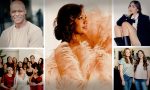
Today we’d like to introduce you to Francis French.
Hi Francis, thanks for sharing your story with us. To start, maybe you can tell our readers some of your backstory.
No matter what incredible feats of technology and scientific investigation we humans achieve, it’s the personal stories behind them that fascinate me most. Stories of creativity and inspiration have intrigued me my entire life. I’ve been fortunate to grow up in an era of space exploration where people has journeyed to the moon, lived in space for months at a time, and sent robotic probes to the deepest fringes of our solar system. These moments will stand forever in history, but they grow extra dimensions when I hear the memories of those who lived them.
Halfway through high school, I realized that my skills in math and science were going to plateau… and not highly. Perhaps I wasn’t going to be able to contribute to this remarkable time of discovery we live in. However, I found I had skills in writing, in teaching, and in relating complex subjects in simple ways. The theater and the poetry of science was something I could fully participate in.
San Diego is a wonderful place to do this. There is cutting-edge discovery taking place in almost every field of human understanding imaginable. From cameras orbiting Mars, to exploration of the deepest ocean depths, exciting new images and information flood in daily. There are groundbreaking advances in medicine, and in the challenges we face as a planet with climate change and habitat loss. This understanding of who and where we are is vital to our survival, and the survival of our ecosystem. It affects our daily lives, and not only affects our future – it shows whether we even have one in the century to come.
But scientists are busy people. They’re often too busy to pause and explain to the world what they are doing. A few are also constrained by being very good at doing their work, but not too good at explaining it to others. I’ve been fortunate that San Diego has allowed me three distinct opportunities to share their work with the public. Working over the last two decades at the Fleet Science Center, The San Diego Air & Space Museum, and Sally Ride Science, I could make hundreds of connections with the vibrant creative hub we live in. I could give scientists, engineers, explorers, and many others a platform to reach large audiences and relate what they do. I could create special event days, hands-on workshops, and other programs for all ages.
Most heartwarmingly, I could reach audiences who are traditionally minoritized and marginalized, either by mainstream society or by a sense that science was not “for them.” We live in an ever-changing multinational zone with many languages and cultures in play. I came across kids who lived only a few miles from the ocean but had never felt beach sand between their toes. Kids with disabilities whose families had never been reached out to for participation in summer camps. Local Indigenous nations who had never felt welcomed in downtown cultural institutions. To see these kids, in a very short time, bringing their families to Balboa Park because they felt the place was now “theirs” and they wanted to show it off – it’s impossible to relate how special that feels. Although there is still a huge amount to be done and this work will never end, the future feels a lot more inclusive, and safer for us all.
Personally, I was intrigued to find that so many spacefarers lived in San Diego. It made perfect sense, as what better place is there to retire to? It still feels surreal that, just down the street, there are people who journeyed to the moon. Only 24 people ever did that, after all, in a tiny blip of human history that came and went half a century ago. To have lunch with people who can throw in memories of the earth as a tiny, fragile blue oasis in the blackness of space never grows old. And, like so many successful people, few of them are going to slow down long enough to dedicate time to writing a book about their experiences. Over the years, through hosting and moderating panel discussions, and interviewing for magazine articles, I have been able to tease out stories that would otherwise have been lost forever.
Writing books with these explorers seemed like the inevitable next step for me. They have stories, and the wish to work with me to get them out to the world. I’m now writing almost full-time. It’s a pleasurable challenge to try and relate space experiences that were primarily visual and visceral. For example, Apollo 15 astronaut Al Worden orbited the moon for six days, three of them totally alone, the most remote human in existence. To work with him, transforming sights he witnessed and gut-level emotional reactions into words, was one of the highlights of my career. There can only ever be one group of explorers who went to the moon first; their memories are all the more unique, and treasured, as a result.
I’m sure you wouldn’t say it’s been obstacle free, but so far would you say the journey have been a fairly smooth road?
Reaching out to and making connections with underrepresented audiences is challenging, but always rewarding. A tougher obstacle has sometimes been working with administrators at the institutions I’ve been employed by, convincing them that we did not merely exist to celebrate ourselves and our collections, but we needed to be more inclusive. Their resistance was often financial: change can initially be costly. Fortunately, I was able to convince them that, without the long-term investment of being relevant to the entire community, cultural institutions would fade into obscurity.
Alright, so let’s switch gears a bit and talk business. What should we know about your work?
One of the risks of working with spacefarers of the Apollo generation is time. Those who remain are in their late eighties and early nineties now. I was very fortunate to finish two books with Apollo 15 astronaut Al Worden in recent years – a children’s book, and another reflecting on his entire life. Al did not live long enough to hold either of them in his hands as printed books. Nevertheless, I’m gratified that we completed them and that they will live on as enduring legacies of a remarkable life journey.
Before we go, is there anything else you can share with us?
I love the Renaissance idea of a curious mind: that learning is possible in all fields. I have been that way my whole life. I try never to be scared of something new. To the public, learning about engineering can have the same concerns as learning about contemporary art. If people don’t know where to begin, they feel they can’t begin to understand something. My greatest joy has been to find ways into these subjects for adults and children. Through offering personal interactions with an expert, hands-on experiences, and other immersive and interactive methods, we could grab their attention and soothe their worries. It’s so important for people to develop a lifelong love of discovery, whatever the field. They may not all become engineers, or musicians, or artists, but they’ll understand why others are passionate about these subjects, and why they are an important part of culture.
Along the way, I’ve become increasingly aware of how gender, ethnicity, and economic background can play a huge part in who has the opportunities to succeed. Working with Sally Ride, America’s first woman in space, I learned how peer pressure can push many young women out of science careers before they even have a chance to begin their adult lives. Working with Indigenous groups, students from economically disadvantaged areas, and Chicano groups, I learned how each has unique advantages when it comes to enjoying educational experiences.
I also saw how other pressures can push them away from reaching goals. I’ve been committed to trying to break down barriers ever since, advocating for diverse audiences, and I have been very successful in finding funders who share these goals. I’ve coordinated with many outside organizations in this process, but my greatest success has been recruiting fabulous educators and associated team members. There are a great number of committed people out there it has been my honor to hire and oversee. There is so much that every reader out there can do.
Contact Info:
- Website: www.francisfrench.com
- Instagram: https://www.instagram.com/francisjfrench/
- Twitter: @F_French
- Other: https://www.imdb.com/name/nm4893952/

Image Credits:
Francis French
UNP