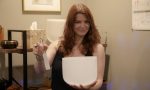
Today we’d like to introduce you to Jennifer Purcell.
Hi Jennifer, so excited to have you on the platform. So before we get into questions about your work-life, maybe you can bring our readers up to speed on your story and how you got to where you are today?
I’ve always known I was different from others in my family, but I didn’t understand why until I was a student at UC Berkeley and got diagnosed with Nonverbal Learning Disability—also known as NLD or Developmental Visual-Spatial Disorder. It affects how people process nonverbal cues like body language, tone of voice, and facial expressions, as well as things like motor coordination, visual-spatial awareness, and processing speed. Getting that diagnosis during college was a huge turning point—it helped me understand so much about why things had been difficult for me growing up.
Before college, I had been homeschooled, so starting at Berkeley was a major adjustment. I was required to complete a summer prep program before officially beginning my four years there because the university wasn’t sure I could handle the academic rigor coming from a homeschool background. When I heard that, I said to myself, “I’m going to prove them wrong.” And I did! Interestingly, my brother—who was also homeschooled and went to UC Berkeley five years before me—wasn’t required to do the same program. By the time I applied, more homeschoolers had begun applying to universities across California, so the standards had shifted a bit, but I still had to take that extra step to show I was ready.
Once I had my diagnosis, Berkeley was incredibly supportive. I received accommodations like extra time on tests, audio textbooks, recorded lectures, quiet testing environments, and even cheat sheets for math exams. My professors were also incredibly helpful—many offered extra office hours and really took the time to make sure I understood the material.
But honestly, I couldn’t have made it through without my family. My mom went above and beyond—she spent countless hours over two full years helping me proof, edit, and rewrite every single essay. As a sociology major, that was a lot of writing. She always showed up, and while it was two years of intense work for her, she jokes it felt more like four! My dad supported us both by taking care of dinner and other things around the house while she helped me, which made a big difference. Having my dog, Truffles, with me during the last year and a half of college made a world of difference. Before she came into my college life, I was really struggling with homesickness, but her presence brought me so much comfort and stability.
My brother played a huge role too. He gave me tips on navigating Berkeley life, helped me with math homework and studying for my personal finance final, and—most importantly—helped me write my college application essays. His support, combined with the strength of the stories I shared in those essays, is a big part of why I was accepted to Berkeley in the first place.
With all that support, I was able to graduate in four years, and my grades improved from C’s to B’s and A’s. It made a huge difference.
Then in 2020, during the pandemic, I started my podcast “Living With An Invisible Learning Challenge,” after being inspired by another show. I wanted to raise awareness, build understanding around NLD and neurodiversity, and give a voice to those who might not know how to tell their own stories. Since then, the podcast has reached all 50 states, over 100 countries, and more than 1,000 cities. The website has also gotten over 9,300 views. I’ve interviewed nearly 70 guests—therapists, teachers, fellow NVLDers, authors, advocates—you name it.
This podcast isn’t about making money. It’s about connection, understanding, and visibility. While NLD comes with real challenges, it also comes with unique gifts. My goal is to highlight both and remind people with invisible differences that they are not alone.
Alright, so let’s dig a little deeper into the story – has it been an easy path overall and if not, what were the challenges you’ve had to overcome?
No, it definitely hasn’t been a smooth road. Like I mentioned earlier, I’ve really had to work hard to get to where I am today. On top of navigating my Nonverbal Learning Disability, I’ve also dealt with chronic migraines that started in college and continue every day. Back then, the migraines were intense, and I didn’t even know what they were until about a year after I graduated when I finally sought testing and treatment. Since then, they’ve improved a lot, but it’s still a daily challenge.
During the time I was driving, I had four car accidents—two of which totaled my cars. Thankfully, no one was hurt. My migraines, along with challenges caused by NLD such as difficulty processing spatial information, contributed to these accidents. Because of this, I haven’t been able to drive for almost two years now.
My family and friends have been incredibly supportive throughout this, driving me to doctor’s appointments, vet visits for my dog, Truffles, and helping me with errands.
My childhood was also far from easy. I was sexually molested by my cousin for nearly eight years, and I disclosed it to my mom in late August of 2008. Since then, I’ve gone through over eight years of therapy and even wrote victim impact statements when I was a junior in high school. Recently, I was able to find some closure when I attended my uncle’s wedding last year and was in the same room as my cousin without feeling overwhelmed by anger. So, while my early years were very difficult, I’m aware that many people face their own struggles growing up.
I’m sharing this not to play the victim or ask for pity, but to highlight that neurodivergent people like me can be especially vulnerable. I talk about this openly on my podcast—in episode 20 of the first year—because it’s an important part of my story.
I’ve also faced challenges adjusting to the work world. For the past six years, I’ve been working full-time at The Unity Center as my mom’s administrative assistant, handling tech and social media support. My parents, John Purcell and Rev. Wendy Craig-Purcell, have given me countless chances and support along the way, which I’m very grateful for.
After living with my parents for six years following college, they also helped me financially and practically to find and move into a place of my own—a journey that wasn’t easy either, but an important step for my independence.
On top of all that, miscommunications with friends have been another challenge, but I’ve worked through those and tried to learn and grow from every experience. Living as a neurodivergent person in a world that wasn’t designed for people like me has never been easy—but it’s shaped who I am and why I’m passionate about the work I do today.
Thanks for sharing that. So, maybe next you can tell us a bit more about your work?
I work at The Unity Center in San Diego, a spiritually progressive and inclusive community founded by my mother, Rev. Wendy Craig-Purcell. My role is quite multifaceted. As the Administrative Assistant, I handle a variety of tasks that keep our operations running smoothly. This includes managing our technology needs, overseeing social media platforms, and planning events.
On Sundays, I play a pivotal role in our services by monitoring live attendance, selecting music, and quotes that complement the weekly lessons, and ensuring our Fair Trade Store is well-stocked, and organized. I also contribute to our Youth Village programs, assisting in event planning, and providing support to our youth initiatives. Additionally, I offer technical assistance to individuals working on personal tech projects.
Working alongside my parents—my mother as Senior Minister and CEO, and my father as Facility Manager and Finance Support—has deepened my commitment to our community’s mission. Our dedicated board, music team, Youth Village staff, and volunteers all contribute to creating a welcoming, and nurturing environment.
Absolutely I can share about, my work beyond The Unity Center. I’m the creator and host of the podcast “Living With an Invisible Learning Challenge.” This platform is dedicated to raising awareness about Nonverbal Learning Disability (NLD), an often misunderstood and invisible learning challenge. Through candid discussions and personal stories, the podcast aims to illuminate the daily experiences of individuals with NLD, foster understanding among neurotypical listeners, and build a supportive community for those navigating similar challenges.
While the podcast isn’t a commercial endeavor, it serves as a vital resource for education and empathy. As one listener noted:
“Jennifer, does a great service to everyone with NLD by succinctly describing it and providing various points of view to the learning difference.”
My unique perspective as someone living with NLD allows me to bridge gaps between neurodivergent, and neurotypical communities. I take pride in advocating for inclusivity, and understanding through both my podcast, and community involvement. My technical proficiency enables me to assist others effectively, enhancing accessibility, and engagement. Being deeply involved in both the operational, and spiritual aspects of The Unity Center has taught me the importance of empathy, adaptability, and continuous learning.
So maybe we end on discussing what matters most to you and why?
What matters most to me are my family, friends, my job, access to basic necessities, and my podcast — because without all of these, I wouldn’t be where I am today. I love helping people in any way I can, even when it’s challenging. I believe it’s really important to speak your mind, and stand up for what you believe in, especially in today’s world.
I’m passionate about women’s rights, Black Lives Matter, animal rights, LGBTQ+ rights, and immigrant rights. We’re all human, even if we look different or have different orientations. Platforms like podcasts, social media, and YouTube can be powerful tools to spread education, awareness, and understanding about things that can be hard to grasp in this complex, yet beautiful world.
Travel has played a huge role in shaping my values and worldview. When I was eight, I learned from the Dalai Lama—and from my family’s example while traveling—that making friends around the world broadens your perspective and teaches you not to take basic necessities for granted. At age 12, I traveled to South Africa with The Unity Center and other New Thought communities to help build two schools. That experience, along with my trip to Peru at 14—where I helped build greenhouses to support local communities—taught me core values that still guide me today: it takes guts to face challenges, never give up, and live simply while sharing freely.
Later, I studied abroad in Norway at the end of my sophomore year, immersing myself in a different culture and environment. And one of my proudest moments was taking senior year graduation photos with my family—a reminder of how far I’ve come.
At the end of the day, I think we should all try to lift each other up instead of tearing each other down.
Contact Info:
- Website: https://www.livingwithnld.com
- Instagram: https://www.instagram.com/livingwithnld/
- Facebook: https://www.facebook.com/livingwithnld?view_public_for=107332511122585#
- LinkedIn: https://www.linkedin.com/in/jennifer-purcell-2b5277122/
- Twitter: https://x.com/Jennife91777685
- Youtube: https://www.youtube.com/channel/UCOqAA0b3-C-qDkhKwCmaaZg
- Other: https://livingwithnld.com/what-is-nld


Image Credits
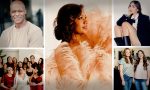
Some of the photos are from my travels and others are from college with family members.