Today we’d like to introduce you to Allie Stewart.
Every artist has a unique story. Can you briefly walk us through yours?
When I think back to why I started to love photography, it was never a complicated foundation. I remember being a young girl with a disposable camera, snapping photos of her forest backyard and begging her mother to take her to get the photos developed. I remember when I got my first cell phone, and couldn’t believe how easy photo-taking could be. I remember the day the family desktop computer broke, and how sad I was when I realized all of the photos from my early childhood were gone forever.
I remember the loss of my first pet, a labradoodle named Sydney, and how I wished more than anything that I’d stopped to document her life more so that it would never feel lost. Today, I have tried to streamline those emotions into what I do each time I pick up my camera, an early Nikon I saved up for in high school and purchased the second I found it on clearance. Each time I take a photograph, I am still living out those preemptively-nostalgic feelings expressed in childhood, ones that begged me to stop and capture a moment in my hands so that I would not have to let it go forever. I suppose, in that way, I am a hoarder of experiences, of moments that might go passed unnoticed if I don’t stop to do something about it. That is what I hope comes across in my photographs. In even the simplest manner, I intend for every image I create to express details that can speak for time itself, and let nothing appear insignificant.
Please tell us about your art.
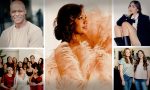
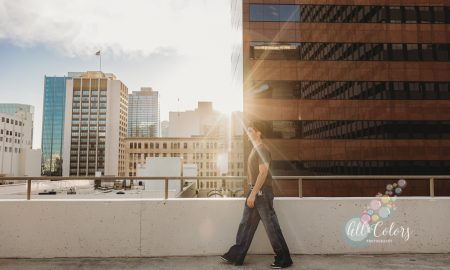
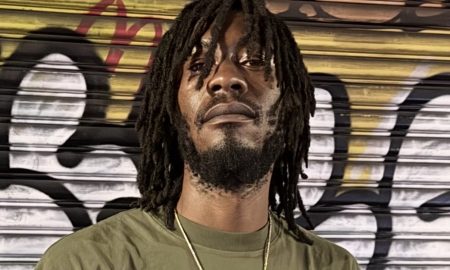
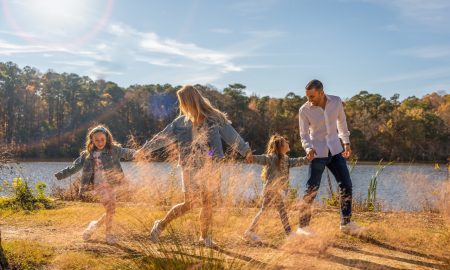
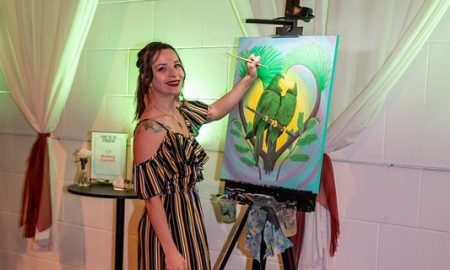
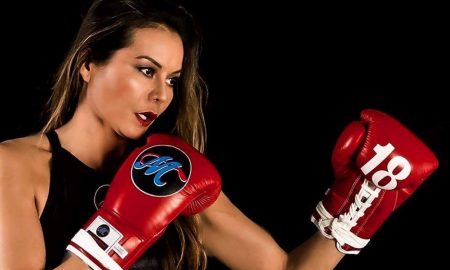
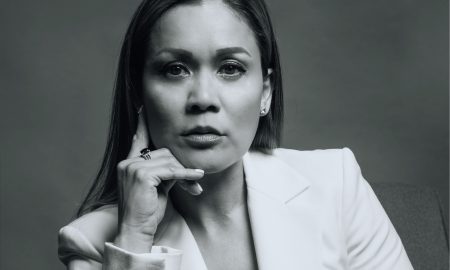
In the early days of my image creating, my photographs focused on an innate need to capture every place around me. Today, I still love landscapes, but my true passion has fallen within portraiture. What I have found is that much of the fleeting emotional sensation I have experienced in city and natural landscapes is replicated in the split-second expressions on people’s faces. I find that when I am with an individual and we are experiencing a few hours together for a photoshoot, that sharing of space is incredibly sacred, for they are allowing themselves to be seen by me and themselves.
My favorite stories in portraits are the ones that start off uncomfortable, such as a woman who has never wanted her face in front of the lens but, over time, begins to unfold before herself as she realizes that she is beautiful and worth showcasing as a medium of art. I make photographs that show people being humans. That is as simple as I can phrase it. In no way are my portraits intended to show models or replicas of something already seen. They are just moments with individuals experiencing themselves in a wild and unpredictable world; I consider myself inexplicably lucky to share space with the humans I have met in this process.
Do you have any advice for other artists? Any lessons you wished you learned earlier?
In my opinion, the biggest challenge that artist’s face today is the risk of becoming homogenized. We are faced with so many stimuli in our day-to-day lives, so many influences, and while that can be incredibly inspiring, it also leaves us at risk of believing that what we are creating is in competition with the people around us. This inundation of exposure to media can often make us question our worth as artists, and make us ask whether the things that we are creating are worthwhile from our own ideas, or if we need to change to meet the interests of the world around us. Being constantly connected to other people through media is one of the greatest privileges of this time in history, but I believe that it becomes with great responsibility.
If we do not approach the accessibility of sharing art with a baseline understanding of the inherent worth of each creative in this world – including ourselves – it can be extremely easy to lose our place in it all. With that said, I think we live in a time that is a true blessing to creatives, in which art can be something for all spectrums of wealth, race, education, national identity, gender identity, and sexual identity. There are no barriers anymore when it comes to art, and that is an extreme gift and responsibility. My advice to other artists is to learn what you feel you appreciate more than others, what you are passionate about that might set you apart, and learn to celebrate that. In a world where everyone is creative in some capacity, it is so important to understand that you are special and different and have something to offer. Art will always be created, and no matter who you are, you can contribute to that conversation.
How or where can people see your work? How can people support your work?
While I have been lucky enough to show my work in some galleries over the last year, I consistently have my images, and several photo stories, for display on my website (www.alliestewart.squarespace.com). Additionally, I share much of my work on a more casual platform through Instagram (@_alliestewart_). In terms of support, I am always taking inquiries for print sales, of any size, and scheduling for portraiture sessions!
Contact Info:
- Website: www.alliestewart.squarespace.com
- Email: stewar23@duq.edu
- Instagram: @_alliestewart_
 Image Credit:
Allie Stewart
Getting in touch: SDVoyager is built on recommendations from the community; it’s how we uncover hidden gems, so if you know someone who deserves recognition please let us know here.