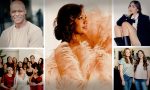
Today we’d like to introduce you to Ana Maria Herrera.
Hi Ana Maria, thanks for joining us today. We’d love for you to start by introducing yourself.
As far back as I can remember, the border was never a limit for me, but a space of encounters and conversations. I was born in Tijuana, Mexico, and grew up among the rhythms, colors, and voices that cross the invisible line between two worlds. That landscape, shaped by hope and contradiction, became my first studio and my most intimate raw material.
My artistic path began early. At six years old, I held a small camera for the first time, opening my attention to the world. It was more than a toy; it was a portal to stories many people overlook. At thirteen, I began formal artistic training, a process that continued between Mexico and the United States, crossing not only geographic borders, but also languages, cultures, and ways of seeing reality.
Throughout my life in the arts, my studies and experiences in the United States have been fundamental in shaping my vision. I trained in institutions on both sides of the border, participating in workshops, courses, and formative experiences that expanded both my technique and my thinking. Each class and each project became an opportunity to question what is established and to deepen my exploration of the relationship between identity, memory, and community.
My work in mixed media and contemporary art emerges from this crossing. I am interested in exploring how memory becomes a form of resistance, and how bodies that have been silenced can reclaim space and dignity through form. My pieces act as bridges and mirrors. They invite viewers to see what is present and what has been left behind. This is deeply investigative and transformative work, born from personal experience yet in constant dialogue with collective histories.
Learning and creating between two countries taught me how to translate contexts, not only literally but emotionally. Through my studies, from technical courses to ongoing education, I came to understand the border as a metaphor for limit, transition, and possibility. This understanding permeates every artwork, every investigation, and every collaboration I undertake.
As a border artist, my goal is for my work not only to be seen, but to live alongside those who encounter it. I want it to provoke questions, build bridges between different experiences, and reveal that our internal borders are as real as the ones drawn on maps. For me, art is a way of making visible what has been woven in silence, of finding resistance within memory, and of generating community from lived experience.
I’m sure it wasn’t obstacle-free, but would you say the journey has been fairly smooth so far?
No, it hasn’t been a smooth road. My work has grown between Tijuana and San Diego, a place where you are always moving, adapting, and translating. Living and creating across the border meant learning how to navigate two systems that do not always offer the same access, support, or understanding.
One of the hardest parts has been finding where my work belongs. My practice, built through mixed media, found materials, and community memory, does not fit neatly into established categories. There were moments of doubt, along with the challenge of sustaining an artistic practice while dealing with financial uncertainty, border logistics, and the responsibility of staying true to my lived experience and the communities I come from.
Over time, those difficulties became part of how I work. They taught me to pay attention, to work slowly, and to listen. What felt like limitations turned into questions, and those questions continue to guide my process. I learned to use materials, place, and memory as ways of thinking and researching, not just making.
For Voyager, this journey matters because my work comes from experience rather than theory. It is shaped by movement, curiosity, and the need to understand what happens in between places. The road has been uneven, but it is exactly what has made my practice honest, grounded, and open to discovery.
Can you tell our readers more about what you do and what you think sets you apart from others?
I am a multidisciplinary visual artist working between Tijuana and San Diego. My practice focuses on mixed media, assemblage, photography, and installation, often using found and discarded materials as carriers of memory. I am drawn to objects, textures, and stories that have been overlooked, and I use them to explore themes of identity, resilience, migration, and belonging.
I am known for work that moves between personal history and collective experience. Many of my projects are community-based or rooted in public space, where listening, collaboration, and process are as important as the final piece. Rather than starting with a fixed image, I allow materials, conversations, and place to shape the work as it develops.
What I am most proud of is building a sustained practice that remains deeply connected to community while continuing to evolve within contemporary art spaces. I am proud of projects that create moments of recognition, where people feel seen through the work, and of maintaining an artistic voice that is honest and grounded in lived experience.
What sets me apart is my border-based perspective and the way I work with translation, not only between languages and cultures, but emotionally and materially. Growing up between two countries taught me to see the border as a method rather than a limitation. That approach shapes how I create, research, and share my work, allowing it to exist in between disciplines, places, and people.
What would you say have been one of the most important lessons you’ve learned?
I am a multidisciplinary visual artist working between Tijuana and San Diego. My work moves through mixed media, assemblage, photography, and installation, often using found and discarded materials that carry memory. I am drawn to objects and stories that have been overlooked, and I work with them to explore identity, resilience, migration, and belonging.
My practice lives between personal history and collective experience. Many of my projects grow from community and public spaces, where listening, presence, and process matter as much as the final piece. I rarely begin with a fixed image. Instead, I allow materials, conversations, and place to guide the work as it unfolds.
What I am most proud of is sustaining a practice that stays deeply connected to people while continuing to evolve within contemporary art spaces. I value work that creates moments of recognition, when someone feels remembered, seen, or acknowledged through the experience of the piece. That exchange is where the work becomes meaningful for me.
What sets me apart is my border-based perspective and my relationship to translation, not only between languages and cultures, but emotionally and materially. Growing up between two countries taught me to see the border not as a limitation, but as a way of working. That sensibility shapes how I create, research, and share my work, allowing it to exist naturally in between disciplines, places, and people.
Pricing:
- Original mixed-media works on paper and framed pieces: starting at $220
- Wooden mixed-media artworks: approximately $950
- Large assemblages and installation works: $2,500–$5,000, depending on scale and materials
- Private workshops: $45 per hr
- Public group workshops : $25 per participant
Contact Info:
- Website: https://www.anamariaherrera.com/
- Instagram: https://www.instagram.com/ana.herrera.art/
- Facebook: https://www.facebook.com/arteanamariaherrera/
- LinkedIn: https://www.linkedin.com/in/artisana/


Image Credits
Jorge Sanchez with Z-nergy