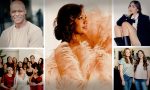
Today we’d like to introduce you to Cato Zane
Hi Cato, please kick things off for us with an introduction to yourself and your story.
Well, my name is Cato Zane, and I run a small recording studio called Lost & Sound Foundry here in the Rolando Village neighborhood. I specialize in indie pop and alt rock music production, and I love it!
My family is from the San Diego area, but we moved to a suburb of New York City when I was little. I always did well in school, doing particularly well in science and math, and with a love of music. In high school, I played drums in some bands (mostly punk rock types), and I saved up and got an all in one recording system. I then started recording my bands and all my friends’ bands, and realized that audio engineering combined my two favorite subjects: music and physics. I wiggled my way into assisting at a local studio as a teenager, and it just took off from there! That was over 20 years ago.
Since then, I worked part time in studios and theaters while in school, taking any audio engineering job I could find. I’ve always believed in continued education to help keep an edge in a competitive field, and I also *love* learning, so I’ve done multiple formal degrees, certificates, certifications, etc. For undergrad, I had a triple focus in Music and Technology, Economics, and Computer Arts and Technology at Connecticut College. After college, I worked in studios as an assistant and engineer, learning as much as possible. I also worked in theater, running live sound for musical theater productions (including some traveling Broadway shows!). My partner and I eventually moved to San Diego – I think that was around 2012?
After moving to San Diego, I continued doing both theater work and studio work for a while, before eventually switching to studio work only. I worked at the La Jolla Playhouse and the San Diego Repertory Theater primarily. I’ve worked out of a number of the larger commercial studios here in San Diego over the years, including Studio West, Rarefied Recording, Capricorn Studios, and Signature Sound. Just before covid hit, I also completed an Electronics Technician degree at a community college here in San Diego. I did that so I could repair and build music gear. One of my favorite gigs (I love it because I learned so much!) was hosting a show called Pro Studio Live, which was mostly filmed at Signature Sound Studios. For that show, they would bring in successful engineers and music producers (many of them had multiple Grammys), and we would spend an entire day with them; they would show us their process in depth. I learned so much, and I’m so grateful for that experience! That’s the type of education and social connection is something that most people really never get access to, so I’ll forever be grateful for that.
In 2015, I also started teaching the audio for film course at Platt College (which has since gone out of business). They were willing to overlook the fact that I didn’t have a masters, due to my professional experience. I realized I really enjoyed teaching, and teaching one course at a time is a great way to supplement studio work. The course was at 8am, and not many people are booking studio time at 8am! Anyway, I realized that if I wanted to dig into that world more, I should get a masters. So, I applied to Teachers College, Columbia University, and got in! I just finished my masters in Music and Music Education there this past spring, graduating with all A’s. I didn’t even get an A-; I was so into it! They let me focus on audio engineering and music production for the music side, and undergraduate and adult ed for the education side of things. While getting my masters, Columbia University hired me to teach applied studio music lessons (i.e. private lessons) in audio engineering to students seeking lessons for college credit. After graduating, I was hired by SDSU to teach one of their intro audio engineering courses, and taught my first round of that class this past fall. I had so much fun in grad school though, that I’m now researching my options for doctorate work.
On the studio side, my husband and I bought a house a few years ago. The house has a separate garage building, which I built out into my own small studio that I call Lost & Sound Foundry (although most of my branding is under my own name, with the @catonoise handle). Most of my work hours are now spent up there, but I do book time in the larger studios on occasion, as needed. I mostly work on indie pop (I sometimes call it cinematic pop because I use a lot of cinematic textures) and alt rock music, helping clients produce and mix their songs. I love it! Most of my mentors from my Pro Studio Live days did something similar, where they gained experience and eventually built out a studio space, often in their own homes. I realized the industry has been shifting a lot as technology has improved. Many recording studios with commercial rent are struggling, many no longer have staff engineers like they used to have, and so they’re not the same in terms of mentorship opportunities. The super experienced engineers and producers aren’t spending as much time as they used to in larger commercial studios. So, after working in larger commercial studios for almost 20 years, I followed the examples of my mentors, and built my own space. I love how there’s more scheduling flexibility for me, I can charge my clients less, and it’s a much more relaxed and less clinical environment.
I’m sure it wasn’t obstacle-free, but would you say the journey has been fairly smooth so far?
Yeah, I think it has been fairly smooth! But, I have had a health condition called POTS (Postural Orthostatic Tachycardia Syndrome) for my entire adult life, and so I was particularly cautious when covid hit. We lived in a condo in North Park at the time, and I think I didn’t even pass the threshold to the condo for a number of weeks initially.
POTS is also a struggle that’s just been persistent throughout my adult (and teenage) life. I used to faint occasionally because of it, and some advocacy organizations say it can give you the energy of someone with congestive heart failure. But, I work hard to mitigate symptoms, and I’ve learned to manage it pretty well. It’s one of the main reasons I switched to studio-only work; I knew the physical work of live sound wasn’t sustainable for me. I’m just glad that I’m able to manage it enough to continue doing what I love, which is working on music!
Another obstacle or issue that matters a lot to me is the lack of female representation in the music industry. There are so few women working as audio engineers or producers, and I’ve come across statistics showing that the percentage of women in these roles is even lower than in the Marines. I’ve definitely run into some situations related to that imbalance, in my opinion. Because of this, though, I’ve made more of an effort to reach out and support other women in the industry.
Alright, so let’s switch gears a bit and talk business. What should we know about your work?
My favorite work is producing indie cinematic pop and alt rock tracks with clients! I’ve developed a very specific sound that involves a lot of organic textures mixed with electronic techniques, and a ton of very carefully sculpted reverbs and delays. I’ve had people come to me for that sound specifically, and my favorite thing is to bring that into someone’s music. It’s my way of bringing more creativity into my work, and I love it! I also make beats, and some clients will purchase a beat from me, and then topline over it (toplining is when they sing over the beat, often recording in my sound booth, and then we polish it up together). I love helping people express themselves!
I’m very sensitive to musical texture, and I love manipulating it to match an artist’s aesthetic. So, another one of my favorite things is when an artist requests a specific texture or sound that’s in their head, and I’m able to produce that quickly for them. It’s so satisfying when that happens – people just light up!
One more thing is that I’ve worked very hard to make my space an inclusive and welcoming environment. I don’t want artists to feel like they’re walking into a clinical space. I want them to feel comfortable and cozy and ready to create. For example, I have complimentary snacks and drinks available for my clients, and I’ve decked my space out in plants. I keep fresh clean pillows on the sofa, and there are big trees with hammocks and a fire pit out back. A lot of this may seem fairly obvious, but many studios don’t have that extra touch. I also have a Polaroid camera in the studio, and I encourage everyone to take a selfie with it somewhere in the studio, sign it with a Sharpie, and then tape it to the wall somewhere. I also periodically have a “Cozy Concert” in the backyard behind the studio. People bring blankets, we put out snacks and drinks, we run the space heater and the fire pits, and I have clients (and sometimes musician friends of clients) performing. I love adding little elements of fun and community wherever I can! That’s what music is about, after all.
How do you think luck has factored into your journey?
I was very lucky to be born in Southern California, and grow up right outside New York City. The kind of opportunities in these areas are often hard to find elsewhere, so I was very lucky! I also had a very stable childhood, with supportive parents. They didn’t force me into any of my hobbies, but did their best to enable them once I expressed an interest. For example, I was in band in high school, playing flute, but when I expressed an interest in drums, they signed me up for private drum lessons.
I’ve also been extremely lucky to have a supportive husband. He’s very emotionally intelligent and supportive, and just as an example, he encouraged me to take the leap and switch to only studio work. Oh! And I’ve wiggled my way into so many good mentorship opportunities as a mentee, and I know that luck *definitely* played a part in that. I’ve been extremely lucky to have gained access to a world class education in both the traditional education space, as well as in the commercial space. Honestly, I think luck plays a part in everything. You have to work hard, but you also need a ton of luck!
Pricing:
- $50 an hour for studio time
- $375 for 8 hour chunks of studio time (I call this my monthly membership, so I encourage people to sign up for a monthly membership or half membership – it helps them practice studio skills, and start getting music out more consistently!)
- $50 for a stereo master
- Mixing or Producing a song: I like to discuss the track and then send a quote. If people go to my website and click the “Get Started” button, it will ask them a few questions about their music, and then take them to a page where they can schedule a free one on one call with me to discuss their project.
- I’m working on a new offering where I create a demo based on someone’s song idea (can be a phone memo, or basic song structure, etc), and if they aren’t super excited to finish that song with me, then they pay me nothing.
Contact Info:
- Website: http://catonoise.com/
- Instagram: https://www.instagram.com/catonoise/
- Facebook: https://www.facebook.com/catonoise
- LinkedIn: https://www.linkedin.com/in/catonoise/
- Twitter: https://x.com/catonoise
- Youtube: https://www.youtube.com/@catonoise
- Soundcloud: https://soundcloud.com/catonoise
- Other: https://www.catonoise.com/work-experience/


Image Credits
I took all the photos except for the profile photo of me with the guitar. That photo was taken by Mindy DuPonte, back when I did a video for Splice Music. She did send me the photo back then, and said to feel free to use the photo for my own purposes, so I have permission to use the photo.