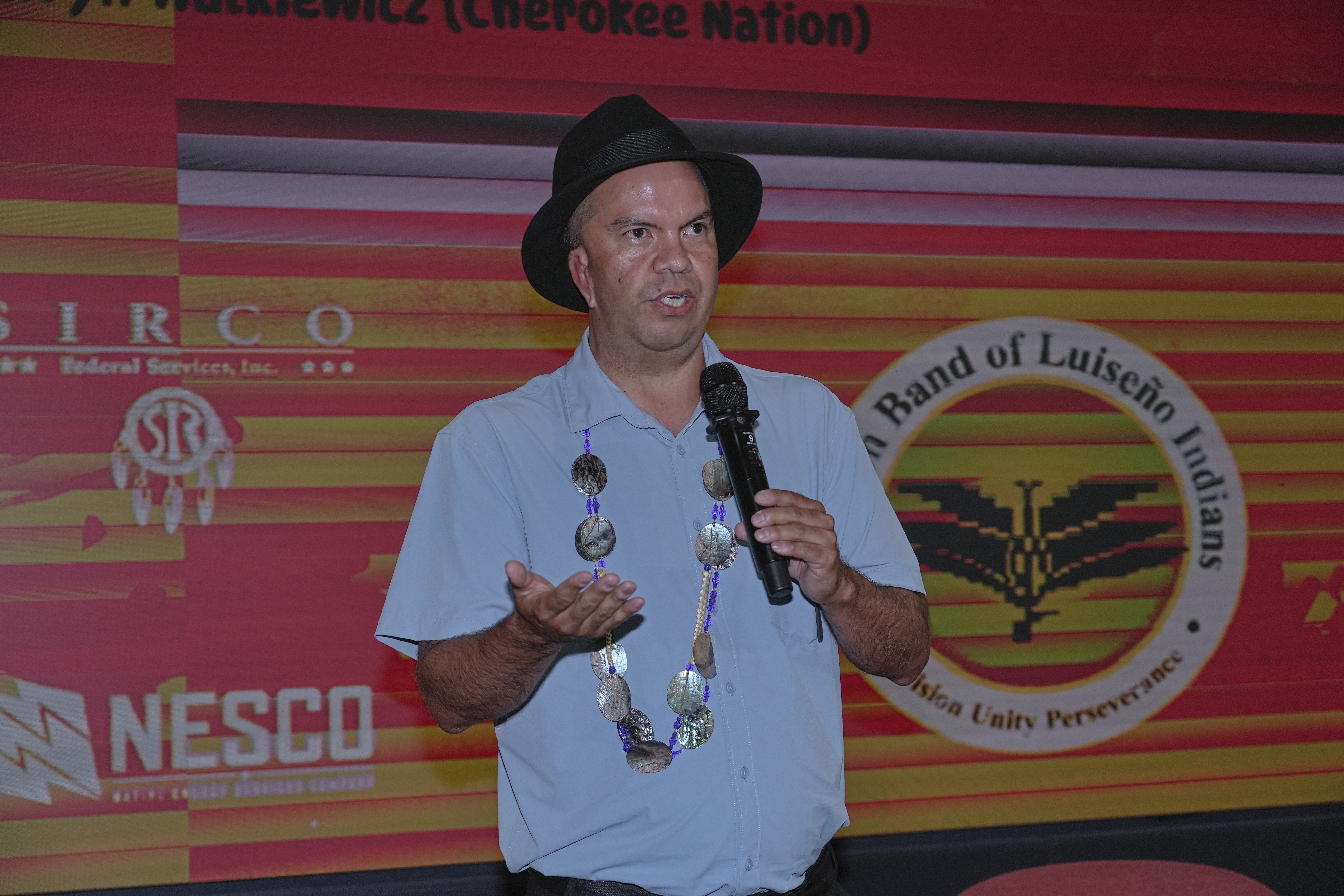
Today we’d like to introduce you to Chag Lowry.
Hi Chag, so excited to have you with us today. What can you tell us about your story?
I am the Executive Director of the Indigenous Futures Institute (IFI) at UC San Diego. I enjoy collaborating with Native scholars, writers, artists, and language speakers from throughout California. I work with some amazing professors such as Dr. Theresa Ambo, Dr. Katie Walkiewicz, and Dr. Heather Ponchetti-Daly on health, culture, history, and storytelling projects. I appreciate learning from and working with local Kumeyaay, Ipai, Luiseno, and Payomkawichum community members such as Johnny Bear Contreras, Laurie Gonzalez, Mathew Alvarado, Eva Trujillo, Alexis Munoa-Dyer, Camaray Davalos, and Mike Connolly, among others. I am fortunate to work with colleagues like Alexxa Cassanova, Alison Richardson, Dr. Linda Hill, Romeo Campos, Priscilla Ortiz, Moriah Hayes, and Chase Kornacki at UCSD and in our community. And I am very blessed that my wife Rebecca and our sons Trey and Matteo support and join me in my work. I mention all these great people because any success I have is due to them and many other friends and colleagues.
Would you say it’s been a smooth road, and if not what are some of the biggest challenges you’ve faced along the way?
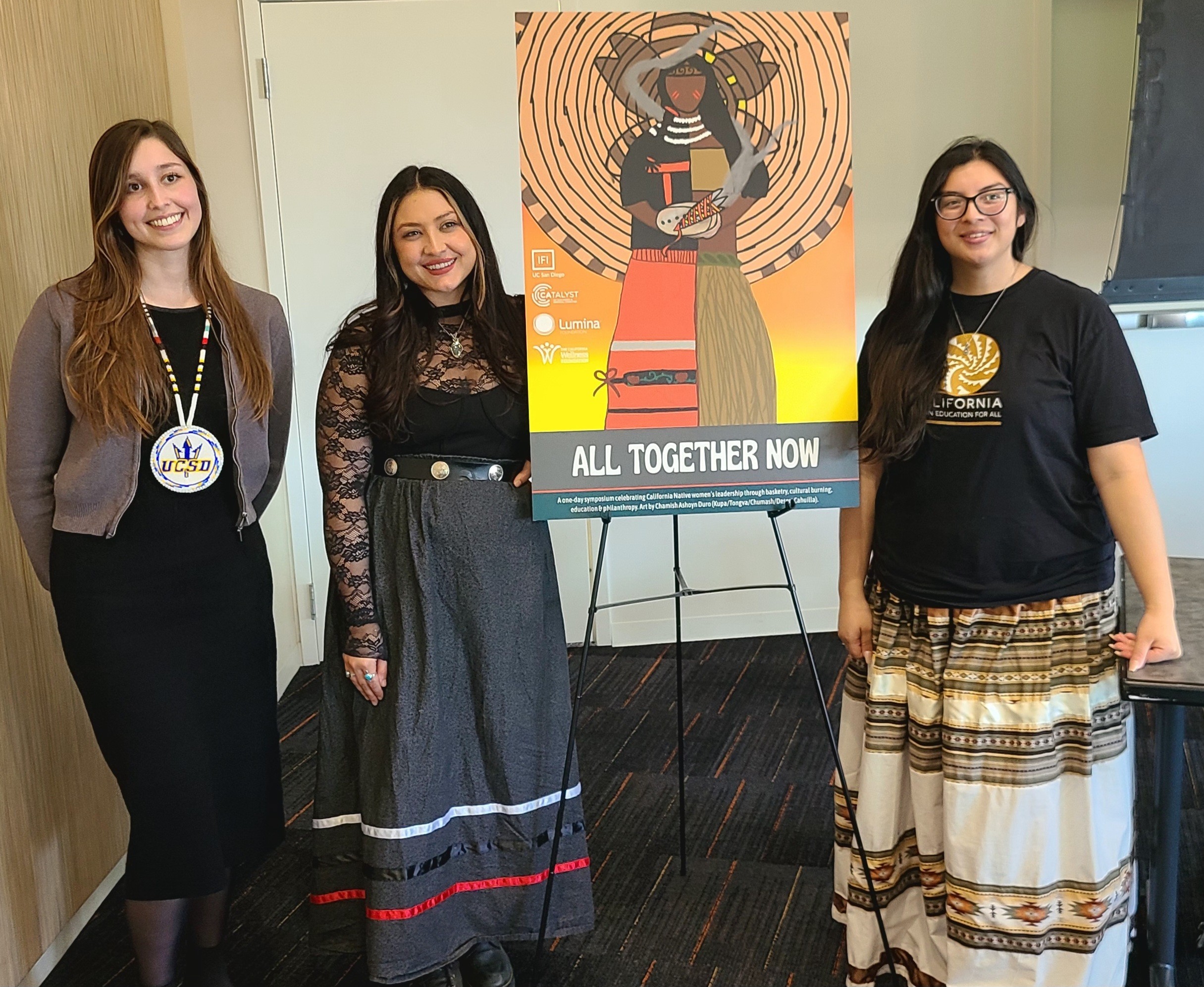
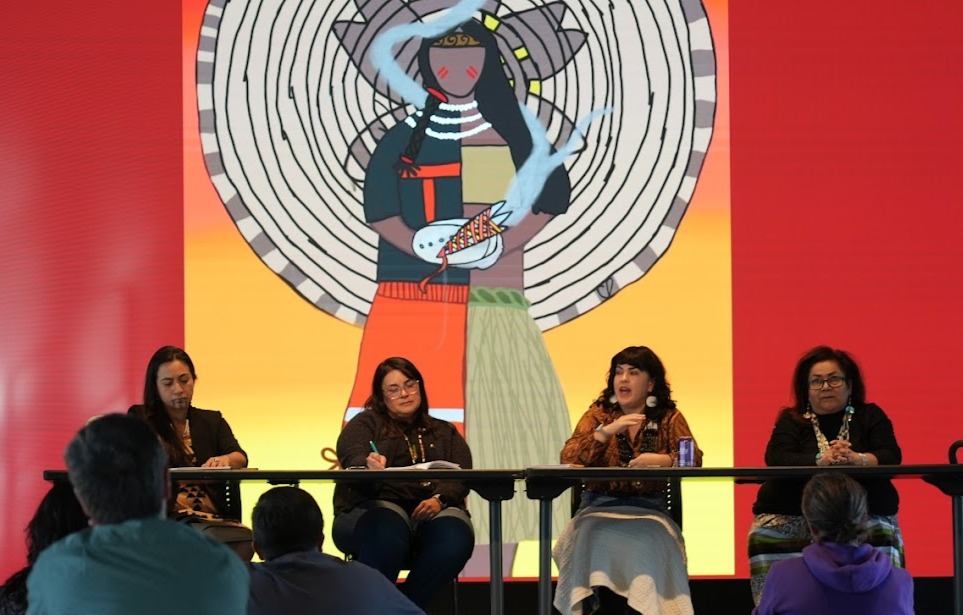
It’s a challenge to convey the knowledge, abilities, and achievements of Native people and cultures to institutions that were not designed to acknowledge or partner with us. I feel that we are doing this in our School of Public Health at UCSD where the IFI is located. Chancellor Pradeep Khosla chose to invest in and support the Indigenous Futures Institute, and there is no other institute like this in the UC or CSU systems. I believe that we’ve developed the respectful relationships and partnerships with tribal communities so that we can continue to be good partners and craft some great academic and cultural programs together. The goal of these programs is to forge strong community and institutional bonds so we can develop young leaders, collaborate on research projects, and honor and uplift the original people of the San Diego region. That’s what our symposiums such as All Together Now and Weaving with Words were designed to do.
Thanks for sharing that. So, maybe next you can tell us a bit more about your work?
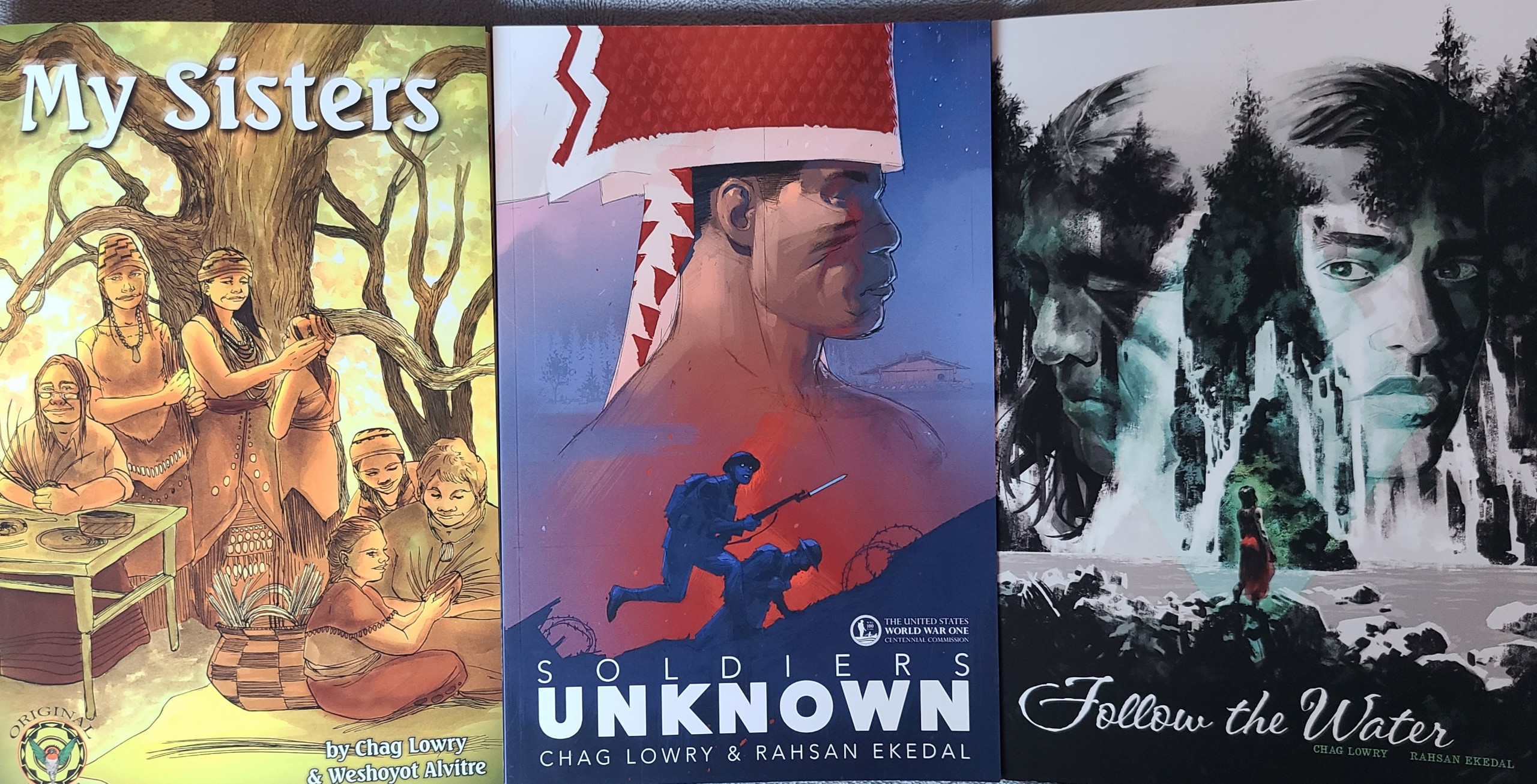
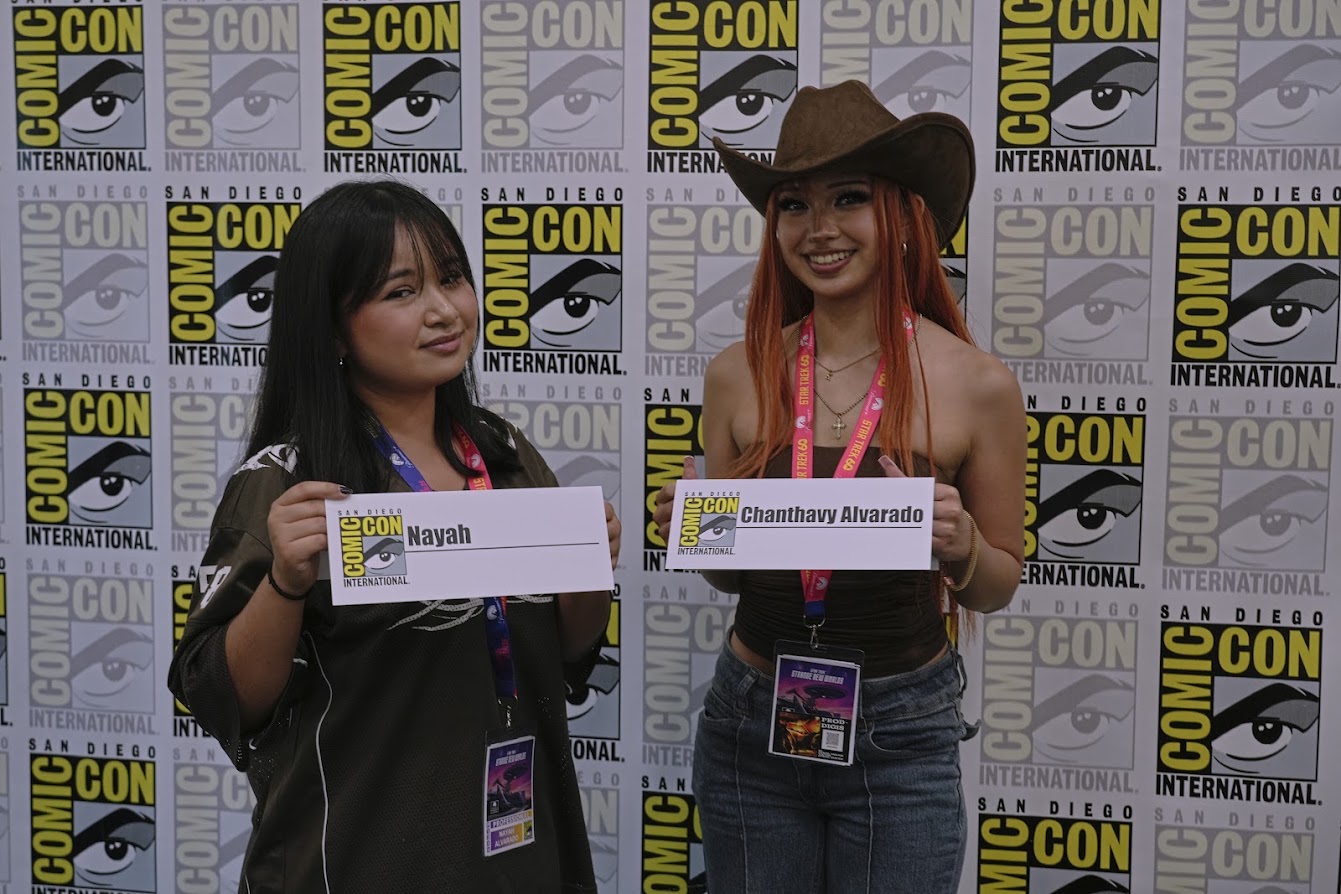
I am able to integrate my comic book creative process into my work at the Indigenous Futures Institute. The foundation for strong public health depends on communities and different cultures to be able to tell their stories without fear. Public health policies and priorities are driven by people’s perceptions of one another. If you don’t know who your neighbors are, then you can make choices about them that won’t reflect an equitable or shared value system. And most people don’t really know what Native cultures or histories are like. They have an image or concepts based on stereotypes they’ve seen in movies. The comic book stories I tell revolve around different, authentic aspects of Native life and experiences. The Indigi-Con events that I’ve worked on focus on uplifting Native comic creators from Tribes throughout the country as they share their comics and art. I also emphasize always having local Native people as presenters. I’ve been able to work with talented young Native artists like Chamish Duro, who created the logo art for All Together Now, and with sisters Nayah and Chanthavy Alvarado, who created the logo art for our 2026 Indigi-Con we just had in downtown San Diego. Although we are from different cultures, there is a strong thread of responsibility, discipline, and connections to one’s homelands that are present among Native artists and writers. The ability to share this in a comic format is very rewarding. It’s also fun!
We love surprises, fun facts and unexpected stories. Is there something you can share that might surprise us?
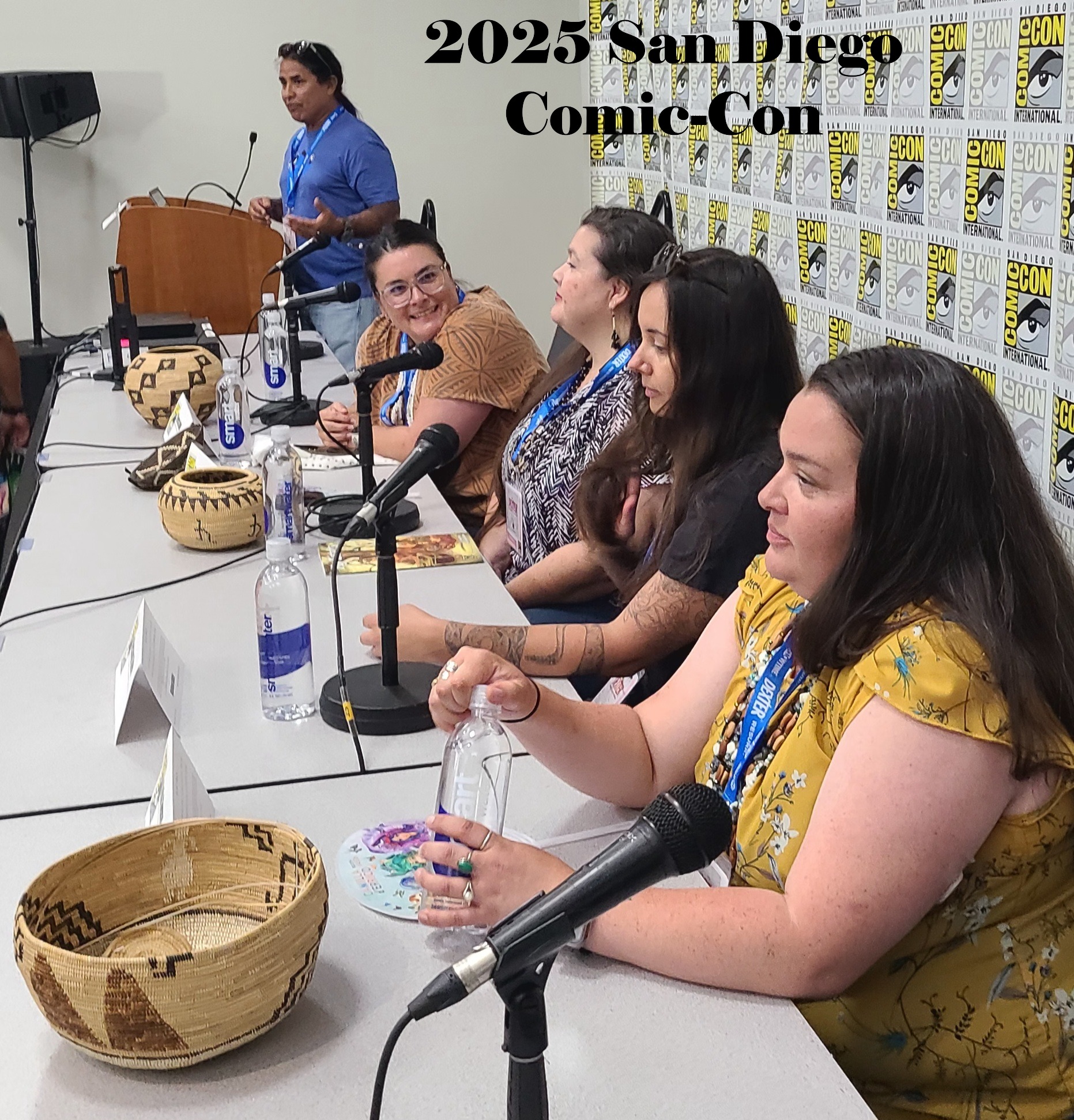
I’ve presented at the San Diego Comic-Con for several years! My good friend Johnny Bear Contreras and I coordinate with friends and colleagues to present together and share about how we’ve always used sequential art as Native storytellers. I enjoy writing stories set in different genres. I’ve written a western, a science fiction tale, several children’s stories, a World War One story, and am writing horror and World War Two stories at the moment. Also, I once caught a salmon with my bare hands in the Salmon River! I was swimming with a youth group and the salmon slowly went by. It had just broke off a fishing line upriver so was tired out. I grabbed it by the tail and hauled it in! Some adults cut it up and cooked it right there on the river bank. It was quite tasty, as I recall. I was around 11 years old.
Contact Info:
- Website: https://www.tea.bluelakerancheria-nsn.gov/chag/
- LinkedIn: https://www.linkedin.com/in/chag-lowry-m-ed-5255a1207/
- Youtube: https://www.youtube.com/watch?v=mT80zCLlRuU