Today we’d like to introduce you to Christopher Broek.
Every artist has a unique story. Can you briefly walk us through yours?
From an early age, perhaps 6 or 7 years old, I found, mostly through instructors, that I had a gift for creativity and art. I studied Art in college and pursued my BFA in design with an emphasis on photography in Illinois before moving to California. Although I enjoy creating in many mediums, photography is the one I gravitate towards most.
My tendencies tend to lean towards perfectionism, and I can be a bit of a gadget geek, best camera, best lenses, etc. Fortunately, my professors in college identified this and to break me free from my tendencies; they gave me a personal project. I was presented with a “Diana” camera—which was an inexpensive almost entirely plastic 120 format camera made in the 1960s by the Great Wall Plastic Factory in China. Primarily sold in dime stores and given away as a promotional item at gas stations and the like (Wikipedia has a great page on this), my next few classroom assignments were to be shot exclusively with the Diana. Because of its poured plastic lens and a tendency toward light-leaks, every Diana is unique in its representation of the world, most being somewhat “dream-like.” The experience forced me to learn the quirks and nuances of this “new” tool. Because the results were at first, unexpected, I began to “see” in a very different way. Not only seeing the way things actually look, but also how they might appear through a different lens.
All-in-all, it changed the way I approach photography. I do still have “perfectionist” leanings but have been freed from what you might call photo-realism. I enjoy experimenting with different types of cameras (especially infrared) and play with every digital manipulation tool and filter I can get my hands on to see what they do when pushed to their limits and ultimately attempt to achieve what I feel is the best expression of any given image.
I shoot professionally and deliver to clients what they want, but it is freeing to shoot one’s personal work, without regard to any predefined end-product. When out shooting for myself, you will most likely find me using my digital infrared camera and trying to “see the unseen.”
Please tell us about your art.
My Art…
Organically would be a good term to describe how I get to my finished pieces. For the most part, I don’t normally start with a predefined vision of what I hope to create with a few exceptions. In most instances, the final image I present to the world is arrived at by following my personal internal compass and not attempting to copy or emulate something that’s been done before. In essence, it comes about naturally.
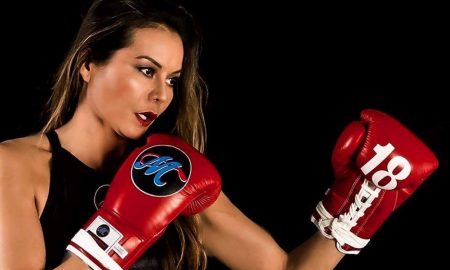
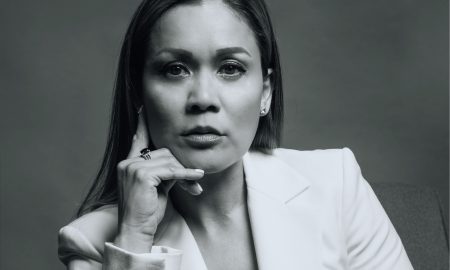
Knowing how a particular tool, brush, or in my case, camera works I visualize how it might interpret the light that reaches the sensor and seek out subjects and lighting that will make compelling images. I enjoy using a variety of different digital tools in creating my images and love to explore what happens when I push them to their limits to find out what happens.
Why do I create?:
My art is an expression of what is inside me yearning to be expressed. I derive both joy and satisfaction through the process of creating.
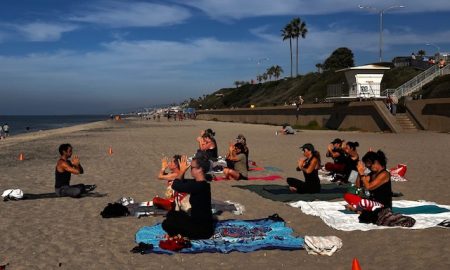
I am not attempting to convey any specific message through my art. The inspiration for the work I create comes from how I am shaped, my talents and my drive. My two favorite subjects are people and landscapes. Both are very different on any given day and in every season. What I hope people take away from the images I create is a sense of wonder, curiosity, or perhaps even a dream on the edge of consciousness.
Given everything that is going on in the world today, do you think the role of artists has changed? How do local, national or international events and issues affect your art?
I think that is a great question. I believe that there are probably as many roles as there are artists. Art is personal and subjective, and as such, each artist expresses their own individual voice. Some desire to make a social or political change which is great. On some level, I am sure there is a net effect upon my work, but I remain focused on creating something that pleases me, that comes from me organically.
I would imagine that if I were a nihilist or simply an angry person, my art would be very different, darker. I believe my art is positive for the most part, and I think that is what this world needs most now, more positivity, more beauty.
How or where can people see your work? How can people support your work?
I am not exhibiting at this time, but much of my work can be found on my website. Physical prints can be ordered of any of my pieces. You can find my work on my website: www.broekphoto.com I would be happy to answer any and all questions.
Recently, I have stepped back from social media, that is to say, I don’t post as much as I used to, but I expect I will pick up the pace in the near future. Instagram is where I will be posting most.
I actually have two accounts, my @fractalmania Instagram account is where my fractal art gets posted, and my @photobroek Instagram site is more straightforward photography.
Contact Info:
- Website: broekphoto.com
- Email: c@broekphoto.com
- Instagram: instagram.com/photobroek
- Other: instagram.com/fractalmania


 Image Credit:
Christopher Broek
Getting in touch: SDVoyager is built on recommendations from the community; it’s how we uncover hidden gems, so if you know someone who deserves recognition please let us know here.