Today we’d like to introduce you to Diana Cervera
Diana, we appreciate you taking the time to share your story with us today. Where does your story begin?
I’ve always believed in the power of art to transform our conscious reality. Ever since high school, I remember being mesmerized by the power of film and theatre and how these artworks create alternate realities—a way to dream up a different world and really live in it even if only for a moment. I started acting in high school plays and went to college with dreams of becoming an actress at UCSD. As a first-generation college student I was hit with culture shock when I arrived and and often found myself the only person of color in my theatre classes. It was challenging to feel like I fit in, or that any of the stories I was learning about reflected my experience.
Thankfully, I discovered Ethnic Studies early on, where I learned to critically examine systems of exclusion and how media has historically shaped the popular imagination of places, people, and communities. I also found amazing mentors who helped me find my place and my voice as a young artist. This helped me find my passion for creating work that centers communities of color and those often left out of mainstream media—the stories that aren’t represented, the people we don’t see on the big screen. My work lives at the intersection of art and social justice, and while I engage with multiple art forms, including acting and film, much of my work is rooted in community engagement. During my time at UCSD I was also an intern at the UCSD Cross Cultural Center which taught me the power of building across communities outside of my own helping me to build a framework of relating to others which informs my work to this day.
Moving to Tijuana 7 years ago really has also been something that has transformed my identity as I am one of the more than 150,000 people who cross the border between San Diego and Tijuana every day. The experience of being Transfronteriza has taught me so much and I am grateful to the folks who have shared their love with me since I moved and taught me how to navigate the borderlands and its many layers of complexity and contradiction.
Can you talk to us a bit about the challenges and lessons you’ve learned along the way. Looking back would you say it’s been easy or smooth in retrospect?
After college, it took me a long time to find my place. I moved around a lot, and while I gained valuable experiences from living in different places, there’s a unique difficulty in feeling like you’re not where you’re supposed to be, or feeling unrooted. For many artists, the journey is often non-linear, and for me, art is deeply personal. When I’m disconnected from creativity, I feel out of alignment with my purpose. I went through a period where I wasn’t sure what I wanted to do anymore—I was in a kind of creative limbo. I finally made peace with this feeling when I arrived in the Tijuana/San Diego border region. Border towns have a poetic quality—they’re constantly in motion, full of complexity and possibility, which makes them the perfect places for inspiration and exploration.
Finding a community of transborder artists has been transformative for me. After living here for seven years, I’ve adopted this transborder identity—it’s a way of life that shapes your perspective on the world. Border towns are where global issues converge, and as a community member, you witness it all firsthand. There was a time when I didn’t feel rooted in an artistic community. Even though I always had my friends and family, it’s easy to get caught up in the 9-to-5 grind, making art feel secondary. Fortunately, I’ve found a beautiful and supportive community in the Borderlands, especially in Tijuana, where there are so many DIY art spaces. It’s incredibly powerful and inspiring to be surrounded by creatives doing amazing work.
Currently I am the Director of Community Programs with the San Diego Tijuana World Design Capital and am also working on several personal art projects in collaboration with other local artists on both sides of the border. I am the former Director of Education with California Lawyers for the Arts where Ive had the gift of learning more about the legal side of being an artist and sharing this information with the arts community here in the Borderlands. Part of my work with CLA has also been presenting an annual bi-national symposium entitled INTERSECTIONS: Art and Law at the Border which illuminates the geopolitical context of the Tijuana San Diego highlighting the perspectives of amazing artists, legal advocates and community members. My work as an arts administrator has really helped me to organize my artistic practice.
Ultimately, I would say I am in a place of returning to myself and returning to acting by reconnecting with the deep work of expression. Ive recently had the pleasure of studying physical theatre with Kennedy Brown in Los Angeles which was a really inspiring experience for me and I will be taking a mentorship training with him this fall to learn how to facilitate the exercises of Lucid Body with others.
Thanks for sharing that. So, maybe next you can tell us a bit more about your work?
Currently, I’m completing my first feature documentary film, Mujer Mariposa: Voices of Women on the Periphery, in collaboration with cinematographer and editor Magdalena Ramirez. The film tells the stories of three women of color navigating the complexities of growing up first-generation in the United States. Mujer Mariposa positions the unseen labor of migrant and refugee mothers as acts of resistance. The film is dedicated to our mothers and grandmothers, honoring their legacies of sacrifice, brilliance, and tenacity. We’re currently in post production and excited to share it with the world and hopeful we’ll complete it by the end of the year.
I’m also working on the second iteration of an installation at NTC Liberty Station, in collaboration with Josemar Gonzalez, titled Transcending Perception. This piece explores how dominant media has historically played a central role in crafting normalized perceptions of people and communities of color within the American imagination, and how these perceptions shape who is considered part of the imagined America and who is deemed “other.” The installation consists five free standing doors, featuring portraits and poetry of various community members from different cultural communities. Each of the doors serve as entry points to stories of migration, identity and offer an invitation in. As the audience walks through these doors and reads the stories, they are invited to reflect critically on the doors they’ve opened and those they’ve closed, both physically and metaphorically.
In addition to my artistic work, I’m an arts administrator and have worked with various nonprofits in San Diego and the Bay Area, and I currently serve as the Community Program Director for World Design Capital San Diego-Tijuana. It’s a dynamic and demanding role, as we’re programming and serving two countries, in two languages, while constantly moving across the border. I’m fortunate to collaborate with hundreds of community members on both sides, who are doing transformative work through design. From redesigning systems that support transborder students to reimagining humanitarian efforts for migrant communities and healing our water systems—these projects embody the spirit of innovation and community resilience that is the lifeblood of the borderlands.
In my view, WDC serves as a catalyst, bringing together the efforts of the many communities that have long called this region home, well before the designation, and gives us the opportunity to push the envelope even further. I definitely encourage folks to visit spaces and communities in the region they may not know of. If you have never been to Tijuana you are missing out! WDC and the events in our calendar are a perfect excuse to make your way over if you can. I hope this year can strengthen pre-existing connections and also plant seeds for new ways of existing in relationship to one another despite the border wall which by-design is meant to separate and exclude, marking an “us” and “them.”
What was your favorite childhood memory?
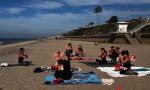
My favorite childhood memory is visiting Merida Yucatán where my family is from in Mexico. I have really happy memories of being on the beach with my mom and siblings in a little tiny remote beach town. My mom would wake us up at 6 or 7am and we would walk to the beach and spend the entire day there in the ocean. Those are some of my happiest most blissful memories.
Contact Info:
- Website: https://dianacervera.com
- Other: https://wdc2024.org


Image Credits
Josemar Gonzalez
Magdalena Ramirez
Beto Soto