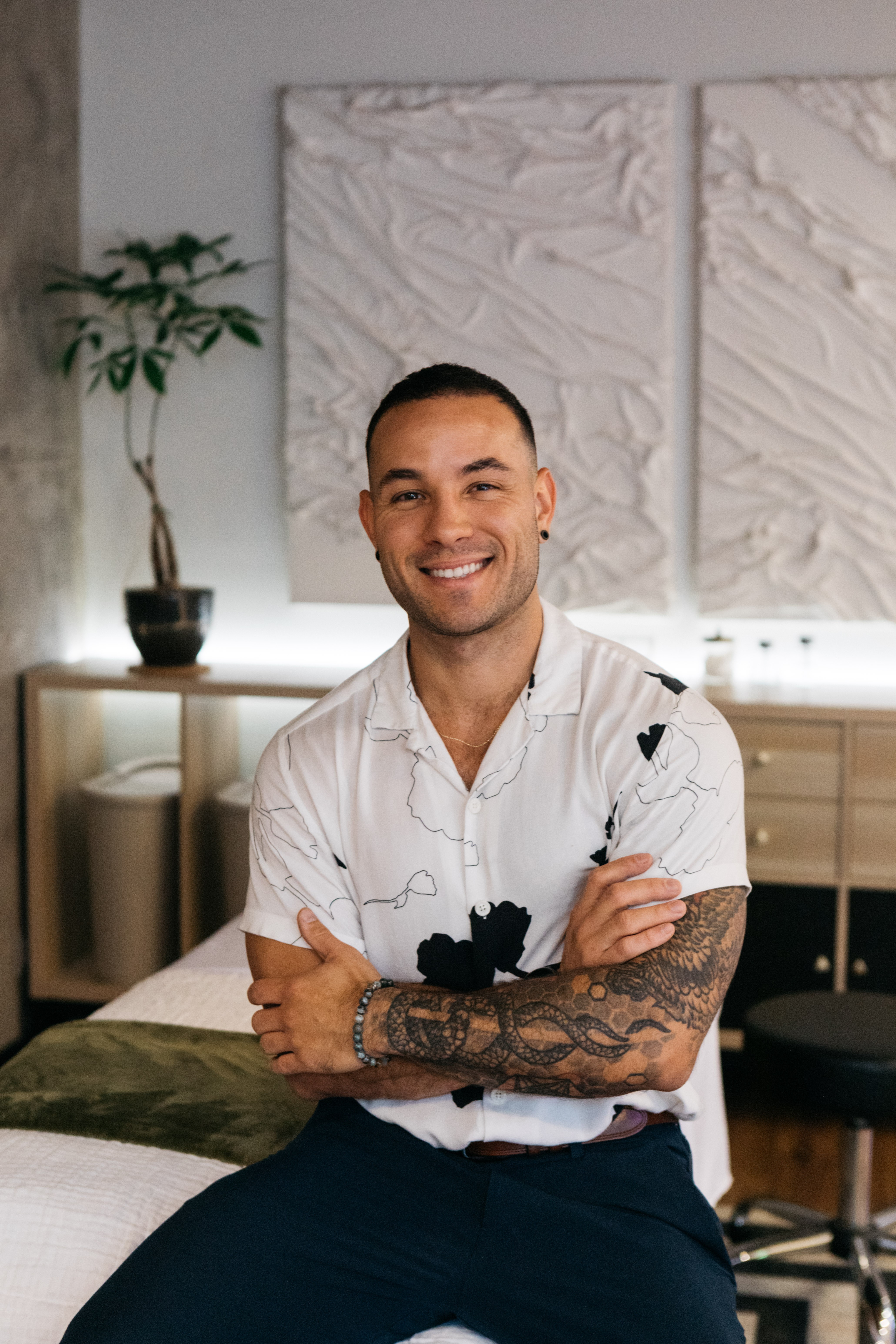
Today we’d like to introduce you to Diego Garcia.
Hi Diego, thanks for joining us today. We’d love for you to start by introducing yourself.
I came to this medicine sideways. I was born in Venezuela and moved to the United States when I was eleven. I studied nutrition at the University of Florida and then spent close to a decade working in strength and conditioning. Spending every day trying to understand bodies eventually led me to acupuncture school. I completed my master’s degree in 2017, became licensed soon after, and assumed that finding the right profession would be enough to carry me forward.
It wasn’t. My original training was in mainstream Traditional Chinese Medicine, and for nearly five years I stalled with a license in hand. I treated only a handful of patients, continued coaching fitness to support myself, and privately described what I was doing as “poke-and-pray acupuncture.” I knew there had to be greater depth in the medicine, but I had not found my way into it yet.
At the same time, I was confronting the same problem in my own life. I knew I had something meaningful to offer, but I could not seem to create momentum. The same patterns repeated. I wanted my life to change and kept watching myself recreate the conditions that kept it the same. Eventually that became doubt about whether I was capable, or even worthy, of stepping fully into the role of healer.
If you have ever known what you wanted your life to become and still watched yourself remain stuck, you know something about those years.
Eventually I came across a class on the 13 Ghost Points, an ancient acupuncture treatment traditionally used for deeply rooted patterns of the mind and spirit. I contacted the teacher, Leta Herman, initially because I felt stuck myself. Receiving that treatment became a turning point in my life.
I felt like myself again. The doubt that had governed so many of my decisions began to loosen, and in its place came a much stronger desire to live and work more authentically. That fall I enrolled in a three-year Daoist alchemy apprenticeship. Just three months after my Ghost Points treatment, I found a small space in Hillcrest, signed the lease, and opened Gateway.
Following the alchemical roots of the medicine eventually led me deeper into classical acupuncture and to Ann Cecil-Sterman, my second mentor. Studying closely with both teachers fundamentally changed the way I understood Chinese medicine. I moved away from relying primarily on standardized protocols and toward a medicine built around classical theory, close observation, pulse diagnosis, channel systems, and the individual person in front of me. That was the medicine I had been looking for.
Today my work at Gateway brings those two paths together. Classical acupuncture helps me understand how the body has lost balance and how to help restore it. Daoist alchemy asks another question: once suffering loosens its grip, what becomes possible for this person’s life?
That distinction matters to me because I no longer think healing ends when a symptom disappears. Sometimes the symptom is only the gateway.
Gateway Acupuncture & Alchemy grew directly from that realization. The work I offer now is inseparable from the work that changed me. I understand many of the people who come through my door because I remember what it was like to know there was more available in my life and still be unable to reach it.
I was one of them.
The treatment that helped return me to my own life eventually became part of the medicine I now offer others. In that sense, Gateway did not begin when I signed a lease. It began when I finally experienced, in my own life, that deeply rooted patterns are meant to change and that everyone is entitled to experience healing.
Would you say it’s been a smooth road, and if not what are some of the biggest challenges you’ve faced along the way?
It has not been a smooth road. Long before I learned medicine, I learned what it feels like to live in conflict with something that is true.
I was born in Venezuela and moved to the United States as a child. I was already a little different; I was more interested in music, building things, and taking electronics apart than fitting into what was expected of the other boys around me. Immigration added another layer. I was learning a new language and culture while becoming increasingly aware that I was gay in an environment where I had learned that part of myself was something to hide.
So, like many of the patient’s I work with today, I adapted by becoming smaller.
I learned to censor myself, not ask for too much, and stay within the boundaries that felt safe. There were economic pressures too. My family was starting over in a new country, and I became very conscious of the differences between what I had and what many of my peers had. For a long time, I carried those differences as shame.
The hardest obstacle was eventually realizing how much energy it takes to fight yourself.
Unlearning that took years. Thankfully, my family changed with me; my mother went from crying when I came out to eventually founding a PFLAG chapter in our hometown. And over time, the Daoist and alchemical work that later became part of my clinical practice gave me another way of understanding what I had experienced: resistance creates constriction. When we spend enough time fighting our bodies, our emotions, our circumstances, or some part of ourselves, we lose freedom long before we lose apparent health. Either way, our bodies are tasked with manifesting our mental state. Whether that is vitality or dis-ease, it all begins in the mind.
When I stopped resisting what was true about me, my internal terrain shifted. The climb remained. But the war with myself ended. The resources I had been spending on self-judgment were now available for courage, growth, and a fresh perspective on reality.
That experience profoundly shaped the way I practice medicine. People often arrive in my clinic after months or years of fighting something they did not consciously choose: a painful body, anxiety, exhaustion, chronic symptoms, grief, or simply the feeling that they are no longer themselves. They may already feel frustrated with their body or disappointed in themselves for not being able to “fix” it.
I understand that terrain.
My work is not simply something I perform on another person. I continue to submit myself to the same work of examination, transformation, and cultivation that I ask of my patients. That matters to me because healing requires more than technical knowledge. It requires the capacity to stay present with someone without treating their struggle as evidence that they have somehow failed.
My own road taught me that healing does not begin by fighting harder. It begins when the relationship to illness shifts from judgment to gratitude for the opportunity to evolve the personal and collective consciousness.
As you know, we’re big fans of you and your work. For our readers who might not be as familiar what can you tell them about what you do?
“Artist/Creative” is probably the truest category for me, even though my license says acupuncturist. I believe healing is an art, and that a healer should approach their work with the attention, curiosity, and discipline of an artist.
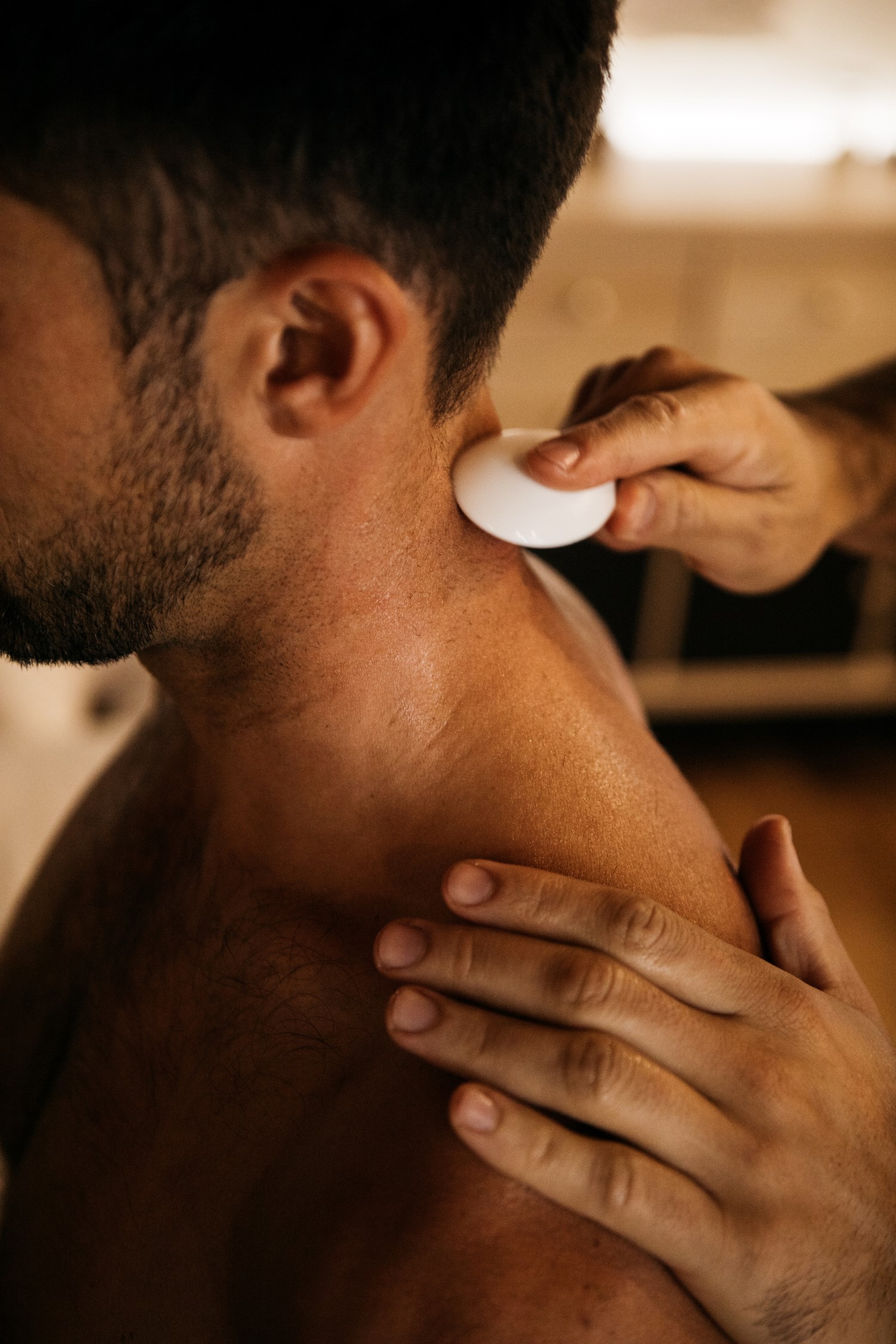
Classical acupuncture is my primary medium.
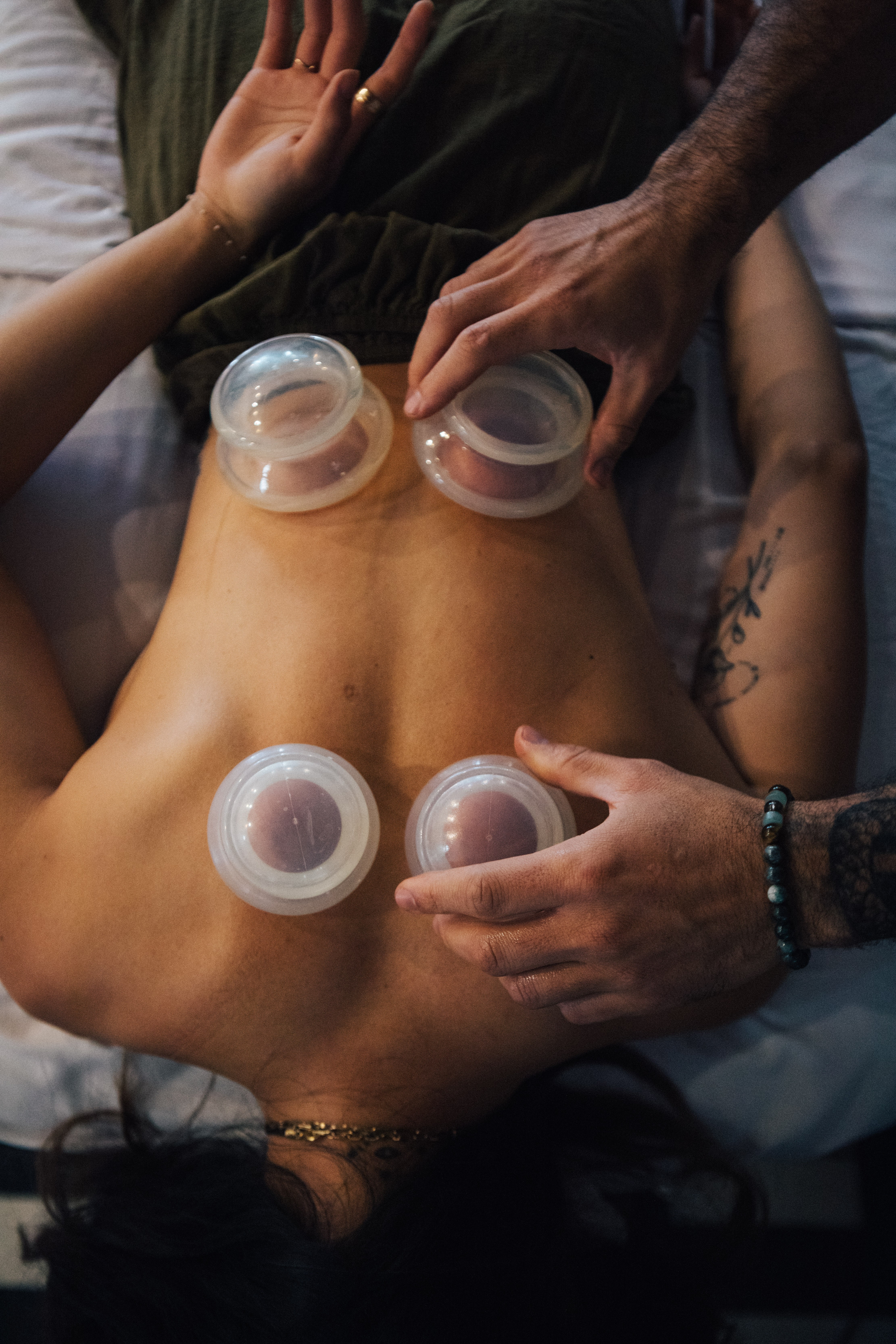
What I practice is highly individualized. There is no prewritten treatment waiting for someone when they walk through the door. I begin by asking what is happening in their life and body that day, listen carefully, examine the pulse, and build the treatment around the person in front of me. Two people can arrive with the same diagnosis and receive completely different treatments because the question is not simply, “What condition do you have?” It is, “How is this condition happening in you?”
That distinction is central to my work.
Classical Chinese medicine gives us an extraordinarily rich way of understanding a person. A patient is not a collection of isolated symptoms, but a being with a history, a constitution, relationships, adaptations, and patterns of energy in motion. My work also draws from Daoist medicine and alchemical traditions, including systems such as the 13 Ghost Points and Nine Stages, which allow treatment to engage dimensions of illness and transformation that do not always fit neatly into a conventional wellness checklist.
What sets my practice apart is not simply that I know these systems. It is how seriously I take the craft of applying them.
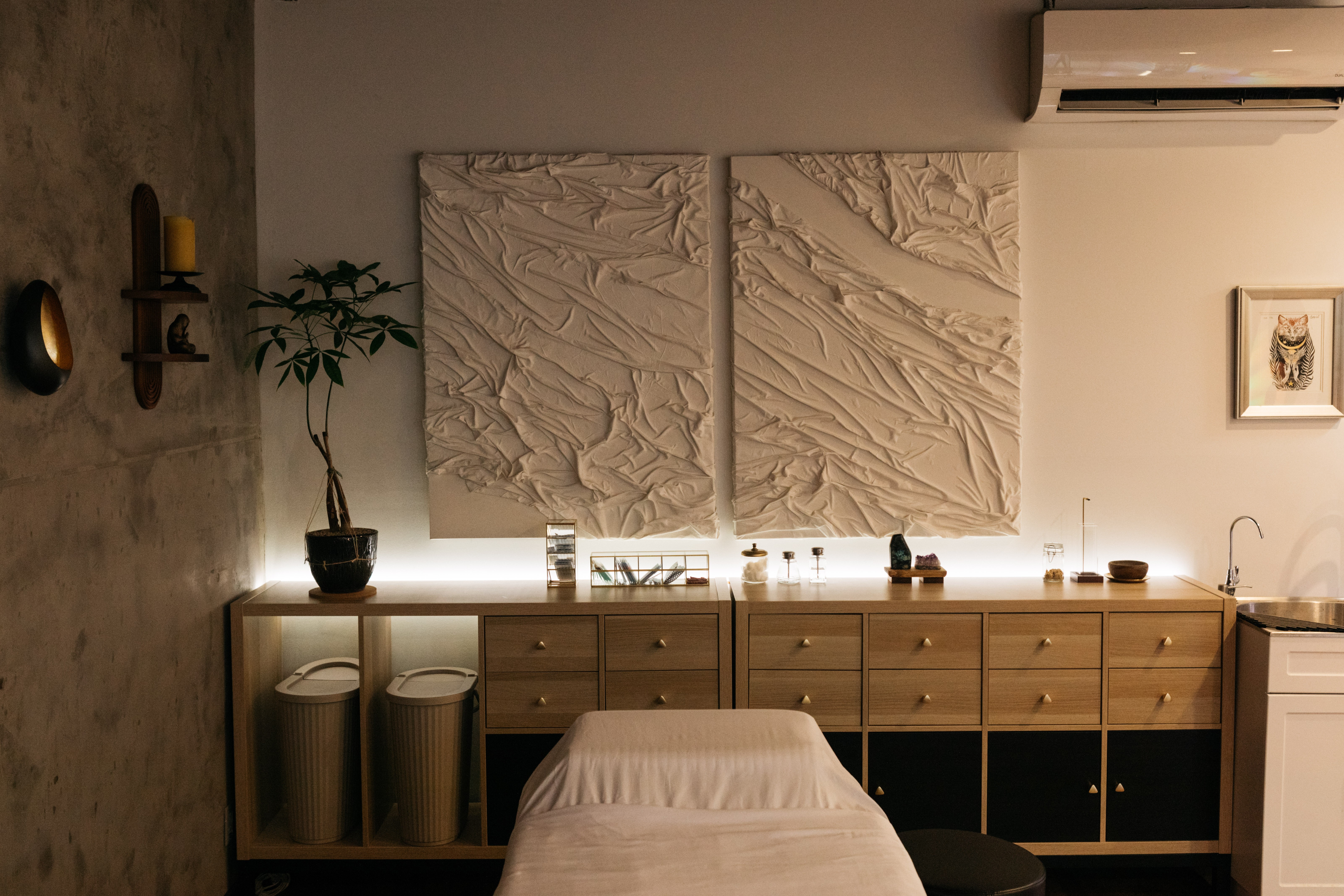
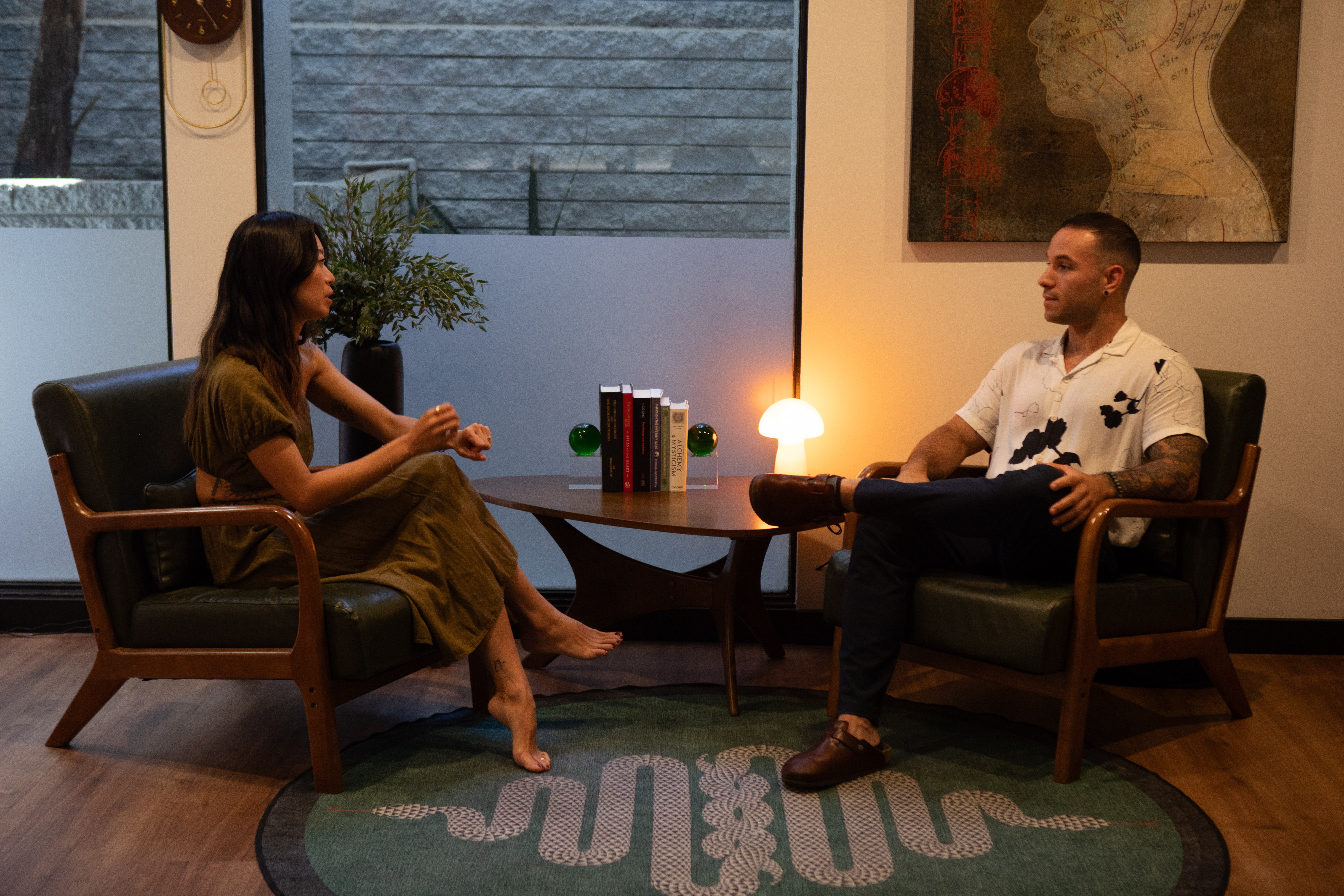
I have built Gateway as an extension of that philosophy. I renovated the clinic myself because I wanted the room to communicate something before I ever placed a needle: that this is a place where someone can be fully attended to. I designed and built the website for the same reason. It is not simply a place to list services; it is an invitation into how I revere the medicine.
That has expanded into writing and visual art. My website now holds a growing collection of essays on subjects such as the Five Elements, the Nine Palaces, the 13 Ghost Points, classical acupuncture, and the experience of being a gay healer. Each essay has its own unique artwork, designed by me, because I want the form to carry the same care as the ideas themselves.
I am probably most proud that all of these things have become one body of work rather than separate parts of my life.
The treatment room, the writing, the artwork, the study, and my own continued cultivation all come from the same question: how deeply can I understand the mystery of the body-mind-spirit, and how skillfully can I facilitate the conditions for change?
That is also why I resist practicing standard acupuncture, formulaic Traditional Chinese Medicine. People do not come to me as formulas. They come with complicated bodies, complex histories, and often with symptoms that have persisted despite their best efforts to solve them.
My job is to meet that complexity with equal curiosity and attention.
The essays and artwork let people encounter that philosophy before they ever step into the clinic. If something in them makes a reader see their body or their life differently, then the medicine has already begun doing some of its work.
Is there a quality that you most attribute to your success?
Curiosity. I would place it before any credential or accolade.
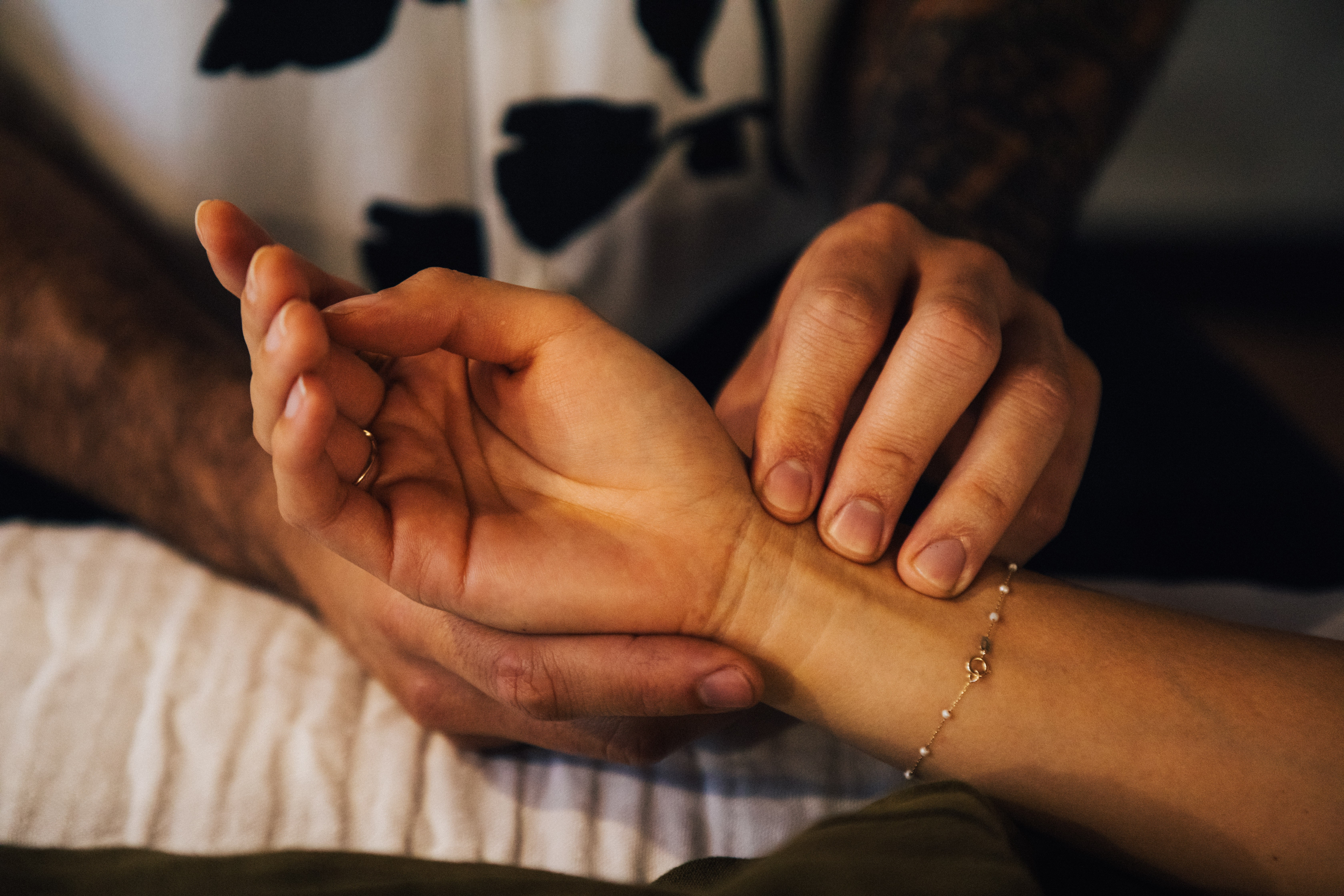
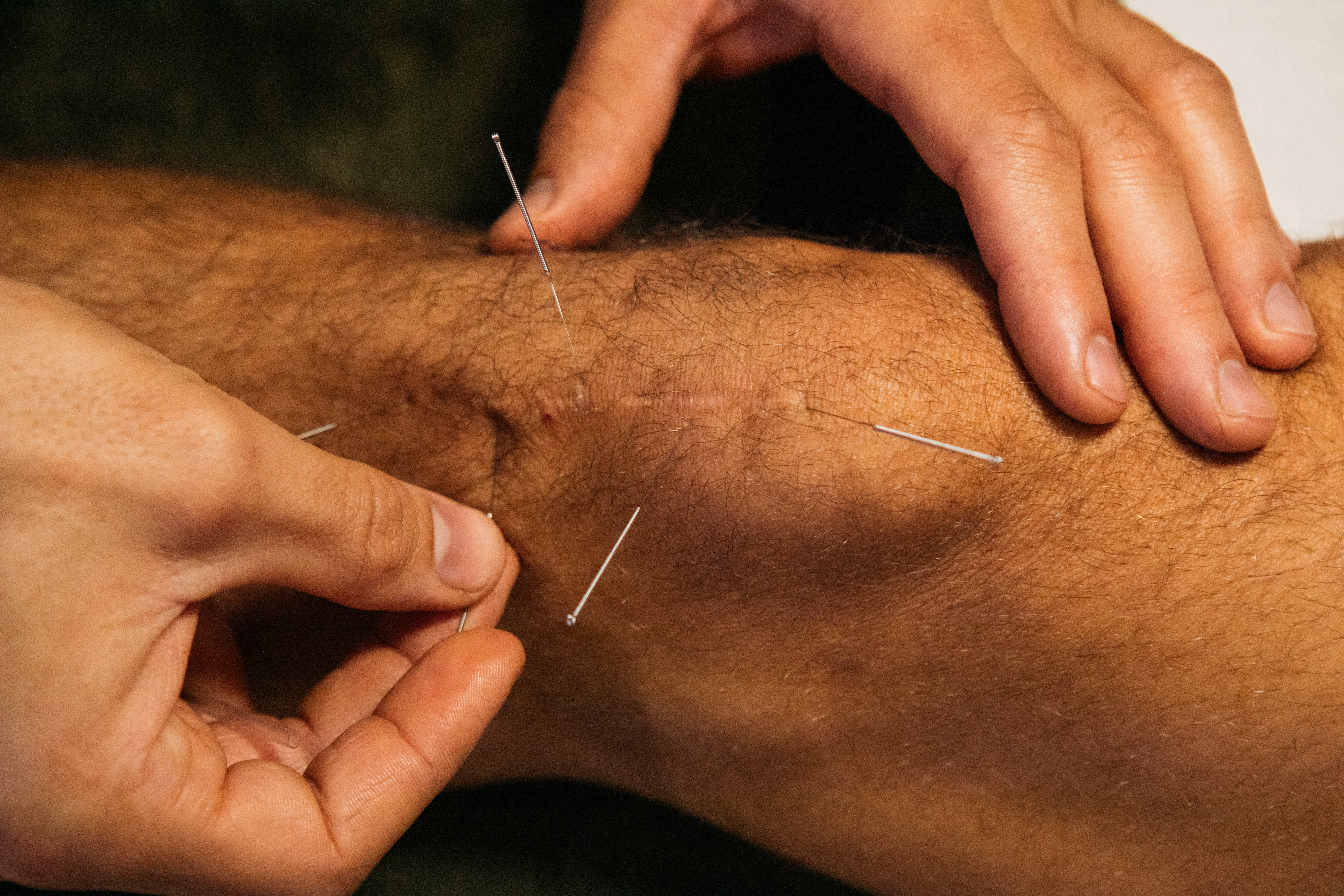
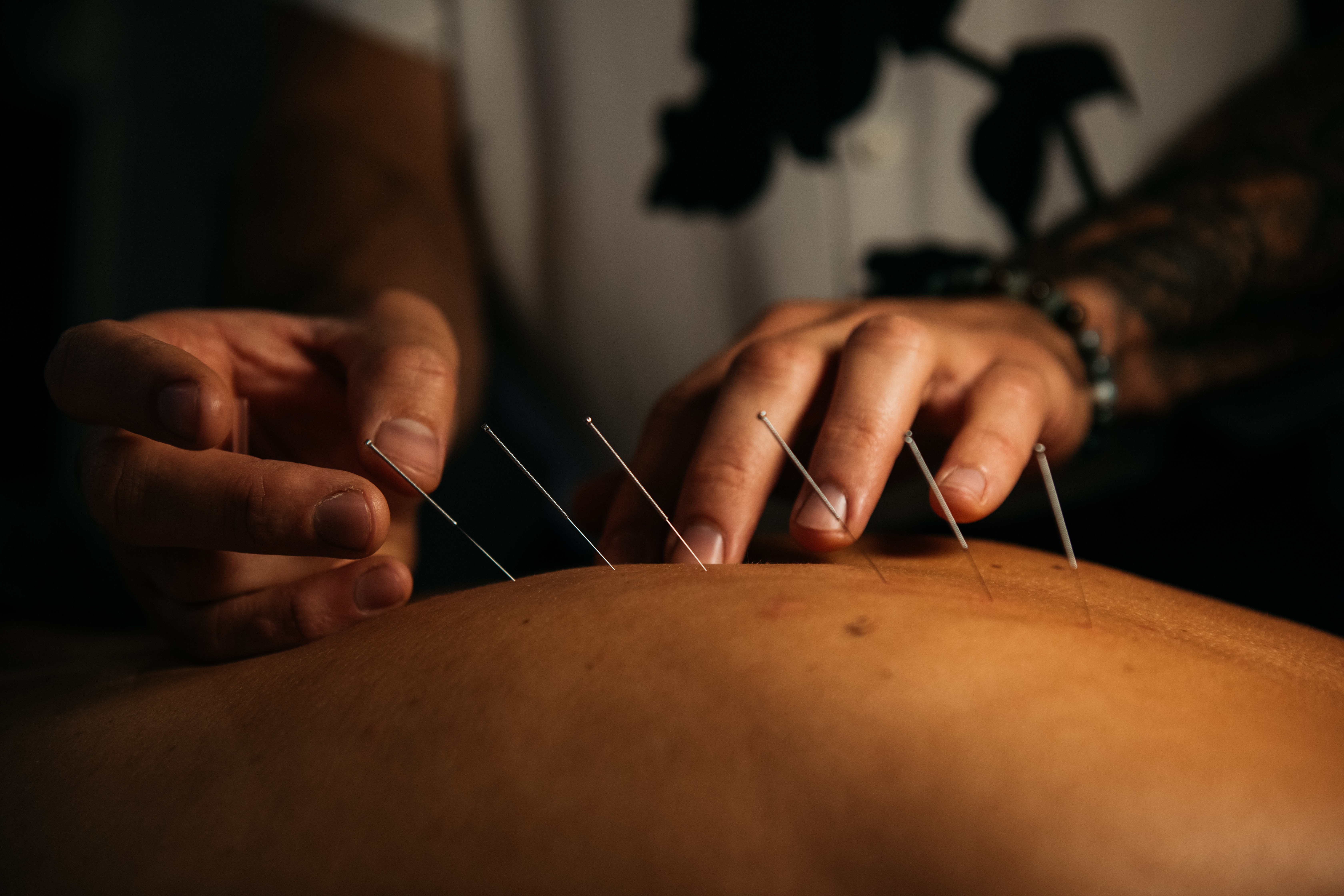
Physically, acupuncture requires me to listen with my hands. A needle is not simply placed out of habit. I am paying attention to how the body responds and adjusting accordingly. The acupuncture classics compare placing a needle to grasping a tiger’s tail. It requires that kind of attention and conviction. Pulse diagnosis asks for incredible stillness and a willingness to listen for the most subtle invitation from the patient’s body. Under three fingers, you can encounter patterns that an intake form could never capture.
That curiosity is intellectual too. Classical Chinese medicine is vast enough that I don’t think anyone reaches the bottom of it in a lifetime, or even several. The deeper I study, the more interconnected its worldview becomes: acupuncture, herbal medicine, Chinese astrology through Bazi, geomancy through feng shui, stone medicine, divination through the I Ching, and the deep well of Daoist philosophy.
I approach these subjects much like I took electronics apart as a kid. I want to understand how the pieces relate, what makes the whole thing work, and what becomes visible when you take something down to its fundamental parts and build it back up again. It is the same curiosity that kept me absorbed in Legos for hours as a child, now directed toward healing and the nature of being human. I am grateful that the medicine still surprises me, and I hope it always does.
The most important curiosity, though, is the one I turn toward myself.
I continually ask: What is this experience trying to show me? Where am I participating in the patterns that frustrate me? What becomes possible if I stop treating difficulty only as something to escape and become curious about what it can teach me?
That is a central part of the alchemical work I practice. It asks us to meet our lives with enough openness that even unwelcome experiences can become material for growth. I take that work seriously because I don’t want to ask patients to examine their lives, change deeply rooted patterns, or become more honest with themselves while exempting myself from the same process.
When SD Voyager first featured me, while Gateway was still a young practice, I said, “Health is not something I do; it is who I am.” Curiosity is how I have kept that sentence true.
Pricing:
- All my pricing information is available on my website: www.gatewayacu.com
Contact Info:
- Website: https://gatewayacu.com
- Instagram: https://instagram.com/goesbydiego
- Facebook: https://facebook.com/gatewayacu