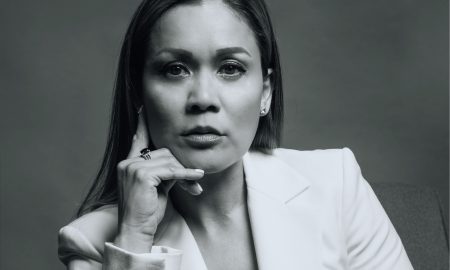
Today we’d like to introduce you to Erica Thompson.
Erica, please share your story with us. How did you get to where you are today?
I’m originally from Massachusetts, where I received my Master’s in Counseling Psychology with a concentration in Cognitive Behavioral Therapy from Assumption College in 2006. In my years of counseling experience, I’ve worked in a variety of treatment settings, including community mental health, outpatient programs supporting individuals with both mental health and substance misuse disorders, and higher education. Before moving to California, I spent over six years working at Worcester Polytechnic Institute as both a counselor and later Associate Director of the Student Development & Counseling Center. There my responsibilities included counseling college students and overseeing all outreach and prevention education (substance abuse, suicide, and sexual assault prevention). While working at WPI, I had the privilege of working on two grants – SAMSHA’s Garrett Lee Smith Campus Suicide Prevention Grant and the DOJ Office of Violence Against Women Grant to Reduce Sexual Assault, Dating Violence, and Stalking. These grants allowed me to take part in training with national experts and to develop programs that supported students.
When I first moved to California, I had some hoops to jump through as I became licensed here. Every state has different licensing requirements and sometimes even different licenses. Luckily, I was able to get an intern number so I could start working while I prepared for the California exams and waited for the license applications to be approved. I began my professional career here working at a dual diagnosis treatment program (IOP/PHP). There I worked with a multidisciplinary treatment team providing holistic services including therapy, psychoeducation groups, psychiatry, yoga, massage, and accupuncture.
A few years after being in San Diego, I decided to go into private practice so that I would be able to support individuals without the limitations of academic or program schedules and insurance driven time restraints. Sometimes the therapeutic work an individual wants and needs to do may take weeks or months. Sometimes that person has more long term goals.
Overall, has it been relatively smooth? If not, what were some of the struggles along the way?
Overall, the transition to private practice has gone well. When I was looking for an office, I wanted to be sure I was around other therapists. In my career, I have always enjoyed being part of a team and didn’t want to lose that. Some therapists may describe private practice as isolating at times. I love being able to have colleagues to consult with easily and to chat with between appointments. After looking into a few office options, I signed a lease at my current office location, 10 Story in Mission Valley. Our suite is the perfect fit. The therapists have their own businesses but we can meet regularly to consult about cases or to chat about life in general. We also can refer to one another when needed. Additionally, I meet with another group of therapists monthly to consult. This combination has been great. I feel both supported by and connected to colleagues which has always been a priority me.
I think the biggest challenge when it comes to private practice is that they don’t teach us the business side in graduate school. That has been the area that I’ve learned the most in these two years. Having colleagues to discuss business with has helped. Also, I connected to a business coach company, Kelly & Miranda, who specializes in supporting private practice therapists. That community has been an amazing resource as well.
Please tell us about your business.
I’m a firm believer that everyone deserves therapy. We all deserve time when we are truly seen, supported, and validated. Many of us like to think we can handle things on our own. Maybe we were told by people in our lives “suck it up” or “pull yourself up by your bootstraps.” The fact of the matter is that life gets messy sometimes and we can’t do it alone.
I support adults who are healing from trauma or past relationships so that they can thrive in their lives today. I’m trained in a variety of treatment modalities including CBT, ACT, Motivational Interview, and Mindfulness. The modalities that most clients come to me for are EMDR and IFS. I’ve seen amazing healing happen with EMDR and IFS, both professionally (as a therapist) and personally (as a client).
A topic I’m passionate about is supporting survivors of sexual assault and rape. We are living in a time where society is finally having some important conversations about consent and sexual assault prevention. We still have far to go, but it’s an important start. We are seeing high profile cases in the news. We are hearing more voices of survivors. This is making it more comfortable for people to come forward if/when they’re ready. These events can also be retraumatizing or bring up difficult memories & emotions for survivors who haven’t healed fully and even those who have. Additionally, these conversations are giving a language to survivors who didn’t have the language to say what happened to them was rape or sexual assault when the event(s) happened. Now they’re understanding things that have happened in their past differently. This can be both relieving and overwhelming. There’s a lot of emotion around these types of events… these crimes. As a therapist, I’m honored to be a support to the clients that come to work on healing from their sexual trauma.
Another passion of mine is reducing the stigma of mental health struggles. This struggle is universal… Though we all have different specific struggles and different stories. Society should look at going to therapy the way they look at going to see a medical doctor or going to get a massage. It’s an important part of self care and wellness. My approach as a therapist is that I do not like to label with a diagnosis. Exceptions to this are if it’s needed for insurance reasons or if the client is requesting it because it may provide them with some relief & understanding. I think it’s important to do a full holistic assessment (including considering biology, thoughts & emotions, social environment, school/career, spirituality…) because all of these things can contribute to how a person is functioning. Also, I conceptualize cases in a less pathologizing way. What people are feeling and how they are attempting to cope often make sense when we sit down and have a conversation about it. In general, people are doing the best that they can to get by. Sometimes we get stuck in unhelpful patterns. I support clients in understanding why they do the things they do and to begin to build a healthier relationship with themself. This can lead to change within and then ripples out to their relationships in the world.
A belief of mine is that mental health support should not be a privilege for only those who can afford it. Because of this I’ve worked in a variety of settings beginning in community mental health and now in private practice. In these different settings, I’ve been able to support individuals from a wide variety of backgrounds and different social economic statuses. In my private practice, I do not work directly with insurance companies (a conversation for a different day); however, I will provide a superbill that clients can submit to their insurance if they have out of network benefits. I do have a limited number of sliding scale spots through Open Path Collective. Also, I have a limited number of probono spots for clients referred by San Diego’s Trauma Response Network. Additionally, a limited number of spots for clients seeking support utilizing funds from California’s Victim Compensation Program.
Finally, one of my biggest values is a commitment to professional development. I love attending trainings and conference. Also, I love helping other therapists further develop their skills, so I assist at trainings or provide consultation on certain topics. Our field is often improving as we learn more and more. Being open to new ideas and continually growing my skills as a therapists benefits both myself and the clients I support at my practice.
If you had to go back in time and start over, would you have done anything differently?
There’s a part of me that wishes I started private practice earlier. I love the freedom of being my own boss. I can plan my schedule in a way that allows me to be the best therapist I can be. It’s possible to have work life balance. Private practice allows me to support clients in a way that helps meet them where they are at. I’m not bound by the restrictions of program schedules or managed care. The term “client centered” has become a buzz word these days. In private practice, I’ve found that I’ve truly been able to provide that.
At the same time, there’s a part of me that wouldn’t change a thing. I’m so grateful for all of the professional experiences that I have had in my career. I encourage therapists in training to work in a variety of settings before deciding where they want to focus their career. In all of my experiences, I have learned so much and met so many amazing people. All of it helped to get me where I am today.
Pricing:
- 165 for a 50 Minute session
- Limited number of low fee spots through Open Path
Contact Info:
- Address: 2851 Camino del Rio S, Suite 300
San Diego, CA 92108 - Website: https://www.ericathompsontherapy.com
- Phone: 858-609-9115
- Email: ericathompsonlmft@gmail.com
- Instagram: https://www.instagram.com/ericathompsontherapy/
- Facebook: https://www.facebook.com/ericathompsontherapy/


Image Credit:
10 Story Therapist Team, Worcester Polytechnic Institute Student Development & Counseling Center
Suggest a story: SDVoyager is built on recommendations from the community; it’s how we uncover hidden gems, so if you or someone you know deserves recognition please let us know here.