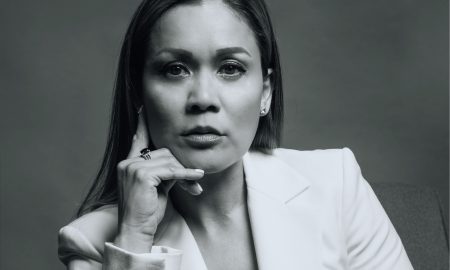
Today we’d like to introduce you to Hais Lindeman.
Hais, let’s start with your story. We’d love to hear how you got started and how the journey has been so far.
I grew up in San Diego attending elementary school through college, so after graduating from UCSD in 2004, I decided to change the scenery and moved to Florida.
There, I got my first full-time professional job at a substance treatment program without any previous experience. I was very fortunate to have had a licensed social worker who supervised and educated me throughout my employment. Up until then I was not sure what I wanted to do with my Human Development degree, but by the end of my stay in Florida, I knew that no matter where I go, I would continue to pursue this area of work. When I returned to California in 2005 I realized that without a post graduate degree I would not be able to advance in the therapeutic field and decided to go back for my Master’s in Counseling Psychology.
I worked full-time at a women’s prison as a substance abuse counselor while attending graduate school. My work at the prison gave me the profound thought that maybe not everything is the result of substance use, but that the substance use was the result of untreated mental health issues such as trauma, depression, and anxiety. Additionally, since the prison program was a residential program for women and children, I saw the impact of the mothers’ behaviors on their children, who were beginning to exhibit emerging emotional and behavioral issues. At this point I was convinced that working with children and youth had to be the key in stopping the cycle of addictions and trauma.
After 2 years at the prison and after graduating with my Master’s, I moved on as a case manager and school-based counselor for a non-profit program, San Diego Youth Services. There I worked mainly with youths and adolescents, especially those who have been expelled from traditional schools and moved into secondary or alternative schools. What stood out from that experience was that the youths, while exhibiting many behavioral and emotional issues, were caring, respectful, and thoughtful as long as I was giving them the same in return. I provided psycho-education along with group therapy in school based settings teaching them about basic mental health and more importantly healthy ways to self-care as a replacement to substance use or self-harm behaviors.
By 2008, I was offered a therapist position with the UCSD Co-Occurring Disorders Program, which was a natural fit for me since I have been treating clients with both co-occurring mental health and substance use issues. The UCSD COD Program provided services particularly to those who were severely mentally ill with chronic substance use issues and other psychosocial problems such as homelessness, criminal justice involvement, physical health issues, and ongoing relational violence at home. For the next 8 years I transitioned from therapist to lead clinician and eventually to program director. During my tenure at there I became involved in many collaboratives and initiatives to train San Diego County behavioral health programs and clinicians to become co-occurring capable in their work with clients from all spectrum. My consulting work came naturally out of these collaboratives and continued to build until 2016 when I decided to formally incorporate my business, Integrated Treatment Consulting.
Integrated Treatment Consulting was conceived from the idea that prevention & early intervention will stop the generational cycle of addiction and trauma while focusing on integrated treatment of co-occurring mental health, substance use and other psychosocial conditions that are present. I left the UCSD COD Program in 2016 to fully focus on my practice although still dedicate half of my time at a community mental health program in Chula Vista providing clinical supervision for registered clinicians and student trainees. On a clinical level, I offer individual, couple’s, and family therapies to everyone seeking services in the areas of addictions, mental health, and/or life’s stressors. As part of my consulting work I provide county and community education on Co-Occurring Treatment Practices, Opiate Overdose Prevention, Dialectical Behavioral Therapy, Cultural Responsiveness in Clinical Practice, Problem Gambling Treatment, and Stress Management and Burnout Prevention at the Work Place. Academically, I am a clinical faculty with SDSU teaching about substance use treatment and a voluntary clinical faculty with UCSD providing training on clinical areas mentioned above.
We’re always bombarded by how great it is to pursue your passion, etc – but we’ve spoken with enough people to know that it’s not always easy. Overall, would you say things have been easy for you?
Some challenges that came along the way were the long work hours, low salary, and working with chronically ill individuals with limited resources. While in graduate school I was working nights and overtime at the prison to help pay for my tuition and therefore did not have much of a social life during that time. San Diego is one of the most beautiful beach cities to live, however the cost of living can be challenging for clinicians who work in community mental health settings. I did not go into private practice nor joined one right out of graduate school because I had a strong connection to the underserved communities. In doing so I was pursuing the work that I loved but struggled to meet the financial demands of living in San Diego. Additionally, working with severely mental ill individuals who have chronic substance use issues had its own set of demands, and one hazards of the profession is that I was often unintentionally exposed to secondary traumas through listening to their stories. Resources are often scares and as a clinician I often felt helpless in providing services to a homeless person who has to return to the streets after our meeting or a domestic violence victim returning to the abuser to avoid being on the streets. Setting up my business was a new challenge because I had to learn about laws and regulations in legally and ethically developing my practice, something that many clinicians do not learn about in graduate school.
So, as you know, we’re impressed with Integrated Treatment Consulting – tell our readers more, for example what you’re most proud of as a company and what sets you apart from others.
Integrated Treatment Consulting offers individual, couple’s, and family therapies to every seeking services in the areas of co-occurring mental health (depression, anxiety, trauma, personality), addictions (substance use & gambling), or life’s stressors (unemployment, infidelity, relationships). Treatment modalities include Cognitive Behavioral Therapy (CBT), Dialectical Behavioral Therapy (DBT), Eye Movement Desensitization and Reprocessing (EMDR), Mentalization Based Therapy (MBT), and Intensive Short-Term Dynamic Psychotherapy (ISTDP). ITC also provides clinical training and education to the county and community on Co-Occurring Disorders Treatment, Opiate Overdose Prevention, Problem Gambling Treatment, Dialectical Behavioral Therapy, Cultural Responsiveness in Clinical Practice, and Stress Management and Burnout Prevention in the Work Place. What sets us apart from other treatment models is that the interventions and services we provide are research based and have evidence to show efficacy in long term stabilization of an individual. We accept insurance and work with individuals, couples, and their families on a sliding scale for out of pocket payment to accommodate treatment. For those who struggle with problem gambling, they and their loved ones are able to receive services free of charge for up to 24 sessions. Finally, we offer language specific services for individuals who are monolingual Vietnamese speakers.
So, what’s next? Any big plans?
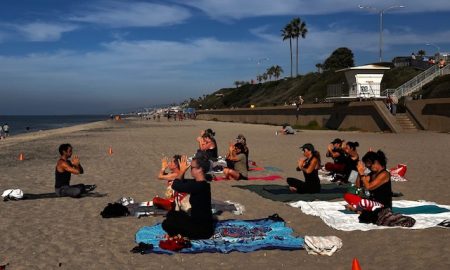
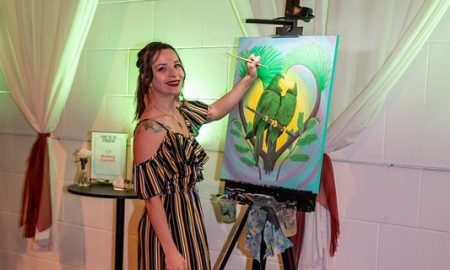
My future plan is to grow the practice and partner with more clinicians to build a full spectrum holistic service. I believe that therapeutic treatment is not just evidence-based talk therapy but a broad range of expressions that do not include spoken words such as mindfulness, art therapy, bodywork such as yoga or qi gong, and working with animals such as equine therapy. Starting in 2018, I plan to engage in an intensive 3-year certification training for Intensive Short Term Dynamic Psychotherapy addressing the connection between the body, mind, and behaviors. I will also be implement Problem Gambling treatment and support groups both in English and Vietnamese to address this growing and less talked about addiction problem, which again will be free of for everyone seeking this specialty service.
Contact Info:
- Address: 621 Second Street, Ste. A
Encinitas, CA 92024 - Website: www.lindemanitc.com
- Phone: 760-704-9422
- Email: hlindeman@lindemanitc.com


Image Credit:
California Department of Public Health Office of Problem Gambling
Integrated Treatment Consulting
Getting in touch: SDVoyager is built on recommendations from the community; it’s how we uncover hidden gems, so if you know someone who deserves recognition please let us know here.