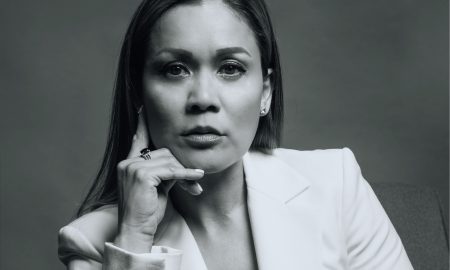
Today we’d like to introduce you to Janeal Ford.
Janeal, please share your story with us. How did you get to where you are today?
I am a fundraising consultant who enjoys inspiring people to make a difference. I relocated to San Diego for work and have called Point Loma home for the past five years. As a Utah native, I enjoy hiking, skiing, rafting or any activity that takes me outdoors in the beauty of nature.
Has it been a smooth road?
I have not always been a successful fundraiser and business owner. I worked hard to overcome tremendous barriers after having my daughter at the age of 15. Statistically, more than 50% of teen mothers never graduate from high school and less than 2% have a college degree by the age of 30. It is not an easy life.
Living in poverty and having a child to care for wasn’t easy. Every day I faced challenging decisions on how to manage what few resources I had. Most of my high school years were spent in a school designed for teen parents. Classes were held in a building that looked like a four-plex apartment where me and 30 other teen moms completed high school credits while our children played in the nursery. I had a very supportive family, but honestly, it was a fight to survive. I was determined to provide a good life for us.
I worked long hours in both work and school and, at some point, realized education was the key to leveraging myself out of poverty. I became an expert at scanning the environment. I would read every newspaper, pamphlet and bulletin board hanging in grocery stores, coffee shops, and libraries to see if there was some resource or activity that could help us. I worked hard and eventually graduated with my bachelor’s degree in Sociology and then, a few years later, went back to get my Master of Public Administration from the University of Utah.
Now that I look back on it, I can see how the survival skill of scanning the environment has helped me to be a great fundraiser. At my core, I am a matchmaker, matching needs in the community with resources from people with passion for the cause. Because I know the hardships that come with living in poverty and have experienced the transformative power of education, I am particularly passionate about these cause areas.
So, let’s switch gears a bit and go into the Fordable Fundraising story. Tell us more about the business.
A fundraising career wasn’t my intention. I have always had a heart for service and was considering the field of social work. Like most professional fundraisers, I stumbled into the work. I still remember the joy of securing my first grant award. I had just finished college and had a part-time job as an outreach worker in a school. I didn’t really know what I was doing at the time, but my efforts raised $5,000 to send the youth orchestra to play at the White House. I was hooked!
Now, nearly two decades later, I am proud to have worked for several amazing nonprofits and have played a strong role in helping them secure millions of dollars. I started my business in 2014 to continue this work and help nonprofits improve their mission impact. I think what sets me apart is my straightforward approach and keen ability to boil down complex information. Major societal issues are fraught with complexity and it is challenging to refine key messages enough, so that those who are passionate, but unfamiliar, can get excited about investing.
How do you think the industry will change over the next decade?
Individuals have historically contributed the lion’s share of all charitable gifts, and a tax deduction has never been the top reason, but it is an important consideration. With the new tax laws that were recently passed, I have no doubt 2018 will go down in history as a major test on charitable giving behavior.
The United States tax law has always included an incentive to give to charity, but only if you itemize. With the new tax bill that was recently passed, a significant number of individual tax filers will no longer have a reason. In fact, the change in law is expected to reduce the number of people who itemize to just 5% of all taxpayers. The full impact of losing this incentive for giving is unknown, but I would suspect the full impact of this new law won’t be felt until 2019 when individuals file taxes and realize the incentive to give is removed when they elect to take the standard deduction.
To remain viable, nonprofits need to be able to put together a compelling story that conveys results and must become highly competent at developing strategic partnerships. They need become laser focused on seeking out and aligning with their tribe or those who care most about the cause area. I believe traditional fundraising (direct mail, events, grant writing) will continue to play a strong role in nonprofits, but there is also a rising trend towards the development of social enterprises who are selling cause-related products to generate earned income.
I recently attended the San Diego Grantmakers conference and was pleased to hear from speakers that Millennial donors are shaking up charitable giving in a positive way. Millennials don’t want to just write out a big check, they want to roll up their sleeves and engage in the cause area. This is encouraging, but old guard nonprofits who are slow to change will need to figure out how to shift into the opportunities of this changing philanthropic environment.
Contact Info:
- Address: 8885 Rio San Diego Drive Suite 237 San Diego, CA 92018
- Website: www.fordablefundraising.com
- Phone: 619-226-9219
- Email: janeal@fordablefundraising.com
- Facebook: https://www.facebook.com/fordablefundraising/
- Twitter: https://twitter.com/FordFundraising?lang=en


 Image Credit:
Austin Diamond Photography, Robin Harris Photography
Getting in touch: SDVoyager is built on recommendations from the community; it’s how we uncover hidden gems, so if you know someone who deserves recognition please let us know here.