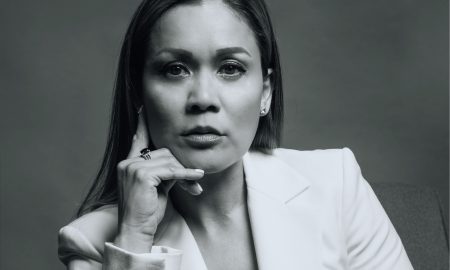
Today we’d like to introduce you to Jessica Dawson.
Jessica, let’s start with your story. We’d love to hear how you got started and how the journey has been so far.
My career as a writer and publisher started in quite an unconventional way. I had been working for Whole Foods Market, when I was suddenly struck with a rare illness in 2012 that left me hospitalized for a month and physically disabled for several years afterwards. It was one of those moments where I had to reconsider everything, and I started wondering what kind of work I could do if I never regained all of my physical abilities.
I remembered how much I had loved journalism and writing in school, and I decided to take a chance and start applying for contract and freelance writing jobs. By putting all of my heart into it and producing quality work, I pretty quickly built a roster of regulars—all from my couch!
As I got healthier, I was able to do more and more work, and I ended up meeting several other freelancers who had publishing experience. In 2015, we made the decision to start our own publishing house. We had been working with several authors who would help launch the company, and by that point, we had all made contacts in various areas of expertise in the publishing industry (editors, layout designers, cover designers, etc.).
Over the past few years, we’ve had the privilege of working with all kinds of incredible people with incredible stories to tell—San Diego small business owners in a variety of industries, with a variety of experiences to share. We’ve published books and e-books for them, and we’ve watched them use those books as tools to connect with customers and grow their businesses.
As of 2018, the company has rebranded, and now it even more effectively reflects the mission—to tell the priceless stories of business owners, innovative thinkers, self-starters, pioneers, entrepreneurs, mentors, and teachers. Or as we call them, founders.
Has it been a smooth road?
It has not always been a smooth road, no. First of all, the publishing business as a whole is in transition. For the past decade, the shift from print to digital books has increased seemingly exponentially. With that shift has come all kinds of growing pains and new ways of doing things. The benefit to digital publishing on a small scale is flexibility, but with that flexibility, you lose some of the structural support that was such a given at large print publishing houses.
While we came long after this shift initially happened, we have still felt the effects of it. For example, book marketing remains one of those mysterious things that no one in the industry quite has their finger on. We’ve learned tips and tricks along the way that help increase the chances of a book’s success, but we have also learned that you can do everything right and still not have the success you’re hoping for. There’s a little more luck and “right timing” involved than is comfortable.
We’ve also had some internal changes over the last year that have been challenging. It’s never easy when people who were once integral to the organization move on to different things, but we’re getting through the adjustment period, and we’ll be stronger on the other side.
So let’s switch gears a bit and go into the Founder Nonfiction story. Tell us more about the business.
At Founder Nonfiction, we turn great ideas into amazing books. We mainly work with other small business owners, but we partner with any busy professionals who have books to write and no time to write them. We know there are so many people out there who have created incredible companies or who have inspiring stories that their customers and industry colleagues would love to read, but we also know how complex the process of writing a manuscript and getting it published can be.
What sets us apart is that we treat each author and each book we work on as the unique individual project it is. Some people come to us with finished manuscripts that simply need a thorough edit. Others come to us with an idea for a book but no clue about how to turn that idea into something people can (and would want to) read. We work closely alongside our authors to make sure they end up with a book that tells their story exactly the way they want it told, and we provide direction and advice on what to do once it is a finished product.
We’re proud of the fact that many of our authors have come back to us for subsequent books, and that they trust us with all kinds of different projects. For example, we’ve worked on short, visually heavy e-books, and we’ve also worked on full-length paperbacks.
How do you think the industry will change over the next decade?
The publishing industry has been in flux for the past two decades and especially in the last five to ten years. As e-books have become more and more popular, we’re seeing the print industry struggle, and we’re seeing large publishing houses try and pivot to meet the changing demands of consumers. As music and television lean more towards subscription streaming services, the book industry is seeing that too.
Another big change is the fact that all the gates have come down. Now, you no longer need to be backed by a huge publisher with a traditional publishing deal. Gone are the days where shopping a manuscript is the only path to publishing. If you want to write and publish a book, you can do that all by yourself.
These changes have opened the door for people like us—we have experience with the “old” way of doing things, and we want to help all of the would-be authors out there who are intimidated by the traditional process and discouraged by the idea of doing everything themselves. We’re the bridge between the two.
As far as the future, it’s anyone’s guess. Amazon is still far and away the biggest player in the publishing industry and will likely continue to dictate the direction of it for a long time. It will be interesting to see how the popularity of their subscription service rises or falls over time. I’m also interested to see if audiobooks start to take off in a hugely impactful way. They’re certainly becoming more popular, but they haven’t disrupted the industry on a large scale yet. They might.
Contact Info:
- Website: foundernonfiction.com


 Image Credit:
Lucas Ballek, Zoë Garland
Getting in touch: SDVoyager is built on recommendations from the community; it’s how we uncover hidden gems, so if you know someone who deserves recognition please let us know here.