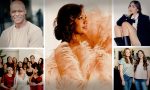
Today we’d like to introduce you to Julia Anne Cordani.
Hi Julia Anne, thanks for sharing your story with us. To start, maybe you can tell our readers some of your backstory.
I am originally from outside of Buffalo, New York, and found a love for music from a young age while singing and playing in church. As I grew up, my practices turned more experimental, and I pursued an insatiable desire to push the limits of the human voice through song, theater, and installation work. This evolution of my tastes, aesthetics, and creative practices landed me in San Diego, where I am working towards my doctoral degree in contemporary voice performance at UC San Diego under the mentorship of Susan Narucki. I’ve found a rich and active performing community in this city, my new home, where I feel I’ve become quickly ingrained both experimentally and canonically.
Would you say it’s been a smooth road, and if not what are some of the biggest challenges you’ve faced along the way?
Though I have encountered many challenges along the way, as can be said for anyone, I choose to be grateful for each as a learning opportunity. Facing rejection in a hyper-competitive capitalist paradigm where art often becomes devalued and discouraged has been the biggest of these challenges, and it comes in many forms both direct and subtle. A close second is found in dealing with the reactions of other artists, colleagues, and community members who don’t like or support my work, so learning how to face that has been helpful in my pursuit for a more internal wellspring of validation. However, if it weren’t for some of these experiences, I would not have gained necessary insight into become a stronger leader, more refined artist, and better human.
Alright, so let’s switch gears a bit and talk business. What should we know about your work?
I like to think of myself as a vocal trailblazer; someone who is unafraid in the face of technical challenge, musical virtuosity, and extreme demands. I thrive while singing stories of the human condition, especially stories about marginalized, misunderstood, and powerful women. I believe that all performance is theatrical, and I continually chase new ways to blur the lines between concert, opera, and installation spaces to heighten the sensory experience of challenging stories. In this way, I envision my creative practice through the lens of Kay Kaufman Shelemay’s “sentinel musician” — someone who watches, hears, and reflects on the social condition of their community with grave care and responsibility.
I also enjoy blurring performative lines on a more abstract level, questioning the relationship between audience and performer and pursuing a more inclusive and co-constitutive ground in which both participate in the creative act. I feel the most fulfilled when working directly with composers as a co-creator of their work; being able to literally breathe life into a piece for the first time is a euphoric feeling.
Are there any important lessons you’ve learned that you can share with us?
A few things, so far:
As artists, we have a responsibility to tell difficult, uncomfortable, and beautiful stories about the human condition. We must see, hear, and reflect our world, so that all voices can be amplified. We must create space for everyone to sing, play, and create together in true collaboration. And finally, art is revolutionary.
Contact Info:
- Website: https://www.juliaannecordani.com
- Instagram: https://instagram.com/juliaannecordani
- Facebook: https://facebook.com/juliaannecordani
- Youtube: https://youtube.com/@juliaannecordani


Image Credits
Photo credits to Robbie Bui, Alex Huddleston, and Carlos Rosas Coronado