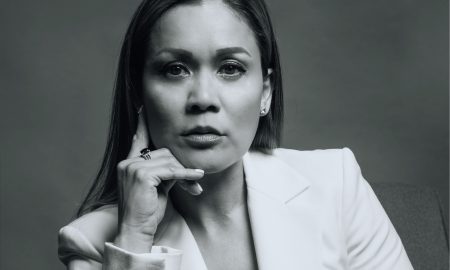
Today we’d like to introduce you to Lisa Brackmann.
Lisa, let’s start with your story. We’d love to hear how you got started and how the journey has been so far.
I was born and raised in San Diego. I’ve lived all over the city, everywhere from Solana Beach to Lakeside to UC to Point Loma and Ocean Beach to Clairemont. I loved growing up here and am proud to call myself a local. I’ve been writing since I was aware there were such things as words and books. My first attempt at a novel came at the age of five.
It was to be an epic tale of cats who went camping. Unfortunately, I did not know how to spell “tent,” resulting in my first case of writer’s block. After that, I decided that I’d rather be an astronaut. This lasted through most of the elementary school (my nickname: “Lunar Lisa”). By junior high, I’d adjusted my career sights to what I felt was a more realistic goal: Secretary of State. I stayed fairly focused on this notion of studying foreign policy and joining the Foreign Service through high school and well into my freshman year at college. Then came the unexpected: I found myself in China shortly after the Cultural Revolution, at the beginning of Deng’s reform era.
It was a setting so alien, so unfamiliar, with virtually nothing from my own culture there as touchstones (well, except for the ubiquitous popularity of the film “Sound of Music” and then the bizarre appearance of “The Man From Atlantis,” a failed TV show set in my hometown San Diego and starring Patrick Duffy) that I pretty much accepted China for what it was – I wasn’t going to waste a lot of time trying to understand something that was beyond me. It wasn’t until I returned home that I experienced culture shock – mainly because I’d changed and what I’d come home to hadn’t at all.
As a result of this profoundly unsettling experience, I decided I was going to be a famous screenwriter and a rock star. After a few years of college, I drifted north to Venice Beach and Los Angeles. I did play in a band, and I did write a bunch of screenplays/teleplays, with little material success in either endeavor. But I had fun, learned a lot, made great friends, and did some of what I’d set out to do.
Somewhere along the journey, I realized that I preferred writing novels to screenplays. I wrote a couple of very long books for fun and practice, and then the novel that would eventually become my first published novel, ROCK PAPER TIGER.
ROCK PAPER TIGER, set in modern China, was one of Amazon Top 100 Books of the Year and a Top 10 Mystery/Thriller and was short-listed for the Strand Critic’s best-first-novel award, as well as being a New York Times and USA Today best-seller. I’ve published five books since then. The latest is BLACK SWAN RISING, set here in San Diego, specifically in exotic Clairemont and Kearney Mesa. Booklist called BLACK SWAN RISING “an absorbing and apocalyptic vision of American politics that leaves the reader hoping it will never come to this.” Sorry about that, Clairemont!
My work has also appeared in The Wall Street Journal, Travel+Leisure, Salon, Los Angeles Review of Books and CNET. I’m really happy to be back in my hometown San Diego, living with, as my bio puts it, “far too many books, a cat and a bass ukulele.” I’m also playing in a band again for the first time in 17 years. Check out Plunderbund, in local dive bars everywhere!
Overall, has it been relatively smooth? If not, what were some of the struggles along the way?
If you ask anyone who has been a published author for any length of time, they will tell you that it is far from easy, or smooth. Writing books is a process where in order to really do it right, you put your heart and soul and intellect and every chop you’ve got into every sentence you write. And books have a lot of sentences. Then, after bleeding out on your page (well, technically your screen. Your keyboard?), you send your vulnerable child off to your agent, who either sends it to your publisher or if you don’t have a deal, out on submission. That process can go well, or it can go terribly. Then, say you sell the book.
You can have the great good fortune to work with wonderful editors, as I have, but you still can’t control what will ultimately happen to your book, how much support the publisher will put behind it and how it will fare in the marketplace. You can’t control whether it will get good review coverage, the kind of buzz that helps sales. And if your book doesn’t sell well, it doesn’t matter how good it is. This will negatively impact your ability to sell your next book as well as how much money you will get for it.
The reality is most authors don’t make a living with their writing. They don’t even make a fraction of a living. You’re doing something that is a full-time job for not even part-time wages. And on top of that, you will be spending many hours promoting your work, for no additional income. This to me is the most challenging aspect of the job – simply making enough money for it to be a reasonable, logical use of one’s time. Most novelists either write multiple books in a year, have other employment, supportive partners or some other kind of income stream. That gets to be exhausting (if you are working other jobs) and exclusionary (not everyone has supportive partners or other income streams). It’s a structural economic problem, and I don’t know what the answers to it are.
We’d love to hear more about what you do.
I’ve published six novels. They’ve been nominated for awards, appeared on numerous “Best of” lists and even made the NYT best-seller list. But what I’m most proud of are the books themselves. I’ve done my best to create quality work that’s about things I think are important, and that’s entertaining to the reader. I’ve never half-assed it or gone, “Eh, this is good enough.” I’ve made every book as good as I can make it.
If you had to go back in time and start over, would you have done anything differently?
That’s a tough one. The things I regret in my career as a novelist has been things I couldn’t really control, e.g., the business side of publishing. And the things that have made me the writer I am are the life experiences that I’ve had. Most of my regrets have to do with not having figured out a secondary career that would mesh well with the writing, and that would give me the kind of financial security that writing does not.
Financial stress is good for some insights and ideas, but it’s not a great way to live, long-term. I could also get philosophical about life choices in general and the importance of having an emotional support network and of giving back to others and to your community. But overall, I’ve been very fortunate in my family and friends, who have been incredibly supportive. Also, both of my agents have been amazing.
Authors really need to choose their agents wisely — this is one of the most important long-term relationships you will have. I would also advise every aspiring author to choose your friends wisely, to give freely to them what you can, and to help other writers in their journeys. To realize that although writing itself is a solitary task, it’s super important to be engaged in the world around you and with other people.
Contact Info:
- Website: www.lisabrackmann.com
- Email: lisa@lisabrackmann.com
- Instagram: https://www.instagram.com/otherlisa/
- Facebook: https://www.facebook.com/lisabrackmannauthor/
- Twitter: https://twitter.com/otherlisa


 Image Credit:
Lisa Brackmann, Christy Gerhart, Cindi Knapton, Dana Fredsti, Tracie Monk, Robert Crowther, Karl Gerth, Teresa Nevarez
Getting in touch: SDVoyager is built on recommendations from the community; it’s how we uncover hidden gems, so if you know someone who deserves recognition please let us know here.