Today we’d like to introduce you to Marie Allen.
You have a private Neurofeedback practice. But what exactly is Neurofeedback?
I use EEG and Neurofeedback technologies, to communicate specific brainwave activity, back to the brain, as it is occurring. This feedback enables the brain to objectively “witness” its own electrical activity, in real time. This enables the brain to gain awareness of its dysregulated activity. Using this new awareness, the brain can better regulate its own activity. Well regulated electrical activity results in functioning and feeling better in life.
Neurofeedback is equipping the brain with the information it needs, to improve its own performance, brain state, and health. A natural consequence of this is the brain can better manage the whole physical, cognitive, and emotional system.
So you might be able to see why I love my work. I get to help adults on down to little bitty children experience a reduction and sometimes even elimination of some cognitive, physical, and emotional symptoms, and live with a greater quality of life. And I put nothing into them. The process is non-invasive. My clients watch something nice on a screen, curled up under a soft blanket if they like.
How do you perform Neurofeedback? What do you actually do?
I gather information from my clients about the many ways in which they feel and function well, and feel and function unfavorably, through the interview, symptom checklist and a Continuous Performance Test that measures with unprecedented accuracy. I learn what’s working well and what’s not.
I also look at things that may seem frivolous or irrelevant, like whether they grind their teeth during sleep, tend to be inflexible, are easily embarrassed, constipated, or uncoordinated, have poor drawing ability, and so on. I look at genetic history. The pieces of information I gather, are clues about the person’s physiology. We have to remember that everything going on in us is connected.
According to the information I gather about my client, I place electrodes strategically on her or his head, set my software to select a highly specific, infra-low frequency of brainwave activity, and feed or communicate it back to the brain, using three modalities: sight, sound, and a gently vibrating stuffed puppy dog.
Is our brainwave activity a critical part of our health picture?
Yes. Think about this. Throughout history, medicine men and doctors knew we had bones, blood, and organs, but they did not know about electricity. And it was not known that there is electrical activity inside our heads. And no one dreamed that an entire universe of electrical activity is going on inside each of our heads.
It wasn’t until 2010 that Stanford University Medical Center discovered that the neurons in one cerebral cortex alone, are connected by more than 125 trillion synapses, roughly equal to the quantity of stars in 1,500 Milky Way galaxies.
Knowing what we now know, I don’t think it makes sense to look at our health, our emotions, or our functioning, without considering the universe of electrical activity.
What kind of problems are often helped by Neurofeedback?
Migraines, panic attacks, trauma, seizures, Parkinson’s, old sports injuries, abandonment issues, PTSD, anger — the list goes on.
How is it possible for one thing to help such a broad array of unrelated problems?
The answer lies in this: I do not try to treat, tackle, change or eliminate my clients’ problems. I do not target injury, disease, or cognitive difficulties.
Rather, through their eyes, ears, and hands, I communicate a specific infra-low frequency of their brainwave activity, back to the brain, showing the brain what it is doing, as it is doing it. In response, the brain is intrigued by it, engages with it, learns from it, starts better regulating its electrical activity, and my client starts feeling and functioning better.
Better regulated electrical activity doesn’t select one problem to manage better. Rather, we have a brain that is better managing the whole cognitive, physical, and emotional system. As a natural consequence, a number of problems decrease or go away.
By the way, does that suggest that I can put the electrodes anywhere on the head and it won’t make a difference? No. I am going to place the electrodes on the specific brain areas associated with the types of symptoms my client is reporting.
While you are feeding the brainwaves back, can your clients feel something happening inside? Do people ever feel afraid that Neurofeedback might change them to the extent that they won’t really be themselves anymore?
Many people start to feel something in a few minutes. Lasting change requires repetition of sessions. Some people momentarily worry that Neurofeedback might change them so much that they won’t be themselves anymore.
In reality, it’s more like you get to find out who you really were and are deep inside, minus some issues you were born with or developed in response to unfortunate experiences in your life. Most people come to really look forward to their sessions as they tend to be very calming.
Did something in your personal life lead you to enter into this field?
Pieces of my history came together and formed the impetus for my work.
I suffered a miscarriage. I was absolutely devastated by it. As an outcome of my grief work, I performed extensive original research on the emotional impact of miscarriage and co-authored Miscarriage: Women Sharing from the Heart, with former Salk Institute researcher, Shelly Marks.
As members of Sharp Hospital’s Bereavement Committee, we wrote, reviewed, and revised standards of care of parents who lost babies through miscarriage, stillbirth, and infant death, and taught medical and mental health professionals how to help bereaved parents in a manner that would be experienced as helpful. I loved my work.
Eventually, I helped people who had lost loved ones, but for a corporation. Their business model conflicted with authentic service, so I was miserable there. I left and never looked back.
Let me back up. When I was a little girl I was extremely ADD, only back then, “attention deficit disorder” didn’t exist yet. I was an extreme daydreamer, messy, late, without my homework, and I accidentally broke things (for example, I knocked over a drink into a new TV, destroying it instantly) — all of which confounded and exasperated my teachers and parents. I was a deep artist-child, yet I felt terrible about myself, guilty, scared, and failing.
In my 20’s and 30’s, I gave birth to three precious babies. Eventually, between them, they manifested ADHD, seizures, and Tourette Syndrome. After years of doctors, tests, schools, teachers, IEP’s, blood, sweat, and tears, and grace from above, all three of them grew into independent functional, beautiful adults. We “made it out alive.” The enormity of those problems became history.
Years later, my beautiful precious firstborn grandchild manifested autism. I had, and I mean HAD, to find a way to help him. I felt completely HELLBENT.
My close, wonderful high school friend, Jenny, had been telling me, “Marie, you have to learn about this thing called ‘neurofeedback’ that [her Bay Area psychologist husband] David is doing. He is seriously helping a lot of kids, and you, Marie, would be a wonderful neurofeedback practitioner for San Diego.”
I researched neurofeedback. I learned that it was helpful to people who have ADD, seizures, Tourette Syndrome and autism, as well as many other things. I could help my grandson, and all of us, too!
Thus, I began classes at EEG Institute. The educational program required that I receive Neurofeedback, starting right away. I was a bit afraid, then relaxed, and then felt moved by it. I remember the day I looked at the screen with tears in my eyes and said, “I feel so understood.” I didn’t understand why I felt ‘understood’ by It. I just felt — understood. I now realize that I was feeling the Neurofeedback mirroring me, or — “understanding” me, so to speak.
After 20 years on the maximum allowed dose of Ritalin, I shed Ritalin. Who could have foretold that that little ADD girl would someday be reading science books about THE BRAIN of all things, 24/7 for years? I wrote detailed book reports, practiced Neurofeedback on family and friends, and I was mentored by Sue Othmer. Eventually, I submitted my application and four-inch binder of work, with high hopes of qualifying for certification.
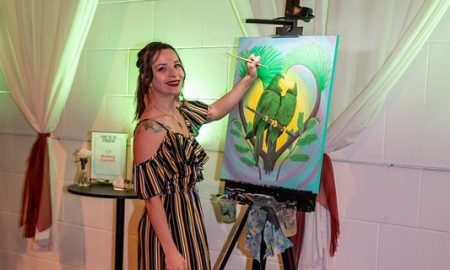
With great care, I designed my logo, designed and physically put together my new office to provide for my clients the warm, light, uplifting ambiance I had envisioned for them, and built my website. Unlocking Brain Potential was born. I began treating two Bishop’s School children followed by some of their family members, and then friends of theirs. Personal referrals. Word of mouth only. I have never advertised.
What are you most proud of?
I’m proud to have been trained by the 33 years, leading pioneers in the field, Dr. Siegfried and Susan F. Othmer. I’m proud to have trained at EEG Institute, known for its standard of excellence. Known for the most comprehensive and rigorous training requirements in the field, including a demonstration of a high degree of understanding and ability in the theoretical, technical and clinical aspects of Neurofeedback.
Competency in administering the most effective Neurofeedback protocols, using the most effective Neurofeedback technology, and achieving superior clinical outcomes. I’m proud that in a field rapidly unfolding right in front of our eyes, I constantly keep abreast. And I’m proud that my practice and continuing education are undivided, meaning I am 100% concentrated in Neurofeedback.
I can’t say that I feel proud when my clients feel and function much better. Rather, I feel amazed every time and a sense of fulfillment. When my children were growing up, I told them that our job in life is to live constructively, contribute more than we get, and leave people better off for our having been here. So I am incredibly grateful for the opportunity to do that through my work. “My day is made” when a client bounces out of my office saying her or his unique version of, “I feel so much better! I’m functioning so much better in my life now!“ When I hear that, I feel joy.
Do you work more with adults or with children? And what kind of problems do you most often treat?
I work with adults and children equally. I suppose what I treat most often, would be anxiety because we all have anxiety. But not everyone who comes to me comes because of a problem. Some athletes, and business and medical professionals, including physicians, come for Neurofeedback just to improve their performance and success.
How well known is Neurofeedback? How broadly utilized is it?
When women, in particular, find something that really helps them or helps someone they love, they tend to talk. They tend to tell a friend, a sister, a neighbor. Word spreads.
The American Academy of Pediatrics’ number one recommendations for treatment of ADHD are Neurofeedback due to its effectiveness, sustained efficacy, and non-invasive nature, and Ritalin. So pediatricians are sending children with ADHD.
Speaking of children, can I leave you with a favorite quote? Dr. Othmer once said, “The greatest impact we could possibly have, is in working with children, where an early redirection of their course can vector their entire lives.”
Contact Info:
- Website: UnlockingBrainPotential.com
- Email: marie@UnlockingBrainPotential.com


Getting in touch: SDVoyager is built on recommendations from the community; it’s how we uncover hidden gems, so if you know someone who deserves recognition please let us know here.