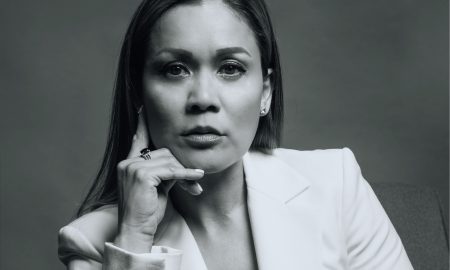
Today we’d like to introduce you to Misty Hawkins.
Every artist has a unique story. Can you briefly walk us through yours?
I was born and raised in San Diego by two parents from Georgia and Texas who lived through an era of racial segregation. They accomplished a lot out of difficult circumstances. Our parents instilled in us the importance of education because of opportunities denied to them. My older siblings were two of three black students, bussed to an all-white school in San Diego, taking part in voluntary integration in the late 1960s. A few years later I didn’t experience overt discrimination in a mostly white grammar school with few people of color. I enjoyed writing stories which was really the first time I felt like a creative person. But more and more I focused on other art projects, coloring, and making things out of clay. I remember, even in preschool, I was always interested in looking at faces. Later, as a teenager, I started copying faces from photographs and using the book, Drawing on the Right Side of the Brain. My mother died of cancer during my last year of high school. I didn’t know how to grieve, but I could focus on routine, discipline, and college. I never thought art-making could be a career, but I majored in Painting as I worked customer service jobs. I discovered how much I love Life Drawing, the Nude, as well as portraits. I don’t know if I can convey the feeling that doing some kind of creative work makes life worthwhile for me. After completing my degree from San Diego State in 2001, I went to graduate school at Tyler School of Art at Temple University in Philadelphia. Here my mind opened up to a different level of critical thought about my art and the art world. I also did a teaching assistantship and found a lot of satisfaction helping students. After living in New York a couple of years and experiencing the city’s galleries and museums I moved back to San Diego in 2005 for a teaching job. I continue to teach drawing and feel it as an extension of my personal creative work.
Please tell us about your art.
I love to make drawings and paintings of portraits and nude bodies. Looking at a face and contemplating the psychology of a personality is fascinating to me. I like the time it takes to depict my observations by hand.
I’ve made a lot of self-portraits, yet even portraits of other people are a reflection of how I relate and empathize with someone else filtered through the process of painting. I hope that viewers can connect with my artwork emotionally, or the artwork can lead them to an idea or interpretation. I intend to offer a range of meanings in an artwork.
Although sexual appeal and desire is a part of it, I see the nude body as a subject that can express a great range of emotions and states. I’m curious about my own conflicting feelings about nudity. In my personal studio work, the naked body has meanings for me about being exposed and vulnerable among other things. It is uncomfortable to explore some of these unconscious feelings. Sometimes I start with a strong idea of what I want to say in a piece. Other times I am compelled by a strong feeling and the artwork is an effort to figure out what that is. So a part of me wants to be conscious and find strength in articulating that understanding.
In a formal life drawing group, I am preoccupied with formal, aesthetic concerns about rhythmic lines, tones, colors, and composition. My academic background has given me an interest in traditional and contemporary meanings of the body about beauty, sexuality, gender, Christian and non-Western theology that are conveyed in representations of the body.
I also find inspiration in looking at dance, athletic performance, and fashion in various cultures from African sculptures and body adornment, ritual, Polynesian tattoo, European paintings, photography, American advertising, movies, and television. What makes me most happy is learning, creative work, and the doors it opens in my life.
What do you think about the conditions for artists today? Has life become easier or harder for artists in recent years? What can cities like ours do to encourage and help art and artists thrive?
I see conditions for artists being better in a way, because of technology your art can be seen by people around the world, and the ability for artists to independently make direct sales. Art education in schools will encourage interest later in adults who may see shows and collect art. I see local television news promoting art walks and events. I hope our city can do more of this to encourage the general public to attend and purchase artwork.
How or where can people see your work? How can people support your work?
Now when I show my work locally or elsewhere I’ll post the information on Instagram, mhawkinsstudio, or my website, mistyhawkinsart.net. I am a member of an international group Poets and Artists, poetsandartists.com, also on Instagram, which curates shows for print publication, galleries, and museums.
Contact Info:
- Website: mistyhawkinsart.net
- Instagram: mistyhawkinsstudio


 Image Credit:
Misty Hawkins
Getting in touch: SDVoyager is built on recommendations from the community; it’s how we uncover hidden gems, so if you know someone who deserves recognition please let us know here.