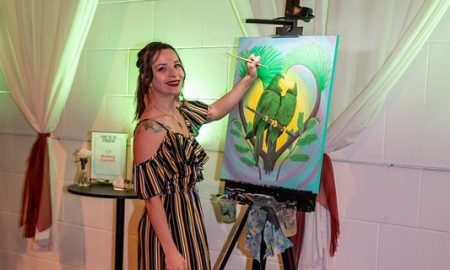
Today we’d like to introduce you to Neil Shigley.
Every artist has a unique story. Can you briefly walk us through yours?
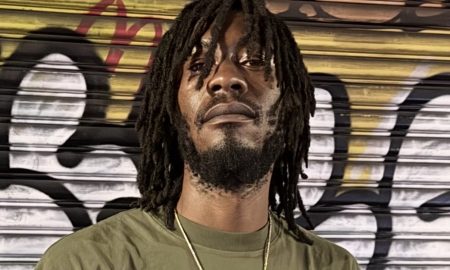
I have been an artist all of my life. It is the only career I’ve had, the only life I have had: making art, studying art or teaching art. Much of my work deals with the human figure in some way, and the human condition. This series to portraits of homeless people, mostly from near my studio, has been shown throughout the United States and internationally in numerous group and solo exhibitions. Most notably at the National Portrait Gallery in Washington DC, part of the Smithsonian. It has shown at the Oceanside Museum of Art and the San Diego History Museum. Every two years the National Portrait Competition is held. One of my portraits has been selected as a semi-finalist in each of the last three competitions. And one was a finalist.
Along with actively creating art I teach art San Diego State University. After I attended San Diego State where I studied painting and print-making I was given a full scholarship to attend Art Center College of Design in Pasadena where I graduated with distinction. I began my career in New York City. I was there five years then moved to the San Francisco Bay Area to work for a year before moving back to San Diego which has been home ever since.
Growing up, I was fascinated by watching my father draw and paint. He had graduated from college with a degree in architecture but was called to duty in World War II so he never practiced. He had incredible artistic skills. As a kid I traveled the world, living in Europe, Asia and several places in the U.S. I sailed across the Atlantic and Pacific Oceans. My father constantly exposed my brothers and I to the art and culture of each place we lived and visited. I’m sure this forged an early appreciation for art, and an open heart to cultures and people.
Please tell us about your art.
On a cold night in San Diego’s Little Italy, I was walking to a gallery opening when I passed a homeless man in a doorway. His eyes caught mine before I could glance away. Inside, as I walked around looking at paintings, the man’s face stayed with me. I knew then that I had to do his portrait, and that’s how the series “Invisible People” started.
While we’re often attracted to images of the rich and famous, too many of us tend to look away from people on the other end of the economic spectrum, the homeless. It’s almost second nature for many of us to simply avoid or ignore a homeless person. Often, we act as if the person isn’t there. For this reason, these images are presented larger than life. By encountering a face this size, I want each viewer to be confronted by a visible, visceral human being.
What is the difference between the people portrayed here and the rest of us? Not as much as we think. We wake up each day and go to sleep at night. We have hopes and dreams and plans. We want to be respected. We want to be loved.
As I’ve gotten to know San Diego’s homeless men, women, and children, I’ve come to recognize and admire the incredible character that each of these people possesses, hard earned through years of struggle and survival on the streets. Their nobility, beauty, strength, and vulnerability are plain to see, if only we look rather than turn away.
There are over six thousand homeless people in the San Diego region, and eighteen hundreds of them are children. The issue of chronic homelessness is complex, here and elsewhere. I don’t pretend to have any answers, but if this work can raise awareness, perhaps we can begin to generate some solutions. If these portraits help to keep even one child from ending up on the streets, then the effort that has gone into making them will be worth it.
Creating the Portraits
Each portrait starts with a walk through a city, usually San Diego. As I meet people living on
the street, I approach them with a great deal of respect. Even though they don’t have a home, they still have a space that they call their own. I explain that I am an artist and that I would like to make a portrait. Some say yes, some say no. If they agree, I ask about their life, their history, and their hopes. I take one to two photographs, without trying to pose the subject in any way except to ask if they can face into the light. I am looking for the most honest portrayal I can get, one that touches on the human condition.
From the photo, I create a charcoal drawing. Once I am satisfied with the sketch, I enlarge it to match the size of a piece of Plexiglas. Most are three feet by four feet, but the largest are nine by twelve. I place the drawing behind the Plexiglas and begin to carve with a flexible shaft drill. It takes six to eight hours to carve each sheet. Then I roll the carving with ink, place a piece of paper over it, and rub the surface to transfer the ink onto the paper. When the ink is dry, the paper is soaked in water and then adhered to canvas stretched over a wood panel. At the top of the piece, I write the name and age of each subject, where we met, and the year and number of the print along with my signature. At the bottom of the image, I paint one of the symbols used by drifters during the Great Depression to relay information about a place to other travelers. I try to express the spirit of each encounter with a specific sign, be it a communication of safety, a warning, or a message like “good road to follow.”
Choosing a creative or artistic path comes with many financial challenges. Any advice for those struggling to focus on their artwork due to financial concerns?
Earning a living is part of life. Fortunately I have lived a life where I have been able to do art, whether it’s creating it or teaching it. If someone has to work a job all day, then they need to work on their art after work hours. I know this can be tough, but many of the world’s most famous artist did just that.
How or where can people see your work? How can people support your work?
I have been fortunate to have exhibited this work through-out the country. I have a solo exhibit opening Sept 8th in Syracuse New York at the ArtRage Gallery. Locally I have a number of these portraits on loan to BNIM Architects in Downtown San Diego at 797 J Street. My largest piece (9ft x 12ft) is one of the pieces displayed. My work can also be viewed on neilshigley.com or on Instagram at Neil Shigley, or on Facebook at Neil Shigley Artist.
Contact Info:
- Website: neilshigley.com
- Phone: 619-203-6557
- Email: neilshigley@yahoo.com
- Instagram: NeilShigley
- Facebook: Neil Shigley Artist


Image Credit:
All photo credits: Neil Shigley
Getting in touch: SDVoyager is built on recommendations from the community; it’s how we uncover hidden gems, so if you know someone who deserves recognition please let us know here.