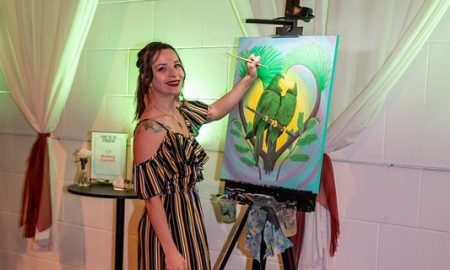
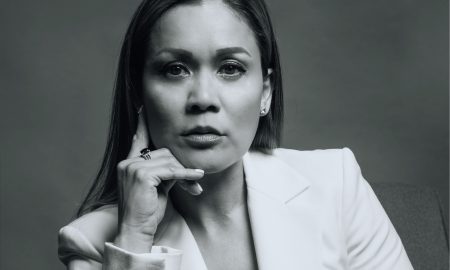
Today we’d like to introduce you to Renae Wang.
Renae, let’s start with your story. We’d love to hear how you got started and how the journey has been so far.
As someone who grew up with continuous transitions in life, art has been an important source of equilibrium that could balance my ever-changing surroundings. I was born in Beijing, China as the only child, and my parents separated when I was four. Given my single dad’s busy work schedule, I spent six years of my childhood in a boarding school and in between the houses of relatives. That was when I took an interest in art, a way of regaining a sense of security from the contingencies around me. I became very observant of my surroundings and learned to record the transitory moments with my eyes and my hands.
Meanwhile, I spent a number of years flying alone to the States as an unaccompanied minor, to visit my mom across the ocean over my summer breaks. Drawing was the best way to kill time during the lengthy solo trips, and those experiences of being alone in public spaces like airports and food courts have inspired me to start creating the type of art that I’m currently making.
The summer after middle school marked the biggest transition in my life: I officially moved to the U.S to live with my mom, and started attending a magnet high school in Miami with design-based art programs. I majored in graphic design as I was determined to work in advertising at that time. However, there is something about the physical act of drawing and painting that sitting in front of a monitor does not supply, and this was when I realized that painting is where my true passion lies. I slowly began to develop my unique artistic approach by combining painting with elements of signage and typography, something that allows me to utilize my graphic design background.
With that in mind, my creative voice started to come into shape during my undergraduate years in Philadelphia. I studied painting at Pennsylvania Academy of the Fine Arts while getting my bachelor’s degree at University of Pennsylvania. This was when I began painting the mundane nocturnal environments around me that are associated with solitude. Inspired by my early life experiences, these found urban landscapes with solitary nameless figures and vibrant neon signs convey the collective human experience of isolation. This body of work got me accepted into Laguna College of Art and Design, where I’m currently working towards my master’s degree in painting. At present, I’m growing as a young artist in another new environment while exploring new possibilities to approach the theme of isolation with my paintings.
Overall, has it been relatively smooth? If not, what were some of the struggles along the way?
The nature of my subject matter requires me to do a lot of editing to my photo references, as the environments that I choose to paint are oftentimes every crowded. On top of taking out the extra figures to adhere to the theme of isolation, I also need to take many artistic liberties to compose an image by removing, moving and rearranging the objects in the environment. This equates to many laborious revisions to perfect one composition, as one change can sometimes result in repainting an area that I have been working for weeks. I’m slowly overcoming this challenge by doing as many compositional sketches as possible ahead of time, to perfect the image the best I can before start painting.
On top of that, another challenge that has occurred to me recently is the difficulties in getting photo references during the COVID-19 pandemic. Many of the bars and restaurants that I frequent are closed, making it nearly impossible to get references for interior paintings. With that in mind, I began to paint environments that are more accessible such as drive-throughs and storefronts, which opened up many new possibilities for me to explore. As the topic of isolation is becoming increasingly relevant during the pandemic, I think it’s possible for me to transform this obstacle into something that can push me further creatively.
Renae Wang Fine Art – what should we know? What do you guys do best? What sets you apart from the competition?
I produce nocturnal paintings that captures quiet, transient moments of everyday life and the underlying sense of isolation behind these moments. From an old diner to an empty motel, the settings in these paintings all take place in mundane environments that are oftentimes overlooked, yet evocative to the universal human condition. These spaces are always occupied by a solitary figure, who remains nameless without any distinguishable or articulated facial features, looking disengaged with the viewer and immersed in their own spacetime.
Drawing inspiration from the nocturnal landscapes around me, I elevate these ordinary places with light, color, and composition, to transform a physical space into a metaphorical encapsulation of solitude. The namelessness of the solitary figures in my paintings allows the viewer to insert their own inner self into the environment and experience isolation in a more immersive way. When I create these nocturnal landscapes and interiors, I’m also incorporating graphic art and typography into my paintings, to combine all my formal interests into a single visual language.
Notably, my experimentation with color, temperature, and artificial light is the most effective way to convey the psychological state of being alone to the viewer. I like to juxtapose warm light source with cool light source in my work, to give the painting another layer of psychological complexity on top of its visual intensity. In addition, I often choose to paint my environments in obscure colors that are unconventional for such interior spaces. The use of these unconventional colors can reconstruct a conventional physical space into a surreal fragment of memory, alluding to the fact my work essentially about the experience of being alone in a place rather than the place itself.
What is “success” or “successful” for you?
As a creative individual, my idea of success is defined by my ability to inspire others, particularly other aspiring artists. I grew up looking at the paintings of Edward Hopper and Wayne Thiebaud, and their ability to transform the mundane into the extraordinary has inspired me to take a similar approach in my own work. To me, the most important legacy of a successful artist is the following generation of other creative minds. Therefore, aside from the more generic commercial success, I would feel accomplished if someone can look at my paintings and feel an urge to create and paint.
Contact Info:
- Address: 18665 Vanderlip Ave, Tustin, CA, 92705
- Website: yfwdec22.wixsite.com/portfolio
- Phone: 9547018863
- Email: yfwdec22@gmail.com
- Instagram: https://www.instagram.com/renaewang_art/


Suggest a story: SDVoyager is built on recommendations from the community; it’s how we uncover hidden gems, so if you or someone you know deserves recognition please let us know here.