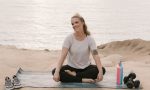
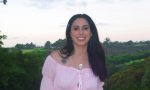
Today we’d like to introduce you to Sally Baxter
Hi Sally, can you start by introducing yourself? We’d love to learn more about how you got to where you are today?
I come from an immigrant family and am a first-generation American. My parents immigrated from China in the 1980s as graduate students, and I spent my early years in the Midwest. We moved to San Diego in 2000, and I feel lucky to have attended an amazing high school (Rancho Bernardo) and to have had the opportunity to engage in multiple academic and extracurricular activities in the San Diego area, including joining the San Diego Youth Symphony, attending the California State Summer School for Math and Science, and completing research internships at the Salk Institute. I also joined the track and field team in high school and learned how to pole vault. I ultimately competed at the NCAA Division I level at Duke University, where I went to college and majored in biology. My senior year I was awarded the Marshall Scholarship to study in the UK and subsequently completed a Master’s Degree in Public Health there at the London School of Hygiene & Tropical Medicine. I returned to the US to complete medical school at the University of Pennsylvania and then returned to San Diego for the remainder of my medical training – an internship in internal medicine, residency in ophthalmology, and fellowship in biomedical informatics, all at UCSD. After my training was complete, I joined the faculty at UCSD in two departments (ophthalmology and medicine/biomedical informatics) and recently obtained tenure last summer. My job includes a combination of clinical care, research, and education. I am grateful for all of the educational and professional opportunities I received and am trying to pay it forward to the next generation. I also could not do what I do without the support of my family. I am so lucky to have both immediate and extended family who have supported me through every step and are our “village” as my husband (also a physician) and I raise our four kids here.
I’m sure it wasn’t obstacle-free, but would you say the journey has been fairly smooth so far?
I’ve faced several challenges in my path. I would say the most difficult was going through medical training at a time when exceedingly few trainees had children. My husband and I started our family our first year of medical school. We were enrolled in two different schools (Johns Hopkins for him, UPenn for me) but decided that living together in the same place made the most sense for raising our family. We lived in Baltimore near his school since my mother-in-law lived relatively close by and could come and help us, so I commuted on the Amtrak train every day to school in Philadelphia. It was a 2-hour trip door-to-door each way. I was able to use the commute time to study and get work done, and then focus on being with my family when I was at home. The commute was grueling at times, although not out of the ordinary for people living in big metropolitan areas. What was harder was the lack of parental leave policies at that time for medical trainees and having to go to work so soon after giving birth. For my first child, I was in a rigid course schedule without much flexibility, and my dean told me I was not allowed to take any leave. I gave birth on a Thursday and returned to class the following Monday (3 days later), and took a major exam two weeks later. I did not have any maternity leave until my fourth child, since I had become a faculty member, and have really appreciated having the time to heal at home before returning to work. I am happy to see that parental leave policies have been developed for medical trainees now, but think that we as a society could still do better.
Another unique and challenging role I have had is being a military spouse. My husband has been in the US Navy since he was 18 and is currently still active duty. While we were in residency training, he had to undergo training to be a flight surgeon to support naval aviators, and I was functionally a single parent with 3 young children at home for almost a year. More recently, he completed a two-year tour of duty in Japan, although thankfully we were able to join him. This experience made me even more grateful for our service members and the sacrifices they and their families make to keep our nation safe.
Appreciate you sharing that. What else should we know about what you do?
I am an ophthalmologist and informaticist at UCSD. In my ophthalmology practice, I take care of eye problems for patients both medically and surgically, with a focus on cataract surgery. It is such a privilege to help restore vision for patients and help improve their quality of life. I have had patients who stopped driving or couldn’t see their loved ones’ faces anymore until they had surgery to get their vision back. It is an incredibly gratifying profession to help people in this way. In addition, sometimes we can diagnose conditions in the rest of the body by looking in the eyes. It’s like the well-known saying – “The eyes are the window to the soul.” Well, they also happen to be the window to the body.
I also conduct research in biomedical and clinical informatics, which is the study of how we use information systems and data to improve health. I am known for analyzing large databases to better understand risk factors and treatment outcomes for various eye conditions such as glaucoma and diabetic retinopathy. I have also been engaged in advancing data standards so that we have better communication of data between different information systems that we use in clinical settings.
Another great aspect of my work is educating the next generation of physicians and scientists. I truly enjoy working with students to teach them about medicine, ophthalmology, and informatics. Whether it is teaching someone how to do eye surgery or how to analyze a large dataset, it is so satisfying to help someone else gain new skills and mature in their career.
Before we go, is there anything else you can share with us?
A unique part of my work is getting to do research in addition to being a doctor. My research revolves around data and informatics, and as part of this I have also had the opportunity to study how we can use artificial intelligence (AI) in eye care. There are a lot of exciting opportunities in using AI in medicine, and I had the good fortune to be part of the first randomized clinical trial to use an AI large language model in a real-world clinical setting at UCSD. I am also part of a large multi-center study that is creating a database to help inform AI models for diabetes. AI has a lot of promise and potential but also some serious limitations, and part of my work is to understand how we might best use AI for the benefit of humanity but also be aware of its limitations and ensure that we are using it ethically.
Contact Info:
- Website: https://shileyeye.ucsd.edu/faculty/sallylbaxter
- LinkedIn: https://www.linkedin.com/in/sally-baxter-402a2a4/
- Twitter: https://x.com/SallyLiuBaxter


Image Credits
UCSD Shiley Eye Institute