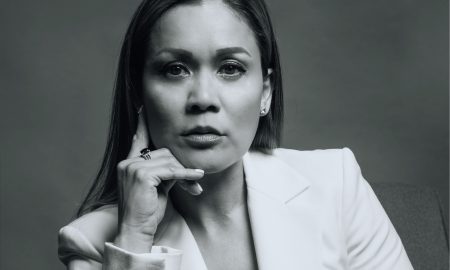
Today we’d like to introduce you to Torrie Dunlap.
Torrie, let’s start with your story. We’d love to hear how you got started and how the journey has been so far.
I spent my childhood in dance studios and rehearsal halls. My dream was to become a Broadway star. My plans changed in high school when I discovered my interest in teaching children. I spent my college years studying theatre at San Diego State while freelancing as a dance teacher and a director/choreographer. San Diego Junior Theatre hired me to be the Education Director, which is where I discovered my life’s purpose.
One morning as I was working at my desk, I received a call from a mom named Linda, who wanted to register her 10-year-old son Devon in my beginning acting class. I gave her all the standard information about the course, and just as we were about to hang up, she said, “Oh, by the way, I should tell you that my son has Down syndrome.” I froze. I felt afraid. At the time, I am not sure I even knew what Down syndrome was, and I certainly couldn’t picture what an acting class with a boy with Down syndrome in it could look like. Could he read? Would he be able to understand me and follow instructions? How would the other students react? In that split second, I dug down deep in my soul and knew I had to rise to the occasion. I said to Linda, “I have to be honest and tell you that I have no idea how to do this. However, I want to, and if you help me, I will figure it out. I want your son to have a great experience in acting class.” She said she would help me and that there was a nonprofit in town called Kids Included Together (KIT). She said if I called them, they would help me too.
KIT did help and what happened in that acting classroom changed my life, changed the lives of all the other students in the class, and changed Devon’s life too. His mother called the class “the turning point in his education.” Years later, I would run into parents who had children in that class, and they would tell me that it wasn’t the arts education that made the biggest difference in their lives, it was the opportunity to experience a community made up of kids of all abilities. They became kinder, more empathetic, and better communicators. They shared that the experience in an inclusive classroom had made a positive impact on their other relationships.
With the support of KIT, we went on to include kids with all kinds of abilities and disabilities at Junior Theatre. We became known for our commitment to inclusion, and it made us better teachers, better leaders, and better artists. In 2003, I joined the KIT staff as a program coordinator. In that role, I helped other San Diego programs become more inclusive of children with disabilities. Our message of inclusion began to spread outside of San Diego. We hosted an annual national conference, sent trainers around the country, and collaborated with the San Diego State University Center for Distance Learning to create the first online training programs in our field.
In 2012, I became the Chief Executive Officer of KIT, and I am so incredibly proud of the work our 30-person team does to get kids included around the world. We now serve programs in 48 states and 13 countries, including every US Military installation. We’ve trained over 100,000 individuals and impacted the lives of more than 5 million children.
Has it been a smooth road?
Nonprofit businesses are designed to solve problems that the market won’t answer. That makes running a nonprofit inherently challenging. We must make a significant social change while still making payroll. Our biggest social goal at KIT is to help people view disability as a natural part of life. Social stigma and ingrained stereotypes keep kids segregated in special programs and excluded from the typical activities of childhood. Decades of research prove positive outcomes for students with and without disabilities in inclusive settings, but still, people resist it. We are asking people to think differently and change how they teach, coach, and care for kids. Behavior change is hard. Behavior change as a business model is a constant uphill climb.
Thankfully, social attitudes are changing, and we are fortunate to have a committed network of advocates in our board members, donors, partners, and clients. I am reminded of the quotation often attributed to Margaret Mead, “Never doubt that a small group of thoughtful, committed citizens can change the world: indeed, it’s the only thing that ever has.”
We’d love to hear more about your business.
Since 1997, Kids Included Together has provided professional development programs and consultation services for schools and community-based programs so that they can better meet the needs of all kids. We offer in-person group training workshops delivered by qualified experts, a best-in-class online learning program, and a coaching call center to help teachers and childcare providers with individual challenges. We help leaders design and implement inclusive policies and strategic plans. Our clients and partners are among the largest and best-known child and youth development programs in the world, including the Boys & Girls Clubs of America, the YMCA of the USA, the US Military Child & Youth Programs, Head Start, the National Afterschool Association, and others.
KIT is an Authorized Provider of the International Association for Continuing Education & Training and a special consultant to the United Nations Economic & Social Council. We are the national leader in disability inclusion and behavior support and what makes us unique is our full-time team of Inclusionistas who provide direct support to our clients.
As the CEO and Chief Inclusionista, I am most proud of our passionate and talented team and the way they relate to each other. They deliver on the promise of inclusion every day, providing a living example of the change we are trying to make in the world.
Is our city a good place to do what you do?
San Diego is the home of the Kids Included Together founders, Gayle and Don Slate. San Diego has been the home of Kids Included Together since the mid-90s when we were funded by the Jewish Community Foundation and incubated at the Lawrence Family Jewish Community Center. We received significant support from Qualcomm and other local corporations, as well as many individual contributors who believe in our mission. The number of family-focused organizations in town, including Girl Scouts, the San Diego Zoo, ProKids Golf, and the New Children’s Museum, has given us a rich environment in which to do our work. Liberty Station has provided us with a beautiful campus environment for our office since 2007. We’ve had partnerships with San Diego State University, and the University of San Diego recognized our Board of Directors with the Kaleidoscope Award for Good Governance in 2015. The local First Five program awarded us with a two-year grant to serve the local Navy childcare programs, which developed into our work with the US Military around the world. KIT has had so much support from this community that it is almost impossible to imagine we’d have survived in any other city.
That said, San Diego is a challenging city in which to run a nonprofit organization. The high cost of living is a barrier to hiring and retaining staff. As our company has grown from local to national, we’ve been able to allow our employees to live wherever they choose. When we decided to transition from a co-located team in San Diego to a remote workforce, four of our team members immediately moved to cities where they could buy homes and where their paychecks would go further. San Diego can also be a difficult fundraising climate for nonprofits. According to The Nonprofit Institute at the University of San Diego, there are 11,523 nonprofit organizations in San Diego. Their recently released report shows that while contributions to nonprofits overall grew by 22% in 2016-2017, this growth only occurred among large nonprofits. Contributions to smaller nonprofits have declined
(Deitrick, L., Strawser, C., Tinkler, T., Durnford, J. (2019). Annual Report: State of Nonprofits in San Diego. San Diego, CA: The Nonprofit Institute, University of San Diego).
To keep San Diego the vibrant, creative, family-friendly city that it is today, we need to focus on creating more affordable housing.
Contact Info:
- Website: KIT.org
- Instagram: @kidsincluded
- Facebook: facebook.com/kidsincluded
- Twitter: @KITandNTCI


Image Credit:
Dana Thonglyvong, David Manning
Suggest a story: SDVoyager is built on recommendations from the community; it’s how we uncover hidden gems, so if you or someone you know deserves recognition please let us know here.